Preserved article · Animals
Axolotl Spiritual Meaning | Xolotl, Symbolism & Modern Magic
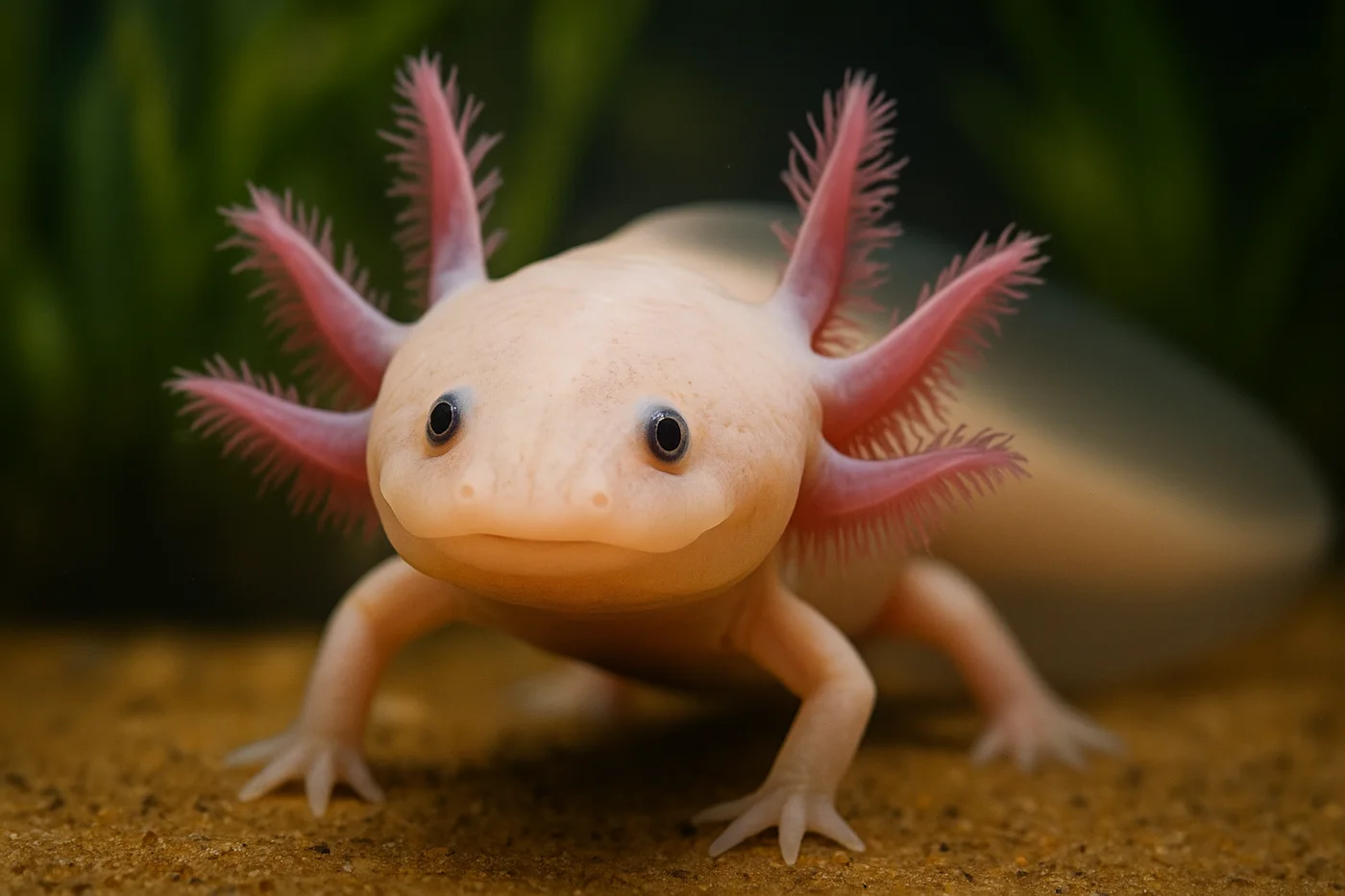
The axolotl, Ambystoma mexicanum, moves through the cool, dark water of the Xochimilco lake complex in Mexico City with red external gills trembling behind its head. It is not a smiling mascot or an ornament for a glass tank. This critically endangered salamander belongs to a threatened wetland, and its name carries a specific Mexica and Nahuatl-language association with Xolotl. For modern Pagan practice, axolotl symbolism begins in that waterlogged, endangered place: survival, concealment, recovery, and the refusal to let a hostile world dictate every change.
TL;DR
Axolotl symbolism joins the Mexica figure Xolotl with the living biology of Ambystoma mexicanum, a neotenic salamander native to Xochimilco. Modern spiritual practice can treat its regenerative body and aquatic persistence as images of recovery and boundary-making without claiming medical outcomes or turning a living animal into a ritual tool. The most grounded devotion is protection of the canals, chinampas, and water quality on which wild axolotls depend.
Key Facts
- Scientific identity: Ambystoma mexicanum is an aquatic salamander in the family Ambystomatidae.
- Native habitat: Wild axolotls survive in the Xochimilco lake complex and canal system of Mexico City.
- Mexica anchor: Xolotl is a named deity associated with twins, the evening star, canine form, and the passage of the dead.
- Biological distinction: Axolotls commonly reach sexual maturity while retaining external gills and an aquatic body plan, a condition called neoteny.
- Modern correspondence: Contemporary practice can connect the axolotl with endurance, concealment, recovery, water-bound thresholds, and resistance to coerced change.
Q&A
What does the axolotl symbolize in modern occult practice?
The axolotl can symbolize recovery without self-erasure, especially after a person has survived pressure to become useful, legible, or obedient on someone else's terms. Its living body offers a sharper image than vague transformation language: remain rooted in the water that sustains you, rebuild slowly, and keep a boundary between survival and performance.
How is the axolotl connected to Xolotl in Mexica mythology?
The axolotl's name and later mythic interpretation are connected with Xolotl, a Mexica deity who appears in accounts of the Fifth Sun and the gods' required sacrifice. The story belongs to a particular central Mexican religious world, not a generic fantasy underworld, and modern practitioners should name that setting rather than present it as interchangeable occult lore.
Can I use a captive axolotl for witchcraft?
A captive axolotl is a living amphibian with cold, clean-water, diet, and handling needs, not a biological prop for spellwork. Work with an image, a written reflection, or a conservation donation instead, and leave the animal's body outside the ritual.
Xolotl Myth and the Evasion of the Knife
Xolotl's connection with the axolotl comes from central Mexican accounts of the Fifth Sun, where the gods confront the sacrifice required to set the new sun in motion. In the version commonly associated with Xolotl, the deity attempts to evade death through changing forms, including maize and maguey, before entering the water as an axolotl. The narrative is not a permission slip to strip a living animal of its setting. It is a story of terror, resistance, and the cost of cosmic obligation.
That history gives axolotl symbolism a hard edge. The creature becomes an image for the fugitive instinct, the moment a person refuses an unjust demand for their body, labor, grief, or silence. A contemporary working might place a small bowl of clean water beside a written boundary, then carry that boundary into ordinary life: decline the demand, leave the unsafe room, document what happened, and call someone who can help keep the line intact.
Modern Axolotl Symbolism at the Edge of Mictlan
Xolotl is a guide through danger and death in Mexica cosmology, a figure often paired with Quetzalcoatl rather than a simple villain of darkness. His canine associations, connection with the evening star, and place beside the dead give the axolotl a chthonic resonance in modern symbolism. That resonance belongs to the threshold, not to a claim that an axolotl can carry messages from the dead or replace a named tradition's funerary rites.
In private practice, the dark water can represent the part of grief that has not yet become a story. The axolotl does not rise above its habitat to prove its worth. It stays close to the bottom, takes in oxygen through gills and skin, and keeps moving through a world of roots, silt, and altered currents. This makes it a powerful figure for shadow work that asks for patience rather than spectacle: name what is hidden, sit with it, and return only when the ground beneath you is real.
Neoteny and the Refusal of Forced Change
Neoteny is the biological trait that lets most axolotls reach adulthood while retaining larval features such as external gills and an aquatic lifestyle. Unlike many salamanders, Ambystoma mexicanum does not normally complete the dramatic landward metamorphosis people expect from an amphibian. Its body makes a clean break with the popular moral that maturity always means leaving one form behind.
Modern axolotl magic can therefore speak to a refusal of forced transition. A person may change jobs, homes, names, relationships, or habits without consenting to become unrecognizable to themselves. The correspondence is not a promise of stasis. Xochimilco itself changes with season, water level, cultivation, and urban pressure. It is an invitation to choose the changes that sustain life and to reject the changes that demand self-abandonment.
Regeneration Without a Medical Promise
Axolotls can regenerate complex tissues after injury, including limbs and portions of several organs, which makes them important subjects of biological research. The salamander's regrowth is a material fact about its own body, not a treatment plan for a human body. Its spiritual force lies in metaphor: what was damaged may still deserve care, time, and a chance to become whole in a new way.
For this reason, regeneration witchcraft works best as a practice of repair that can be completed in the visible world. Mend a torn garment. Replace a broken household item. Schedule the appointment you have delayed. Return to a skill after a grief-heavy season. The axolotl's lesson is not that trauma vanishes without a scar, but that survival can be patient, specific, and made from small acts that restore capacity.
Material and Spiritual Anatomy
The axolotl's anatomy gives modern symbolism a material anchor in the actual limits and strengths of Ambystoma mexicanum.
| Anatomical feature | Biological context | Modern spiritual correspondence |
|---|---|---|
| Neotenic body plan | Sexual maturity commonly arrives without ordinary salamander metamorphosis. | Resisting coerced transformation and keeping a chosen form. |
| External gills | Feathery gills exchange oxygen in water. | Breathing through grief, staying receptive without surrendering a boundary. |
| Regenerative capacity | The animal can regrow complex tissues after injury. | Patient repair, recovery, and rebuilding a life in practical steps. |
| Aquatic skin | Permeable skin makes water quality central to survival. | Discernment about environments that nourish, overwhelm, or contaminate. |
| Dark-water habitat | Wild axolotls live in a reduced remnant of the Xochimilco wetland. | Underworld thresholds, hidden endurance, and care for what persists out of sight. |
Xochimilco, Chinampas, and the Living Habitat
Xochimilco is the living habitat that gives axolotl symbolism its actual geography. Its canals, wetlands, and chinampa farming landscape are part of Mexico City's environmental and cultural history, not scenery behind an internet animal. The wild axolotl's small remaining range is shaped by urbanization, polluted water, introduced fish, and the fragmentation of aquatic habitat.
Zambrano, Valiente, and Vander Zanden documented food-web overlap between native axolotls and introduced carp and tilapia in Xochimilco. Their study makes one thing plain: an endangered species does not exist alone. Its survival depends on food webs, water chemistry, farming practices, canal management, and decisions made far beyond the animal's immediate body. The spiritual meaning of the axolotl becomes stronger when it remains accountable to those relationships.
Ecological Magic and Defense of the Canal
Axolotl conservation begins with the water. The IUCN Red List identifies Ambystoma mexicanum as Critically Endangered, and the species cannot survive on symbolism alone while its wetland is altered by pollution and invasive fish. Conservation work with local chinamperos and Xochimilco restoration projects supports the habitat rather than extracting an animal, egg, gill, or story from it.
The most useful offering is concrete. Support organizations directed by people working in Xochimilco. Keep aquarium animals out of local waterways. Avoid treating axolotls as disposable novelties or status pets. Learn the names of the canals and wetlands where the species survives, and let a donation, a letter, or a volunteer day protect the conditions the animal needs. The god-linked image of the axolotl is fierce precisely because its living counterpart is vulnerable.
Sources
- Author: Bernardino de Sahagún. Title: Florentine Codex: General History of the Things of New Spain. Publisher/Archive: University of Utah Press. Date/Era: 1950-1982 translation by Arthur J. O. Anderson and Charles E. Dibble.
- Author: Luis Zambrano, Elsa Valiente, and M. Jake Vander Zanden. Title: "Food Web Overlap Among Native Axolotl (Ambystoma mexicanum) and Two Exotic Fishes: Carp (Cyprinus carpio) and Tilapia (Oreochromis niloticus) in Xochimilco, Mexico City.". Publisher/Archive: Biological Invasions. Date/Era: 2010.
- Author: International Union for Conservation of Nature. Title: Ambystoma mexicanum Red List Assessment. Publisher/Archive: IUCN Red List of Threatened Species. Date/Era: 2020 assessment.
- Author: Karl A. Taube. Title: Aztec and Maya Myths. Publisher/Archive: University of Texas Press. Date/Era: 1993.