Preserved article · Plants & Herbs
Lemon Balm Magical Properties | Folklore, Calm & Pagan Uses
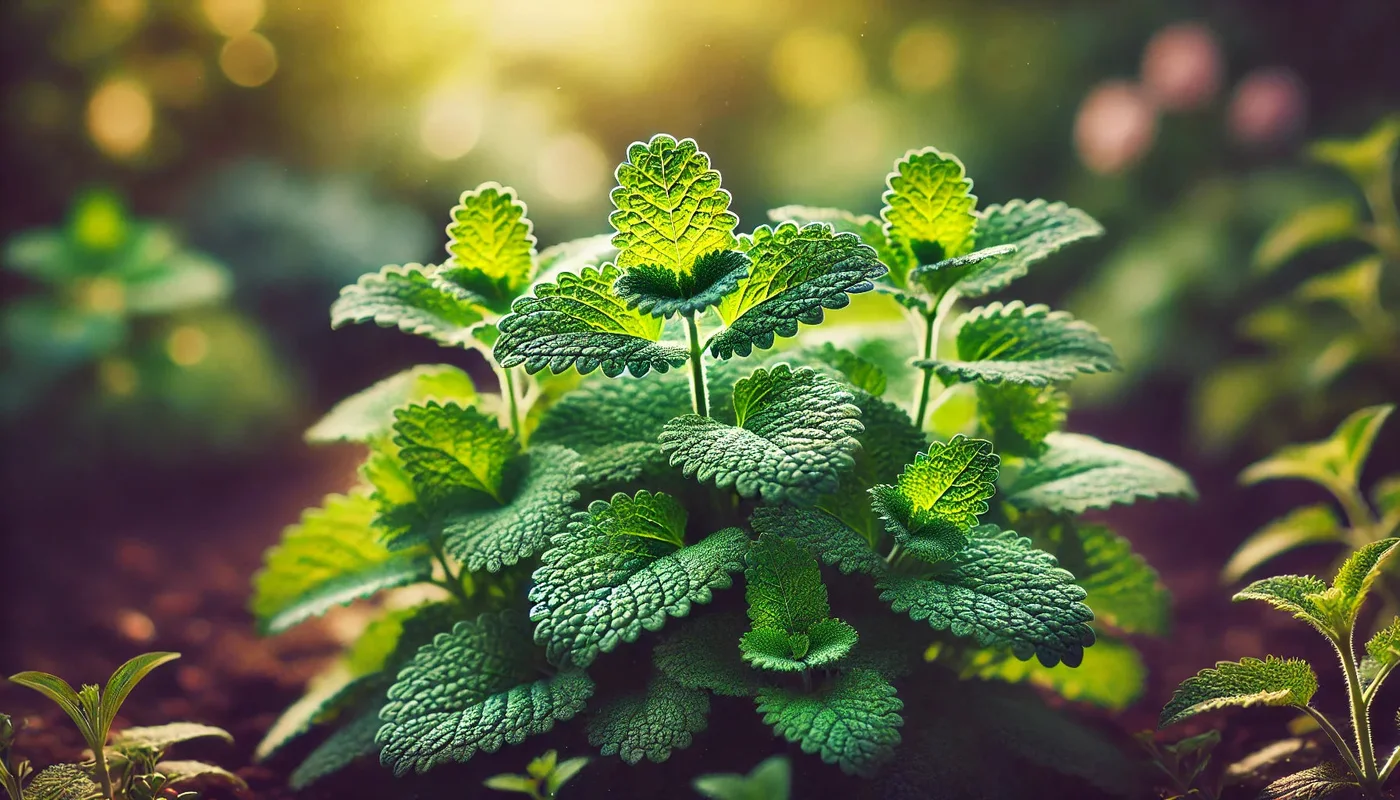
Crush a fresh leaf between two fingers, and a green citrus scent rises from the soft, toothed surface. Lemon balm (Melissa officinalis) is a perennial member of the mint family, Lamiaceae, with square stems, paired leaves, pale flowers, and an old association with honeybees. Its genus name descends from the Greek word melissa, meaning bee, while its volatile compounds include citral and geraniol, substances also present among the components studied in honeybee scent communication. Physic gardens, household herb plots, and early modern herbals carried the plant across Europe and beyond. Within Pagan and folk practice, its beelike name, vigorous growth, and bright fragrance have made it a plant of welcome, restoration, friendship, and the steady return of appetite for life.
TL;DR
Lemon balm symbolism centers on welcome, renewed vitality, friendship, and the bee-rich abundance of a tended garden. Early modern herbals and later occult practice placed Melissa officinalis beside cheer, comfort, and household protection, while modern practitioners often use its scent and living leaves as sensory ritual anchors. Historical medicinal use belongs to regulated herbal practice and should not be confused with a promise of cure.
Key Facts
- Scientific Identity: Melissa officinalis, an aromatic perennial in the Lamiaceae (mint) family.
- Primary Habitats: Sunny or partly shaded gardens, roadsides, field margins, and disturbed ground where moisture is available.
- Folklore Anchor: Early modern herbal praise, alchemical stories surrounding Primum Ens Melissae, and the Greek word melissa, meaning bee.
- Spiritual Correspondences: Water, Moon or Venus in several modern systems, welcome, friendship, household peace, and renewed courage.
- Ritual Application: Keeping a living plant by a threshold, placing an unburned leaf on an altar, or using the fragrance as a non-ingestive focus for reflection.
Q&A
What does lemon balm symbolize in traditional witchcraft?
Lemon balm symbolizes welcome, renewed heart, household friendship, and the return of movement after stagnation. A practitioner may keep the living plant near a doorway, touch a leaf before a difficult conversation, or place fresh foliage beside a written intention for peace and steadiness.
How was lemon balm utilized in historical folklore?
Early modern herbals praised lemon balm for comfort and cheer, while later stories tied it to Paracelsian preparations and Carmelite Water. Those records show how medicinal, devotional, culinary, and alchemical traditions overlapped, but their extravagant longevity claims belong to historical belief rather than established clinical fact.
Is lemon balm safe to handle or ingest?
Ordinary contact with correctly identified Melissa officinalis is generally well tolerated, but an article cannot determine whether a preparation is suitable for a particular person. The European Medicines Agency notes limited clinical evidence, possible drowsiness, and missing safety data for some populations; medicinal use should follow a labeled product and qualified medical or pharmacy guidance. Gardeners should also prevent unwanted spread by removing flowers before seed set and growing the plant in a container where local conditions warrant it.
Paracelsus and the Alchemy of Forced Resurrection
The most extravagant lemon balm stories gather around Paracelsian alchemy and a preparation later called Primum Ens Melissae. Early modern alchemy treated plant matter as a substance that could be separated, purified, and recombined, so an aromatic herb with a reputation for cheer readily became a vessel for stories of renewal.
Later occult literature repeated marvelous accounts of old bodies restored, hair renewed, and failing strength returned. These tales belong to the wonder-working register of alchemical lore, where transformation of matter mirrored transformation of the practitioner. They are not instructions for preparing an extract, and they do not establish a medical effect. In ritual symbolism, the story can still hold force without being swallowed: a bruised leaf releasing fragrance becomes an emblem of concealed vitality made perceptible, while spring growth from a winter crown gives the plant a visible grammar of return.
The Melissae and the Venomous Swarm
In Greek, melissa means bee, and ancient religious language sometimes used the plural Melissai for women serving a goddess. The word does not by itself prove that every bee-priestess tradition used the plant now called Melissa officinalis, but the shared name gave later herbalists and occult writers a powerful bridge between leaf, fragrance, hive, and sacred service. Bees move through the plant's small pale flowers for nectar, carrying pollen through an otherwise modest patch of green.
Beekeeping lore records aromatic plants being rubbed inside a hive or skep, and lemon balm became one of the best-known choices. Laboratory research on Nasonov pheromone shows that citral, nerol, geraniol, and related components participate in honeybee attraction, but that does not turn a leaf into a guaranteed swarm lure or a device that overrides an animal's behavior. In spellwork, the old beekeeping image is better carried as hospitality than coercion. A leaf at the threshold can signify a prepared home, a clear invitation, and the consent of any guest who crosses it.
Modern Devotion and Ritual Application
Modern Pagan work with lemon balm often begins in the garden rather than the bottle. The plant can be watered as a devotional act, kept near a household threshold, or harvested in a few fresh sprigs for an altar arrangement. Crushing one leaf between the fingers releases a distinct scent that can mark the beginning of a rite without smoke, flame, ingestion, or expensive equipment.
A simple working might place a living leaf beside a written statement of welcome, friendship, or renewed courage. The practitioner reads the sentence aloud, breathes the natural fragrance at a comfortable distance, and returns the leaf to compost after closing. No preparation is applied to skin or taken internally. Severe or persistent depression requires qualified support and, in a crisis, immediate emergency help; a ritual plant can accompany care but cannot replace it.
The plant also suits offerings that are given back to the soil. A small amount of clean water poured at the roots, fallen leaves gathered into compost, or seeds prevented from escaping into neighboring habitat all join devotion to stewardship. The act is quiet and reciprocal: fragrance and shade come from the plant, while water, space, and responsible containment come from the keeper.
Botanical Reality: Anatomy and Defense Chemistry of Melissa officinalis
The physical character of Melissa officinalis begins with traits shared across much of the mint family. Square stems carry opposite leaves with crenate edges, and clusters of small flowers open where leaf stalks meet the stem. Established crowns broaden, stems may root where conditions are favorable, and abundant seed can produce unwanted volunteers in a garden.
Glands in the leaves produce volatile compounds that can include citronellal, geranial, neral, and geraniol, with proportions shaped by cultivar, growing conditions, harvest, and extraction method. Some of these compounds also occur in the multi-part Nasonov pheromone blend studied in honeybees. Shared chemistry helps explain why beekeepers and herbalists connected the scents, but it does not show that the plant evolved to control bee navigation. The more durable magical image is relationship: flower, pollinator, gardener, and season each contribute something the others cannot supply alone.
Tabular Breakdown: Material and Spiritual Anatomy
Lemon balm's material traits support a correspondence of invitation, resilience, and measured renewal without turning botanical chemistry into a supernatural mechanism.
| Botanical Feature | Physical Adaptation / Chemistry | Spiritual Correspondence |
|---|---|---|
| Bee-associated fragrance | Volatile compounds overlap with some substances studied in bee scent communication. | Welcome, invitation, and reciprocal community. |
| Aromatic leaf glands | Bruising the leaf releases a strong citrus scent. | Attention, renewed awareness, and a clear ritual threshold. |
| Persistent crown and seed | Established plants return and can spread beyond their intended bed. | Resilience joined to necessary boundaries. |
| Square stems and opposite leaves | Visible Lamiaceae traits aid careful identification. | Order, balance, and a well-tended household. |
| Small nectar-bearing flowers | Bees and other insects visit the pale blooms. | Mutual aid, shared labor, and garden abundance. |
Wildcrafting and Territorial Control
Working with Melissa officinalis in a garden requires attention to place. Lemon balm may seed freely and spread beyond its intended bed, although its behavior differs with climate, soil, moisture, and maintenance. A pot, a bounded bed, or timely removal of flower heads can keep the plant from moving into neighboring ground.
Harvest only from a plant that has been positively identified and is free from spray, roadside contamination, and protected-land restrictions. Garden scissors make a clean cut above a leaf node, leaving enough growth for pollinators and the plant's continued vigor. Never remove a wild population simply for ritual use when a cultivated plant or even a drawn leaf would serve. The correspondence of boundary becomes literal here: devotion includes keeping seeds out of sensitive habitat, cleaning tools, sharing divisions responsibly, and observing how the plant behaves before deciding where it belongs.
Sources
- Author: European Medicines Agency, Committee on Herbal Medicinal Products. Title: Community Herbal Monograph on Melissa officinalis L., Folium. Publisher/Archive: European Medicines Agency. Date/Era: 2013.
- Author: European Medicines Agency, Committee on Herbal Medicinal Products. Title: Assessment Report on Melissa officinalis L., Folium. Publisher/Archive: European Medicines Agency. Date/Era: 2013.
- Author: I. H. Williams, J. A. Pickett, and A. P. Martin. Title: The Nasonov Pheromone of the Honeybee Apis mellifera L., Part II. Publisher/Archive: Journal of Chemical Ecology, National Library of Medicine record. Date/Era: 1981.
- Author: Margaret Grieve. Title: Balm, A Modern Herbal. Publisher/Archive: Harcourt, Brace & Company, Botanical.com transcription. Date/Era: 1931.
- Author: Nicholas Culpeper. Title: Culpeper's Complete Herbal. Publisher/Archive: Project Gutenberg edition of the Richard Evans printing. Date/Era: 1814 edition.