
Planet · Certain
Neptune
Research and editorial review by Cody Manes · Reviewed
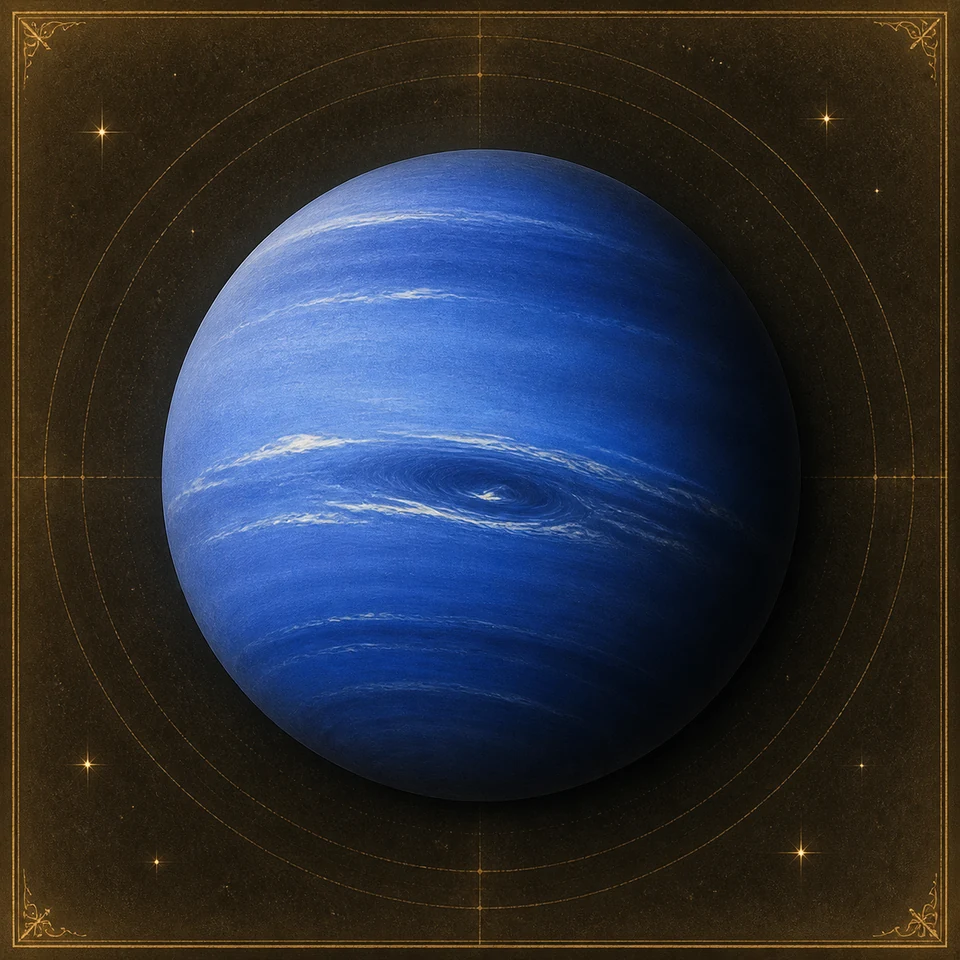
Neptune in modern astrological and occult correspondence systems, where it is associated with Pisces, mystical sensitivity, inspiration, glamour, and illusion.
Overview
Neptune belongs to the modern planetary correspondence layer. Modern Western astrologers associate it with Pisces, mystical sensitivity, inspiration, imagination, glamour, and illusion. Three independent sources support its use as a Piscean co-ruler alongside Jupiter.
Historical and Astrological Context
Neptune was not known to classical or Renaissance astrologers. Its correspondence field developed after astronomical discovery and must remain separated from Ptolemy’s seven-planet order and Agrippa’s planetary tables.
Traditional and Modern Rulerships
Astrodienst, Stephanie Clement, and Alan Oken independently support Neptune as a modern ruler or co-ruler of Pisces. Oken explicitly uses Jupiter and Neptune together, preserving Jupiter’s traditional Ptolemaic rulership.
Traditional Qualities
No Ptolemaic temperament is assigned to Neptune. Classical quality terms are not reconstructed for a planet absent from the historical source.
Plants, Stones, Metals, and Ritual Materials
The current evidence layer does not assign Neptune a historical weekday, metal, plant, stone, or incense. Attractive modern lists are withheld until their independent lineages and exact claims can be demonstrated.
Modern Practice
Modern Neptunian work often attends to imagination, mystical longing, compassion, inspiration, glamour, and the danger of illusion. The same symbolism can point toward vision or confusion, so the profile preserves both sides rather than presenting only agreeable keywords.
Identity Boundary
Neptune the planet and Neptune the Roman sea deity are separate records. Their shared name is disclosed without treating the deity as an alias or a recommended correspondence.
Safety and Physical Boundaries
Planetary records describe symbolic and historical relationships. They do not authorize ingestion, burning, topical use, or handling of connected materials. Each physical entity carries its own safety review, and hazardous records are excluded from default ritual candidates.
Sources
Astrodienst AstroWiki, Neptune; Stephanie Clement, Llewellyn Encyclopedia, Neptune; Alan Oken, The Astrology Podcast episode 223.
Direct connections and evidence
Modern Convention
modern co-ruler of Pisces
Modern Western astrology commonly adds Neptune to Pisces's co-rulership while Jupiter remains the traditional ruler in the classical source layer.
3 attestations · high confidence
- Astrodienst Astrowiki editors, NeptuneAstrowiki reference page, accessed 2026-08-26 · Astrodienst · Twentieth- and twenty-first-century modern astrology · English-language modern astrology · Section Rulerships
- Stephanie Clement, Encyclopedia Term: NeptuneLlewellyn Encyclopedia entry from What Astrology Can Do for You, accessed 2026-08-26 · Llewellyn Worldwide · Twentieth- and twenty-first-century modern astrology · English-language modern astrology · Section Definition
- Alan Oken with Chris Brennan, The Life and Work of Astrologer Alan OkenHuman transcript of episode 223; recorded September 18, released September 24, transcript released December 7, 2019 · The Astrology Podcast · Twentieth- and twenty-first-century modern astrology · English-language modern astrology · Section Rulers of the Horoscope and modern/traditional rulerships discussion · Entry Alan Oken paragraph beginning “I use both the traditional rulers and the ‘new’ rulers”
Reviewed sources
- Astrodienst Astrowiki editors, NeptuneAstrowiki reference page, accessed 2026-08-26 · Astrodienst
- Stephanie Clement, Encyclopedia Term: NeptuneLlewellyn Encyclopedia entry from What Astrology Can Do for You, accessed 2026-08-26 · Llewellyn Worldwide
- Alan Oken with Chris Brennan, The Life and Work of Astrologer Alan Oken (2019)The Astrology Podcast episode 223, human transcript · The Astrology Podcast