
Planet · Certain
Uranus
Research and editorial review by Cody Manes · Reviewed
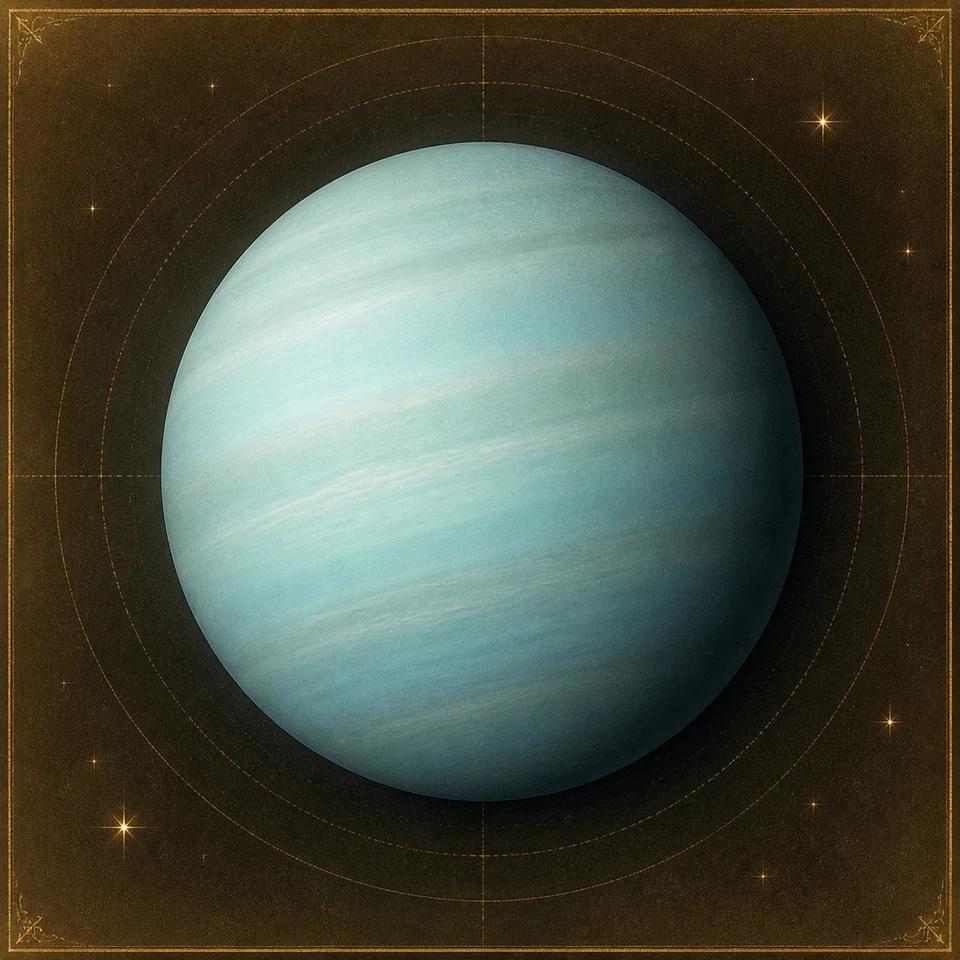
Uranus in modern astrological and occult correspondence systems, where it is associated with Aquarius, sudden change, independence, and disruption of established patterns.
Overview
Uranus belongs to the modern rather than classical correspondence layer. Modern Western astrologers commonly associate it with Aquarius, rupture, independence, innovation, and sudden departures from established order. Three independent modern sources support its use as an Aquarian co-ruler alongside Saturn.
Historical and Astrological Context
Uranus was unknown to Ptolemy, Agrippa, and the authors of the older seven-planet tables. Its astrological meanings therefore belong to post-discovery modern traditions. The archive never backdates Uranian correspondences into classical or Renaissance sources.
Traditional and Modern Rulerships
Astrodienst, Stephanie Clement, and Alan Oken independently support Uranus as a modern ruler or co-ruler of Aquarius. Oken explicitly uses Saturn and Uranus together. Saturn’s Ptolemaic rulership is therefore shown beside, not displaced by, the modern relationship.
Traditional Qualities
No Ptolemaic temperament is assigned to Uranus. Traditional hot, cold, moist, dry, benefic, or malefic rows are absent because the planet was not part of Ptolemy’s seven-planet system.
Plants, Stones, Metals, and Ritual Materials
The current evidence layer does not assign Uranus a historical metal, weekday, plant, stone, or incense. Modern lists may circulate, but they are not added without sufficient independent evidence and exact source scope.
Modern Practice
Modern Uranian practice often concerns liberation, invention, pattern-breaking, reform, and abrupt insight. Those themes remain modern conventions rather than inherited classical doctrine.
Identity Boundary
Uranus the planet and Uranus, the Greek sky deity also called Ouranos, are separate identity records. The deity record exists only to prevent name conflation and does not enter recommendation architecture.
Safety and Physical Boundaries
Planetary records describe symbolic and historical relationships. They do not authorize ingestion, burning, topical use, or handling of connected materials. Each physical entity carries its own safety review, and hazardous records are excluded from default ritual candidates.
Sources
Astrodienst AstroWiki, Uranus; Stephanie Clement, Llewellyn Encyclopedia, Uranus; Alan Oken, The Astrology Podcast episode 223.
Direct connections and evidence
Modern Convention
modern co-ruler of Aquarius
Modern Western astrology commonly adds Uranus to Aquarius's co-rulership while Saturn remains the traditional ruler in the classical source layer.
3 attestations · high confidence
- Astrodienst Astrowiki editors, UranusAstrowiki reference page, accessed 2026-08-26 · Astrodienst · Twentieth- and twenty-first-century modern astrology · English-language modern astrology · Section Rulerships
- Stephanie Clement, Encyclopedia Term: UranusLlewellyn Encyclopedia entry from What Astrology Can Do for You, accessed 2026-08-26 · Llewellyn Worldwide · Twentieth- and twenty-first-century modern astrology · English-language modern astrology · Section Definition
- Alan Oken with Chris Brennan, The Life and Work of Astrologer Alan OkenHuman transcript of episode 223; recorded September 18, released September 24, transcript released December 7, 2019 · The Astrology Podcast · Twentieth- and twenty-first-century modern astrology · English-language modern astrology · Section Rulers of the Horoscope and modern/traditional rulerships discussion · Entry Alan Oken paragraph beginning “I use both the traditional rulers and the ‘new’ rulers”
Reviewed sources
- Astrodienst Astrowiki editors, UranusAstrowiki reference page, accessed 2026-08-26 · Astrodienst
- Stephanie Clement, Encyclopedia Term: UranusLlewellyn Encyclopedia entry from What Astrology Can Do for You, accessed 2026-08-26 · Llewellyn Worldwide
- Alan Oken with Chris Brennan, The Life and Work of Astrologer Alan Oken (2019)The Astrology Podcast episode 223, human transcript · The Astrology Podcast