Greek · Divine personification · Certain
Hypnos
Ὕπνος · Hypnos
Pronunciation: Ancient vocalization unresolved
Research and editorial review by Cody Manes · Reviewed 2026-08-30
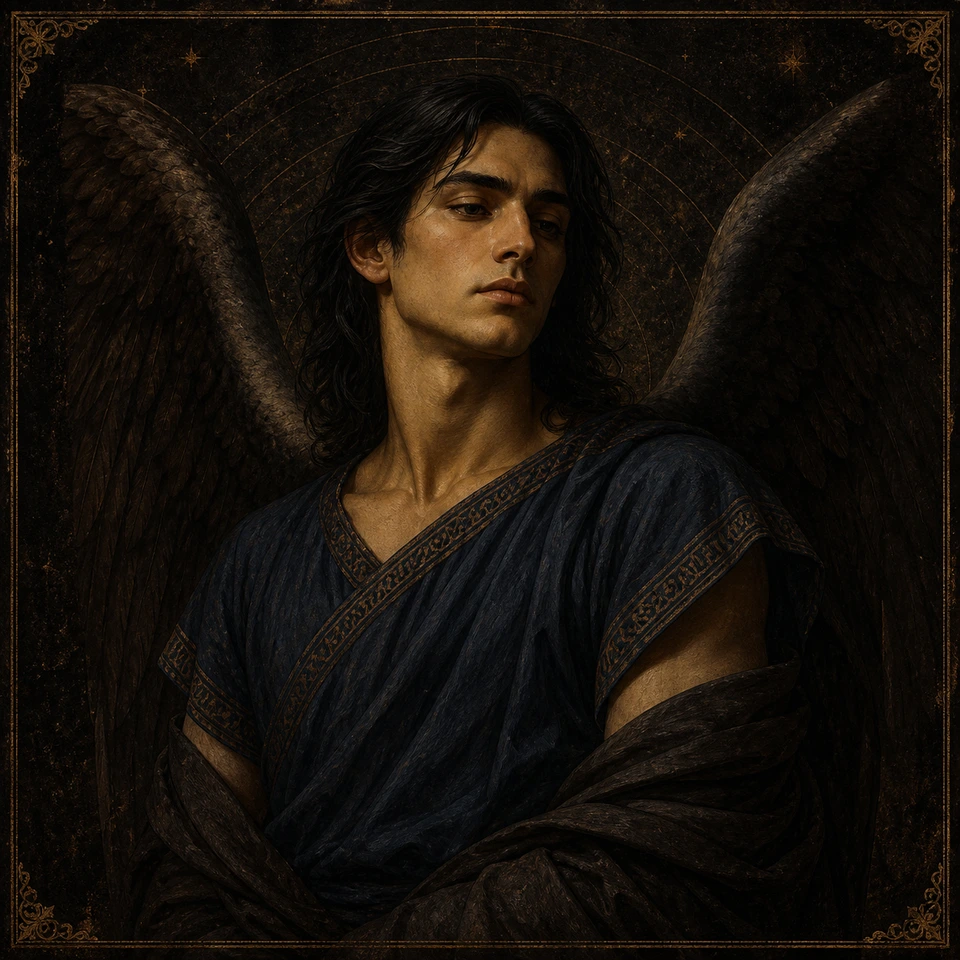
Moving silently through the mortal world, Hypnos embodies the absolute divine personification of sleep. As the son of Night and brother to Death, he possesses the staggering power to temporarily subdue Zeus and bear fallen warriors safely home.
Overview
A dark-winged youth waits among the needles of the tallest pine on Mount Ida. Below him Zeus watches Hera approach. Beyond the mountain, Achaeans and Trojans are locked in battle. Hypnos has crossed from Lemnos under mist, accepted a dangerous bargain, and hidden before Zeus can see him. This is no idle sleeper overcome by his own power. He is alert, calculating, and ready to turn a moment of unconsciousness into a military opening. When sleep finally closes over the ruler of gods, Hypnos runs to Poseidon and says the moment is open.
The scene from Iliad 14 gives Hypnos memory and judgment as well as mastery. Hera has asked this before. After Heracles sailed from Troy, Hypnos once subdued Zeus while Hera drove the hero off course. Zeus woke in fury and hunted Sleep through heaven. Hypnos survived only because Night received her son and Zeus would not offend her. This time a golden throne is not enough. Hera must swear by Styx that Pasithea, the younger Charis whom Hypnos desires, will become his bride. Sleep bargains before he risks himself.
Hesiod places that watchful figure inside a greater darkness. Night bears Sleep, Death, and the Dreams. Near her remote house, Sleep and Death dwell beyond the Sun's rays. Yet kinship does not mean sameness. Hypnos roams peacefully over earth and sea and is kindly to mortals. Thanatos has an iron heart and holds everyone he takes. The old poem understands why sleep resembles death and why waking makes the difference absolute.
The brothers meet again over Sarpedon. After Patroclus kills the Lycian prince, Zeus orders Apollo to remove the body from the weapons, wash away the blood, anoint it with ambrosia, and wrap it in immortal clothing. Then the swift twin bearers carry Sarpedon home to Lycia, where kin can give him burial and a mound. Hypnos does not kill, judge, or rule below. He shares in the dignity of return.
Classical painters held onto that image. White-ground lekythoi in the British Museum and Metropolitan Museum show winged bearers lifting the dead. The British Museum catalogue also preserves the history of its own interpretation: an earlier Boreas and Zephyrus reading gave way to the present Hypnos and Thanatos identification, while the dead warrior remains perhaps Sarpedon. Pausanias recorded images of Sleep and Death at Sparta and described Night holding the two boys on the Chest of Cypselus. His wording gives one child white and the other black but does not say which is which.
The cult evidence is thinner than the poetry and pottery. Pausanias's Spartan notice places Hypnos among public divine images, but it does not preserve a festival, priesthood, offering list, or independent temple. This does not make Hypnos less divine. It marks the point where vivid epic action gives way to fragmentary practice. Greek Hypnos remains the kindly and dangerous interruption that even Zeus must endure: son sheltered by Night, brother beside Death, desired bridegroom, hidden strategist, and bearer who brings the fallen home.
Canonical identity
Canonical Identity
Hypnos functions as the absolute divine personification of sleep, giving the physiological condition a physical body, personal desires, fears, choices, and a distinct family lineage. His presence spans from the remote house of Night to Mount Ida, the battlefield, and Olympus itself. He is a highly active character rather than a passive ornament or a vague dream spirit; Homer depicts him demanding oaths, hiding from the wrath of Zeus, refusing Hera, and calculating the exact moment to strike. Greek witnesses maintain strict boundaries between Hypnos and the rulers of the underworld, Thanatos, and the separately named Dreams in Hesiod.
Linguistic Identity
Hypnos is the precise transliteration of the Greek Ὕπνος. Because a rigorously sourced historical pronunciation for a specific dialect and period is currently unavailable, no IPA or phonetic guide is supplied. The fundamental similarity between Hypnos and other death or dream figures never erases their independent actions or distinct names.
Sources and evidence
TEXTUAL · Supported
Hesiod names Sleep among the children whom Night bears without a partner.
- Source
- Hesiod; edited and translated by Hugh G. Evelyn-White, Theogony (1914)
- Reviewed edition
- Hugh G. Evelyn-White edition and English translation in Hesiod, the Homeric Hymns and Homerica, 1914 · translated by Hugh G. Evelyn-White · edited by Hugh G. Evelyn-White · Perseus Digital Library / Scaife ATLAS
- Exact locator
- Entry Theogony · Line 211-232
- Scope
- Archaic Greece · Ancient Greece
- Authority
- Ancient Greek genealogical poem in the Evelyn-White translation
- Certainty
- High
The poem places Hypnos in Night’s formidable generation and names Death and the Dreams nearby.
Open exact reviewed sourceTEXTUAL · Supported
Hesiod places Sleep and Death in Night’s remote house, then distinguishes peaceful, human-friendly Sleep from pitiless Death.
- Source
- Hesiod; edited and translated by Hugh G. Evelyn-White, Theogony (1914)
- Reviewed edition
- Hugh G. Evelyn-White edition and English translation in Hesiod, the Homeric Hymns and Homerica, 1914 · translated by Hugh G. Evelyn-White · edited by Hugh G. Evelyn-White · Perseus Digital Library / Scaife ATLAS
- Exact locator
- Entry Theogony · Line 744-766
- Scope
- Archaic Greece · Ancient Greece
- Authority
- Ancient Greek genealogical poem in the Evelyn-White translation
- Certainty
- High
Siblinghood does not erase the poem’s sharp moral and emotional contrast.
Open exact reviewed source5 reviewed sources for this section
- Hesiod; edited and translated by Hugh G. Evelyn-White, Theogony (1914)Hesiod, the Homeric Hymns and Homerica, London and New York, 1914 · Perseus Digital Library / Scaife ATLAS
- Homer; Monro and Allen Greek edition with edition-specific translations, Iliad (1920)Perseus CTS edition corpus; Greek edition, Oxford, 1908-1920 · Perseus Digital Library / Scaife ATLAS
- Pausanias; Spiro Greek edition and Jones/Ormerod translation volumes, Description of Greece (1935)Perseus CTS edition corpus, 1903-1935 · Perseus Digital Library / Scaife ATLAS
- British Museum, British Museum CollectionLive official museum collection · British Museum
- The Metropolitan Museum of Art, Open Access Collection and Collection APILive collection data and eligible public-domain images · The Metropolitan Museum of Art
Culture, tradition, period, and place
Hypnos belongs to ancient Greek poetic and visual traditions spanning archaic hexameter, Classical Athenian funerary pottery, and Pausanias's second-century AD account of older monuments. The evidence moves through the imagined house of Night beyond the paths of Sun, Lemnos, Imbros, Mount Ida in the Troad, the Trojan battlefield, Lycia, Sparta, and Olympia.
Those settings do different work. Ida is the place where Hypnos hides in a pine and acts within the Trojan War. Lycia receives Sarpedon's body. Sparta preserves a report of paired public images. Olympia preserves Pausanias's description of Night holding Sleep and Death on the Chest of Cypselus. The Attic lekythoi place the brothers inside funerary art. None of these places alone becomes a universal center of his worship.
Sources and evidence
TEXTUAL · Supported
Hidden in the pine on Mount Ida, Hypnos overcomes Zeus and runs to tell Poseidon that the god is sleeping.
- Source
- Homer; Monro and Allen Greek edition with edition-specific translations, Iliad (1920)
- Reviewed edition
- A. T. Murray English translation, volumes I-II, 1924-1925 · translated by A. T. Murray · Perseus Digital Library / Scaife ATLAS
- Exact locator
- Book 14 · Line 286-360
- Scope
- Archaic Greece · Ancient Greece
- Authority
- Homer, Iliad, A. T. Murray 1924-1925 English translation, eng3 component
- Certainty
- High
His power creates a brief military opening but does not grant permanent command over Zeus.
Open exact reviewed sourceTEXTUAL · Supported
Zeus orders Apollo to prepare Sarpedon’s body and entrust it to the twin brothers Sleep and Death for swift return to Lycia.
- Source
- Homer; Monro and Allen Greek edition with edition-specific translations, Iliad (1920)
- Reviewed edition
- A. T. Murray English translation, volumes I-II, 1924-1925 · translated by A. T. Murray · Perseus Digital Library / Scaife ATLAS
- Exact locator
- Book 16 · Line 667-683
- Scope
- Archaic Greece · Lycia
- Authority
- Homer, Iliad, A. T. Murray 1924-1925 English translation, eng3 component
- Certainty
- High
Hypnos and Thanatos carry the cleansed and clothed body home for burial.
Open exact reviewed sourceTEXTUAL · Supported
In his Spartan sequence, Pausanias records an image of Aphrodite Ambologera and also images of Sleep and Death near the statues of Pausanias; he says the brothers were understood in accordance with the Iliad.
- Source
- Pausanias; Spiro Greek edition and Jones/Ormerod translation volumes, Description of Greece (1935)
- Reviewed edition
- W. H. S. Jones and H. A. Ormerod English translation volumes, 1918-1935 · translated by W. H. S. Jones and H. A. Ormerod, volume-dependent · Perseus Digital Library / Scaife ATLAS
- Exact locator
- Book 3 · Chapter 18 · Section 1
- Scope
- Greek religion under Roman imperial rule · Sparta
- Authority
- Pausanias, Description of Greece, Jones and Ormerod 1918-1935 English translation, eng2 component
- Certainty
- Secure as Pausanias's report
The exact sentence establishes public images and their literary brotherhood, not a separate Hypnos temple, rite, or priesthood.
Open exact reviewed sourceMATERIAL CULTURE · Supported
Pausanias describes Night holding Sleep and Death as boys on the Chest of Cypselus, one white and one black, with their names inscribed.
- Source
- Pausanias; Spiro Greek edition and Jones/Ormerod translation volumes, Description of Greece (1935)
- Reviewed edition
- W. H. S. Jones and H. A. Ormerod English translation volumes, 1918-1935 · translated by W. H. S. Jones and H. A. Ormerod, volume-dependent · Perseus Digital Library / Scaife ATLAS
- Exact locator
- Book 5 · Chapter 18 · Section 1
- Scope
- Greek religion under Roman imperial rule · Olympia
- Authority
- Pausanias, Description of Greece, Jones and Ormerod 1918-1935 English translation, eng2 component
- Certainty
- Secure as Pausanias's report
Pausanias calls Night the nurse of both boys and does not assign white or black to a named brother in his wording.
Open exact reviewed sourceMATERIAL CULTURE · Supported
The British Museum currently catalogs white-ground lekythos 1884,0223.2 (D59) as Hypnos and Thanatos carrying a dead warrior, perhaps Sarpedon; its curatorial history records an earlier Boreas and Zephyrus identification.
- Source
- British Museum, British Museum Collection
- Reviewed edition
- British Museum Collection Online, lekythos 1884,0223.2 (D59) · Department of Greece and Rome, British Museum
- Exact locator
- MuseumObjectId 1884,0223.2 (D59) · Entry Object description; curator comments; attribution; culture; production date; material; registration · RecordUrl https://www.britishmuseum.org/collection/object/G_1884-0223-2
- Scope
- Classical Greece · Attica
- Authority
- British Museum Collection Online, exact object record 1884,0223.2
- Certainty
- Secure for current catalogue description; warrior identity and identification history qualified
The current catalogue describes Hypnos as youthful, winged, long-haired, and dressed in a short bordered chiton while preserving the superseded interpretation.
Open exact reviewed sourceMATERIAL CULTURE · Supported
Met object 251387, accession 23.160.43a, b, is a Classical Attic white-ground terracotta lekythos depicting Hypnos and Thanatos transporting a dead youth.
- Source
- The Metropolitan Museum of Art, Open Access Collection and Collection API
- Reviewed edition
- Metropolitan Museum of Art Collection Online and Open Access API, object 251387, accession 23.160.43a, b · Department of Greek and Roman Art, The Metropolitan Museum of Art
- Exact locator
- MuseumObjectId 23.160.43a, b; object 251387 · Entry Title; artist attribution; date; culture; medium; dimensions; description; Open Access API status · RecordUrl https://www.metmuseum.org/art/collection/search/251387
- Scope
- Classical Greece · Attica
- Authority
- Metropolitan Museum of Art Collection Online and Open Access API, exact object 251387
- Certainty
- Secure object-level catalogue identification
The exact page and API confirm the Painter of the New York Hypnos attribution, circa 440-430 BC date, Greek Attic culture, terracotta white-ground medium, and public-domain status.
Open exact reviewed source5 reviewed sources for this section
- Hesiod; edited and translated by Hugh G. Evelyn-White, Theogony (1914)Hesiod, the Homeric Hymns and Homerica, London and New York, 1914 · Perseus Digital Library / Scaife ATLAS
- Homer; Monro and Allen Greek edition with edition-specific translations, Iliad (1920)Perseus CTS edition corpus; Greek edition, Oxford, 1908-1920 · Perseus Digital Library / Scaife ATLAS
- Pausanias; Spiro Greek edition and Jones/Ormerod translation volumes, Description of Greece (1935)Perseus CTS edition corpus, 1903-1935 · Perseus Digital Library / Scaife ATLAS
- British Museum, British Museum CollectionLive official museum collection · British Museum
- The Metropolitan Museum of Art, Open Access Collection and Collection APILive collection data and eligible public-domain images · The Metropolitan Museum of Art
Historical development
The earliest evidence assembled here gives Hypnos his largest scale. Hesiod places him in Night's family and gives him a cosmic dwelling near the meeting of Night and Day. Homer makes him a speaking divine agent who can refuse Hera, negotiate a reward, disguise himself as a mountain bird, subdue Zeus, and carry a hero's body with Thanatos.
Classical funerary painters concentrated on the paired brothers as bearers of the dead. Pausanias later described monuments that joined Sleep and Death through family and contrast. This movement from cosmogony to epic action to funerary image is not a simple march toward one fixed theology. Each medium chooses what sleep means in its own setting: nightly mercy, dangerous divine power, protective transport, or visual kinship with death. The wider history remains open because no dedicated cult history or comprehensive material corpus has yet been added.
Sources and evidence
TEXTUAL · Supported
Hesiod places Sleep and Death in Night’s remote house, then distinguishes peaceful, human-friendly Sleep from pitiless Death.
- Source
- Hesiod; edited and translated by Hugh G. Evelyn-White, Theogony (1914)
- Reviewed edition
- Hugh G. Evelyn-White edition and English translation in Hesiod, the Homeric Hymns and Homerica, 1914 · translated by Hugh G. Evelyn-White · edited by Hugh G. Evelyn-White · Perseus Digital Library / Scaife ATLAS
- Exact locator
- Entry Theogony · Line 744-766
- Scope
- Archaic Greece · Ancient Greece
- Authority
- Ancient Greek genealogical poem in the Evelyn-White translation
- Certainty
- High
Siblinghood does not erase the poem’s sharp moral and emotional contrast.
Open exact reviewed sourceTEXTUAL · Supported
Hera asks Hypnos to subdue Zeus and secures his agreement by swearing that Pasithea will become his bride.
- Source
- Homer; Monro and Allen Greek edition with edition-specific translations, Iliad (1920)
- Reviewed edition
- A. T. Murray English translation, volumes I-II, 1924-1925 · translated by A. T. Murray · Perseus Digital Library / Scaife ATLAS
- Exact locator
- Book 14 · Line 230-291
- Scope
- Archaic Greece · Ancient Greece
- Authority
- Homer, Iliad, A. T. Murray 1924-1925 English translation, eng3 component
- Certainty
- High
Hypnos refuses a throne, remembers danger, and demands the marriage he desires.
Open exact reviewed sourceTEXTUAL · Supported
Zeus orders Apollo to prepare Sarpedon’s body and entrust it to the twin brothers Sleep and Death for swift return to Lycia.
- Source
- Homer; Monro and Allen Greek edition with edition-specific translations, Iliad (1920)
- Reviewed edition
- A. T. Murray English translation, volumes I-II, 1924-1925 · translated by A. T. Murray · Perseus Digital Library / Scaife ATLAS
- Exact locator
- Book 16 · Line 667-683
- Scope
- Archaic Greece · Lycia
- Authority
- Homer, Iliad, A. T. Murray 1924-1925 English translation, eng3 component
- Certainty
- High
Hypnos and Thanatos carry the cleansed and clothed body home for burial.
Open exact reviewed sourceMATERIAL CULTURE · Supported
Pausanias describes Night holding Sleep and Death as boys on the Chest of Cypselus, one white and one black, with their names inscribed.
- Source
- Pausanias; Spiro Greek edition and Jones/Ormerod translation volumes, Description of Greece (1935)
- Reviewed edition
- W. H. S. Jones and H. A. Ormerod English translation volumes, 1918-1935 · translated by W. H. S. Jones and H. A. Ormerod, volume-dependent · Perseus Digital Library / Scaife ATLAS
- Exact locator
- Book 5 · Chapter 18 · Section 1
- Scope
- Greek religion under Roman imperial rule · Olympia
- Authority
- Pausanias, Description of Greece, Jones and Ormerod 1918-1935 English translation, eng2 component
- Certainty
- Secure as Pausanias's report
Pausanias calls Night the nurse of both boys and does not assign white or black to a named brother in his wording.
Open exact reviewed sourceMATERIAL CULTURE · Supported
The British Museum currently catalogs white-ground lekythos 1884,0223.2 (D59) as Hypnos and Thanatos carrying a dead warrior, perhaps Sarpedon; its curatorial history records an earlier Boreas and Zephyrus identification.
- Source
- British Museum, British Museum Collection
- Reviewed edition
- British Museum Collection Online, lekythos 1884,0223.2 (D59) · Department of Greece and Rome, British Museum
- Exact locator
- MuseumObjectId 1884,0223.2 (D59) · Entry Object description; curator comments; attribution; culture; production date; material; registration · RecordUrl https://www.britishmuseum.org/collection/object/G_1884-0223-2
- Scope
- Classical Greece · Attica
- Authority
- British Museum Collection Online, exact object record 1884,0223.2
- Certainty
- Secure for current catalogue description; warrior identity and identification history qualified
The current catalogue describes Hypnos as youthful, winged, long-haired, and dressed in a short bordered chiton while preserving the superseded interpretation.
Open exact reviewed sourceMATERIAL CULTURE · Supported
Met object 251387, accession 23.160.43a, b, is a Classical Attic white-ground terracotta lekythos depicting Hypnos and Thanatos transporting a dead youth.
- Source
- The Metropolitan Museum of Art, Open Access Collection and Collection API
- Reviewed edition
- Metropolitan Museum of Art Collection Online and Open Access API, object 251387, accession 23.160.43a, b · Department of Greek and Roman Art, The Metropolitan Museum of Art
- Exact locator
- MuseumObjectId 23.160.43a, b; object 251387 · Entry Title; artist attribution; date; culture; medium; dimensions; description; Open Access API status · RecordUrl https://www.metmuseum.org/art/collection/search/251387
- Scope
- Classical Greece · Attica
- Authority
- Metropolitan Museum of Art Collection Online and Open Access API, exact object 251387
- Certainty
- Secure object-level catalogue identification
The exact page and API confirm the Painter of the New York Hypnos attribution, circa 440-430 BC date, Greek Attic culture, terracotta white-ground medium, and public-domain status.
Open exact reviewed source5 reviewed sources for this section
- Hesiod; edited and translated by Hugh G. Evelyn-White, Theogony (1914)Hesiod, the Homeric Hymns and Homerica, London and New York, 1914 · Perseus Digital Library / Scaife ATLAS
- Homer; Monro and Allen Greek edition with edition-specific translations, Iliad (1920)Perseus CTS edition corpus; Greek edition, Oxford, 1908-1920 · Perseus Digital Library / Scaife ATLAS
- Pausanias; Spiro Greek edition and Jones/Ormerod translation volumes, Description of Greece (1935)Perseus CTS edition corpus, 1903-1935 · Perseus Digital Library / Scaife ATLAS
- British Museum, British Museum CollectionLive official museum collection · British Museum
- The Metropolitan Museum of Art, Open Access Collection and Collection APILive collection data and eligible public-domain images · The Metropolitan Museum of Art
Attested roles and historical themes
Roles, powers, and limits
Sleep reaches gods and mortals. Hera addresses Hypnos as lord over both, yet his own speech shows limits. He fears Zeus because an earlier service to Hera nearly ended with his destruction. He agrees only after a sworn bargain, conceals himself in a pine, and leaves when his work is done. His mastery depends on memory, timing, concealment, and negotiation rather than brute force.
Hesiod draws the clearest boundary between the brothers. Hypnos travels peacefully across earth and sea and is kindly to people. Thanatos has an iron heart and does not release those he seizes. When they bear Sarpedon together, sleep resembles death without becoming death. Hypnos can close consciousness and carry the dead, but he neither rules the underworld nor decides who must die.
Sources and evidence
TEXTUAL · Supported
Hesiod places Sleep and Death in Night’s remote house, then distinguishes peaceful, human-friendly Sleep from pitiless Death.
- Source
- Hesiod; edited and translated by Hugh G. Evelyn-White, Theogony (1914)
- Reviewed edition
- Hugh G. Evelyn-White edition and English translation in Hesiod, the Homeric Hymns and Homerica, 1914 · translated by Hugh G. Evelyn-White · edited by Hugh G. Evelyn-White · Perseus Digital Library / Scaife ATLAS
- Exact locator
- Entry Theogony · Line 744-766
- Scope
- Archaic Greece · Ancient Greece
- Authority
- Ancient Greek genealogical poem in the Evelyn-White translation
- Certainty
- High
Siblinghood does not erase the poem’s sharp moral and emotional contrast.
Open exact reviewed sourceTEXTUAL · Supported
Hidden in the pine on Mount Ida, Hypnos overcomes Zeus and runs to tell Poseidon that the god is sleeping.
- Source
- Homer; Monro and Allen Greek edition with edition-specific translations, Iliad (1920)
- Reviewed edition
- A. T. Murray English translation, volumes I-II, 1924-1925 · translated by A. T. Murray · Perseus Digital Library / Scaife ATLAS
- Exact locator
- Book 14 · Line 286-360
- Scope
- Archaic Greece · Ancient Greece
- Authority
- Homer, Iliad, A. T. Murray 1924-1925 English translation, eng3 component
- Certainty
- High
His power creates a brief military opening but does not grant permanent command over Zeus.
Open exact reviewed sourceTEXTUAL · Supported
Zeus orders Apollo to prepare Sarpedon’s body and entrust it to the twin brothers Sleep and Death for swift return to Lycia.
- Source
- Homer; Monro and Allen Greek edition with edition-specific translations, Iliad (1920)
- Reviewed edition
- A. T. Murray English translation, volumes I-II, 1924-1925 · translated by A. T. Murray · Perseus Digital Library / Scaife ATLAS
- Exact locator
- Book 16 · Line 667-683
- Scope
- Archaic Greece · Lycia
- Authority
- Homer, Iliad, A. T. Murray 1924-1925 English translation, eng3 component
- Certainty
- High
Hypnos and Thanatos carry the cleansed and clothed body home for burial.
Open exact reviewed source2 reviewed sources for this section
- Hesiod; edited and translated by Hugh G. Evelyn-White, Theogony (1914)Hesiod, the Homeric Hymns and Homerica, London and New York, 1914 · Perseus Digital Library / Scaife ATLAS
- Homer; Monro and Allen Greek edition with edition-specific translations, Iliad (1920)Perseus CTS edition corpus; Greek edition, Oxford, 1908-1920 · Perseus Digital Library / Scaife ATLAS
Epithets and titles
No securely bounded cult epithet for Hypnos is established by these witnesses; ordinary descriptions and family names are not promoted into titles.
3 reviewed sources for this section
- Hesiod; edited and translated by Hugh G. Evelyn-White, Theogony (1914)Hesiod, the Homeric Hymns and Homerica, London and New York, 1914 · Perseus Digital Library / Scaife ATLAS
- Homer; Monro and Allen Greek edition with edition-specific translations, Iliad (1920)Perseus CTS edition corpus; Greek edition, Oxford, 1908-1920 · Perseus Digital Library / Scaife ATLAS
- Pausanias; Spiro Greek edition and Jones/Ormerod translation volumes, Description of Greece (1935)Perseus CTS edition corpus, 1903-1935 · Perseus Digital Library / Scaife ATLAS
Worship and cult
The strongest public religious evidence in this selection is visual. In a Spartan sequence near statues of Pausanias, the travel writer records an image of Aphrodite Ambologera and also images of Sleep and Death. His brief sentence places Hypnos in a civic sacred landscape and says the brothers were understood in accordance with the Iliad. It does not name a priesthood, sacrifice, hymn, altar, or independent temple belonging to Hypnos.
Epic invocations and funerary scenes show religious imagination, but they cannot restore a missing ritual calendar. Hypnos was more than a literary abstraction, yet the surviving evidence used here remains too thin to reconstruct how Spartans approached the image, what they offered, or whether the pairing had a regular ceremony.
Sources and evidence
TEXTUAL · Supported
In his Spartan sequence, Pausanias records an image of Aphrodite Ambologera and also images of Sleep and Death near the statues of Pausanias; he says the brothers were understood in accordance with the Iliad.
- Source
- Pausanias; Spiro Greek edition and Jones/Ormerod translation volumes, Description of Greece (1935)
- Reviewed edition
- W. H. S. Jones and H. A. Ormerod English translation volumes, 1918-1935 · translated by W. H. S. Jones and H. A. Ormerod, volume-dependent · Perseus Digital Library / Scaife ATLAS
- Exact locator
- Book 3 · Chapter 18 · Section 1
- Scope
- Greek religion under Roman imperial rule · Sparta
- Authority
- Pausanias, Description of Greece, Jones and Ormerod 1918-1935 English translation, eng2 component
- Certainty
- Secure as Pausanias's report
The exact sentence establishes public images and their literary brotherhood, not a separate Hypnos temple, rite, or priesthood.
Open exact reviewed source1 reviewed source for this section
- Pausanias; Spiro Greek edition and Jones/Ormerod translation volumes, Description of Greece (1935)Perseus CTS edition corpus, 1903-1935 · Perseus Digital Library / Scaife ATLAS
Temples, sanctuaries, and sacred places
Sparta provides the only securely located public images in the exact travel passages reviewed here. Pausanias places images of Sleep and Death in the same local sequence as Aphrodite Ambologera and the statues of Pausanias the Spartan. He does not call the spot a separate temple of Hypnos.
Olympia contributes a different sacred setting. The Chest of Cypselus stood in Hera's temple and carried an image of Night with the boys Sleep and Death. Its presence at Olympia is a sacred material setting, not proof that Hypnos possessed the sanctuary. Mount Ida and Lycia belong to epic narrative, while the white-ground lekythoi belong to funerary use. Each place keeps the character of its own evidence.
Sources and evidence
TEXTUAL · Supported
In his Spartan sequence, Pausanias records an image of Aphrodite Ambologera and also images of Sleep and Death near the statues of Pausanias; he says the brothers were understood in accordance with the Iliad.
- Source
- Pausanias; Spiro Greek edition and Jones/Ormerod translation volumes, Description of Greece (1935)
- Reviewed edition
- W. H. S. Jones and H. A. Ormerod English translation volumes, 1918-1935 · translated by W. H. S. Jones and H. A. Ormerod, volume-dependent · Perseus Digital Library / Scaife ATLAS
- Exact locator
- Book 3 · Chapter 18 · Section 1
- Scope
- Greek religion under Roman imperial rule · Sparta
- Authority
- Pausanias, Description of Greece, Jones and Ormerod 1918-1935 English translation, eng2 component
- Certainty
- Secure as Pausanias's report
The exact sentence establishes public images and their literary brotherhood, not a separate Hypnos temple, rite, or priesthood.
Open exact reviewed sourceMATERIAL CULTURE · Supported
Pausanias describes Night holding Sleep and Death as boys on the Chest of Cypselus, one white and one black, with their names inscribed.
- Source
- Pausanias; Spiro Greek edition and Jones/Ormerod translation volumes, Description of Greece (1935)
- Reviewed edition
- W. H. S. Jones and H. A. Ormerod English translation volumes, 1918-1935 · translated by W. H. S. Jones and H. A. Ormerod, volume-dependent · Perseus Digital Library / Scaife ATLAS
- Exact locator
- Book 5 · Chapter 18 · Section 1
- Scope
- Greek religion under Roman imperial rule · Olympia
- Authority
- Pausanias, Description of Greece, Jones and Ormerod 1918-1935 English translation, eng2 component
- Certainty
- Secure as Pausanias's report
Pausanias calls Night the nurse of both boys and does not assign white or black to a named brother in his wording.
Open exact reviewed sourceMATERIAL CULTURE · Supported
The British Museum currently catalogs white-ground lekythos 1884,0223.2 (D59) as Hypnos and Thanatos carrying a dead warrior, perhaps Sarpedon; its curatorial history records an earlier Boreas and Zephyrus identification.
- Source
- British Museum, British Museum Collection
- Reviewed edition
- British Museum Collection Online, lekythos 1884,0223.2 (D59) · Department of Greece and Rome, British Museum
- Exact locator
- MuseumObjectId 1884,0223.2 (D59) · Entry Object description; curator comments; attribution; culture; production date; material; registration · RecordUrl https://www.britishmuseum.org/collection/object/G_1884-0223-2
- Scope
- Classical Greece · Attica
- Authority
- British Museum Collection Online, exact object record 1884,0223.2
- Certainty
- Secure for current catalogue description; warrior identity and identification history qualified
The current catalogue describes Hypnos as youthful, winged, long-haired, and dressed in a short bordered chiton while preserving the superseded interpretation.
Open exact reviewed sourceMATERIAL CULTURE · Supported
Met object 251387, accession 23.160.43a, b, is a Classical Attic white-ground terracotta lekythos depicting Hypnos and Thanatos transporting a dead youth.
- Source
- The Metropolitan Museum of Art, Open Access Collection and Collection API
- Reviewed edition
- Metropolitan Museum of Art Collection Online and Open Access API, object 251387, accession 23.160.43a, b · Department of Greek and Roman Art, The Metropolitan Museum of Art
- Exact locator
- MuseumObjectId 23.160.43a, b; object 251387 · Entry Title; artist attribution; date; culture; medium; dimensions; description; Open Access API status · RecordUrl https://www.metmuseum.org/art/collection/search/251387
- Scope
- Classical Greece · Attica
- Authority
- Metropolitan Museum of Art Collection Online and Open Access API, exact object 251387
- Certainty
- Secure object-level catalogue identification
The exact page and API confirm the Painter of the New York Hypnos attribution, circa 440-430 BC date, Greek Attic culture, terracotta white-ground medium, and public-domain status.
Open exact reviewed source3 reviewed sources for this section
- Pausanias; Spiro Greek edition and Jones/Ormerod translation volumes, Description of Greece (1935)Perseus CTS edition corpus, 1903-1935 · Perseus Digital Library / Scaife ATLAS
- British Museum, British Museum CollectionLive official museum collection · British Museum
- The Metropolitan Museum of Art, Open Access Collection and Collection APILive collection data and eligible public-domain images · The Metropolitan Museum of Art
Festivals and processions
No securely named Greek festival or procession devoted to Hypnos appears in these witnesses. The absence matters because the stories contain movement that can look ceremonial at a glance: Hypnos and Thanatos bear Sarpedon to Lycia, and painted bearers carry a dead youth toward burial. Those are epic and funerary actions, not annual feast names.
The Spartan images may once have stood within a richer ceremonial setting, but Pausanias gives no calendar, officiant, or procession. The annual life of the image is therefore hidden from us. Modern devotional preference cannot be used to supply the missing name or rite.
Sources and evidence
TEXTUAL · Supported
Zeus orders Apollo to prepare Sarpedon’s body and entrust it to the twin brothers Sleep and Death for swift return to Lycia.
- Source
- Homer; Monro and Allen Greek edition with edition-specific translations, Iliad (1920)
- Reviewed edition
- A. T. Murray English translation, volumes I-II, 1924-1925 · translated by A. T. Murray · Perseus Digital Library / Scaife ATLAS
- Exact locator
- Book 16 · Line 667-683
- Scope
- Archaic Greece · Lycia
- Authority
- Homer, Iliad, A. T. Murray 1924-1925 English translation, eng3 component
- Certainty
- High
Hypnos and Thanatos carry the cleansed and clothed body home for burial.
Open exact reviewed sourceTEXTUAL · Supported
In his Spartan sequence, Pausanias records an image of Aphrodite Ambologera and also images of Sleep and Death near the statues of Pausanias; he says the brothers were understood in accordance with the Iliad.
- Source
- Pausanias; Spiro Greek edition and Jones/Ormerod translation volumes, Description of Greece (1935)
- Reviewed edition
- W. H. S. Jones and H. A. Ormerod English translation volumes, 1918-1935 · translated by W. H. S. Jones and H. A. Ormerod, volume-dependent · Perseus Digital Library / Scaife ATLAS
- Exact locator
- Book 3 · Chapter 18 · Section 1
- Scope
- Greek religion under Roman imperial rule · Sparta
- Authority
- Pausanias, Description of Greece, Jones and Ormerod 1918-1935 English translation, eng2 component
- Certainty
- Secure as Pausanias's report
The exact sentence establishes public images and their literary brotherhood, not a separate Hypnos temple, rite, or priesthood.
Open exact reviewed sourceMATERIAL CULTURE · Supported
The British Museum currently catalogs white-ground lekythos 1884,0223.2 (D59) as Hypnos and Thanatos carrying a dead warrior, perhaps Sarpedon; its curatorial history records an earlier Boreas and Zephyrus identification.
- Source
- British Museum, British Museum Collection
- Reviewed edition
- British Museum Collection Online, lekythos 1884,0223.2 (D59) · Department of Greece and Rome, British Museum
- Exact locator
- MuseumObjectId 1884,0223.2 (D59) · Entry Object description; curator comments; attribution; culture; production date; material; registration · RecordUrl https://www.britishmuseum.org/collection/object/G_1884-0223-2
- Scope
- Classical Greece · Attica
- Authority
- British Museum Collection Online, exact object record 1884,0223.2
- Certainty
- Secure for current catalogue description; warrior identity and identification history qualified
The current catalogue describes Hypnos as youthful, winged, long-haired, and dressed in a short bordered chiton while preserving the superseded interpretation.
Open exact reviewed sourceMATERIAL CULTURE · Supported
Met object 251387, accession 23.160.43a, b, is a Classical Attic white-ground terracotta lekythos depicting Hypnos and Thanatos transporting a dead youth.
- Source
- The Metropolitan Museum of Art, Open Access Collection and Collection API
- Reviewed edition
- Metropolitan Museum of Art Collection Online and Open Access API, object 251387, accession 23.160.43a, b · Department of Greek and Roman Art, The Metropolitan Museum of Art
- Exact locator
- MuseumObjectId 23.160.43a, b; object 251387 · Entry Title; artist attribution; date; culture; medium; dimensions; description; Open Access API status · RecordUrl https://www.metmuseum.org/art/collection/search/251387
- Scope
- Classical Greece · Attica
- Authority
- Metropolitan Museum of Art Collection Online and Open Access API, exact object 251387
- Certainty
- Secure object-level catalogue identification
The exact page and API confirm the Painter of the New York Hypnos attribution, circa 440-430 BC date, Greek Attic culture, terracotta white-ground medium, and public-domain status.
Open exact reviewed source5 reviewed sources for this section
- Hesiod; edited and translated by Hugh G. Evelyn-White, Theogony (1914)Hesiod, the Homeric Hymns and Homerica, London and New York, 1914 · Perseus Digital Library / Scaife ATLAS
- Homer; Monro and Allen Greek edition with edition-specific translations, Iliad (1920)Perseus CTS edition corpus; Greek edition, Oxford, 1908-1920 · Perseus Digital Library / Scaife ATLAS
- Pausanias; Spiro Greek edition and Jones/Ormerod translation volumes, Description of Greece (1935)Perseus CTS edition corpus, 1903-1935 · Perseus Digital Library / Scaife ATLAS
- British Museum, British Museum CollectionLive official museum collection · British Museum
- The Metropolitan Museum of Art, Open Access Collection and Collection APILive collection data and eligible public-domain images · The Metropolitan Museum of Art
Offerings, votives, and ritual evidence
No dependable ancient offering list for Hypnos survives in the evidence gathered here. Homer gives a divine bargain: Hera first offers a golden throne and footstool, which Hypnos refuses, then promises Pasithea as his bride under an oath by Styx. That exchange reveals danger and negotiation among gods. It is not a human offering rite.
Apollo later washes Sarpedon, anoints him with ambrosia, dresses him in immortal clothing, and gives him to Sleep and Death. The sequence honors and transports a heroic corpse. It supplies no instruction for ambrosia, funerary substances, sedatives, or sleep-inducing plants in devotion.
Sources and evidence
TEXTUAL · Supported
Hera asks Hypnos to subdue Zeus and secures his agreement by swearing that Pasithea will become his bride.
- Source
- Homer; Monro and Allen Greek edition with edition-specific translations, Iliad (1920)
- Reviewed edition
- A. T. Murray English translation, volumes I-II, 1924-1925 · translated by A. T. Murray · Perseus Digital Library / Scaife ATLAS
- Exact locator
- Book 14 · Line 230-291
- Scope
- Archaic Greece · Ancient Greece
- Authority
- Homer, Iliad, A. T. Murray 1924-1925 English translation, eng3 component
- Certainty
- High
Hypnos refuses a throne, remembers danger, and demands the marriage he desires.
Open exact reviewed sourceTEXTUAL · Supported
Zeus orders Apollo to prepare Sarpedon’s body and entrust it to the twin brothers Sleep and Death for swift return to Lycia.
- Source
- Homer; Monro and Allen Greek edition with edition-specific translations, Iliad (1920)
- Reviewed edition
- A. T. Murray English translation, volumes I-II, 1924-1925 · translated by A. T. Murray · Perseus Digital Library / Scaife ATLAS
- Exact locator
- Book 16 · Line 667-683
- Scope
- Archaic Greece · Lycia
- Authority
- Homer, Iliad, A. T. Murray 1924-1925 English translation, eng3 component
- Certainty
- High
Hypnos and Thanatos carry the cleansed and clothed body home for burial.
Open exact reviewed source1 reviewed source for this section
- Homer; Monro and Allen Greek edition with edition-specific translations, Iliad (1920)Perseus CTS edition corpus; Greek edition, Oxford, 1908-1920 · Perseus Digital Library / Scaife ATLAS
Iconography and material culture
Winged youth is the strongest material form. British Museum lekythos 1884,0223.2 gives the figure currently identified as Hypnos long straight hair, a short bordered chiton, and wings as he helps lift a dead warrior. The catalogue records an earlier identification as Boreas and Zephyrus carrying perhaps Memnon, so the present Hypnos and Thanatos reading should retain that history rather than appear timeless. Met object 251387, accession 23.160.43a, b, supplies a close Classical parallel with Hypnos and Thanatos transporting a dead youth.
The Chest of Cypselus offered another solution: Night held Sleep and Death as boys, one white and one black. Pausanias does not tell us which color belonged to which brother in his wording, so the contrast remains unresolved. These exact Greek records do not establish beds, pillows, poppies, reversed torches, butterflies, moons, Christian angels, or modern fairy forms as universal attributes of Hypnos.
Sources and evidence
MATERIAL CULTURE · Supported
Pausanias describes Night holding Sleep and Death as boys on the Chest of Cypselus, one white and one black, with their names inscribed.
- Source
- Pausanias; Spiro Greek edition and Jones/Ormerod translation volumes, Description of Greece (1935)
- Reviewed edition
- W. H. S. Jones and H. A. Ormerod English translation volumes, 1918-1935 · translated by W. H. S. Jones and H. A. Ormerod, volume-dependent · Perseus Digital Library / Scaife ATLAS
- Exact locator
- Book 5 · Chapter 18 · Section 1
- Scope
- Greek religion under Roman imperial rule · Olympia
- Authority
- Pausanias, Description of Greece, Jones and Ormerod 1918-1935 English translation, eng2 component
- Certainty
- Secure as Pausanias's report
Pausanias calls Night the nurse of both boys and does not assign white or black to a named brother in his wording.
Open exact reviewed sourceMATERIAL CULTURE · Supported
The British Museum currently catalogs white-ground lekythos 1884,0223.2 (D59) as Hypnos and Thanatos carrying a dead warrior, perhaps Sarpedon; its curatorial history records an earlier Boreas and Zephyrus identification.
- Source
- British Museum, British Museum Collection
- Reviewed edition
- British Museum Collection Online, lekythos 1884,0223.2 (D59) · Department of Greece and Rome, British Museum
- Exact locator
- MuseumObjectId 1884,0223.2 (D59) · Entry Object description; curator comments; attribution; culture; production date; material; registration · RecordUrl https://www.britishmuseum.org/collection/object/G_1884-0223-2
- Scope
- Classical Greece · Attica
- Authority
- British Museum Collection Online, exact object record 1884,0223.2
- Certainty
- Secure for current catalogue description; warrior identity and identification history qualified
The current catalogue describes Hypnos as youthful, winged, long-haired, and dressed in a short bordered chiton while preserving the superseded interpretation.
Open exact reviewed sourceMATERIAL CULTURE · Supported
Met object 251387, accession 23.160.43a, b, is a Classical Attic white-ground terracotta lekythos depicting Hypnos and Thanatos transporting a dead youth.
- Source
- The Metropolitan Museum of Art, Open Access Collection and Collection API
- Reviewed edition
- Metropolitan Museum of Art Collection Online and Open Access API, object 251387, accession 23.160.43a, b · Department of Greek and Roman Art, The Metropolitan Museum of Art
- Exact locator
- MuseumObjectId 23.160.43a, b; object 251387 · Entry Title; artist attribution; date; culture; medium; dimensions; description; Open Access API status · RecordUrl https://www.metmuseum.org/art/collection/search/251387
- Scope
- Classical Greece · Attica
- Authority
- Metropolitan Museum of Art Collection Online and Open Access API, exact object 251387
- Certainty
- Secure object-level catalogue identification
The exact page and API confirm the Painter of the New York Hypnos attribution, circa 440-430 BC date, Greek Attic culture, terracotta white-ground medium, and public-domain status.
Open exact reviewed source3 reviewed sources for this section
- Pausanias; Spiro Greek edition and Jones/Ormerod translation volumes, Description of Greece (1935)Perseus CTS edition corpus, 1903-1935 · Perseus Digital Library / Scaife ATLAS
- British Museum, British Museum CollectionLive official museum collection · British Museum
- The Metropolitan Museum of Art, Open Access Collection and Collection APILive collection data and eligible public-domain images · The Metropolitan Museum of Art
Animals, plants, and embodied forms
Hypnos takes the likeness of a bird while hiding on Ida. Homer says the gods call it Chalcis and mortals Cymindis. The transformation belongs to one act of concealment and cannot securely identify a modern species. It is an embodied tactic, not a standing sacred-animal law.
Lotus, crocus, and hyacinth spring beneath Zeus and Hera in the surrounding Ida scene, but the earth produces them for the divine couch before Hypnos completes his work. They are neither gifts to Sleep nor fixed emblems of him. No poppy, medicinal herb, sedative, or sleep-inducing plant belongs to Hypnos in the reviewed Greek passages.
Sources and evidence
TEXTUAL · Supported
Hidden in the pine on Mount Ida, Hypnos overcomes Zeus and runs to tell Poseidon that the god is sleeping.
- Source
- Homer; Monro and Allen Greek edition with edition-specific translations, Iliad (1920)
- Reviewed edition
- A. T. Murray English translation, volumes I-II, 1924-1925 · translated by A. T. Murray · Perseus Digital Library / Scaife ATLAS
- Exact locator
- Book 14 · Line 286-360
- Scope
- Archaic Greece · Ancient Greece
- Authority
- Homer, Iliad, A. T. Murray 1924-1925 English translation, eng3 component
- Certainty
- High
His power creates a brief military opening but does not grant permanent command over Zeus.
Open exact reviewed source1 reviewed source for this section
- Homer; Monro and Allen Greek edition with edition-specific translations, Iliad (1920)Perseus CTS edition corpus; Greek edition, Oxford, 1908-1920 · Perseus Digital Library / Scaife ATLAS
Relationships and genealogy
Night is Hypnos's mother in Hesiod, and Death is his brother in both Hesiodic and Homeric poetry. The kinship is more than a list. When Zeus once raged against Hypnos, Night received and protected her son, and Zeus withdrew rather than offend her. When Sarpedon must return home, the brothers work together as equal swift bearers.
Pasithea enters through desire and bargain. Hypnos tells Hera that he has wanted the younger Charis, and Hera swears to give her to him as wife. The Iliad makes Hera's promise binding between Hera and Hypnos; it does not give Pasithea a speech, response, or wedding. She should not be softened into a willing prize whose consent the poem never supplies. The Dreams belong near Hypnos in Hesiod's genealogy, but they remain a distinct divine group.
Sources and evidence
TEXTUAL · Supported
Hesiod names Sleep among the children whom Night bears without a partner.
- Source
- Hesiod; edited and translated by Hugh G. Evelyn-White, Theogony (1914)
- Reviewed edition
- Hugh G. Evelyn-White edition and English translation in Hesiod, the Homeric Hymns and Homerica, 1914 · translated by Hugh G. Evelyn-White · edited by Hugh G. Evelyn-White · Perseus Digital Library / Scaife ATLAS
- Exact locator
- Entry Theogony · Line 211-232
- Scope
- Archaic Greece · Ancient Greece
- Authority
- Ancient Greek genealogical poem in the Evelyn-White translation
- Certainty
- High
The poem places Hypnos in Night’s formidable generation and names Death and the Dreams nearby.
Open exact reviewed sourceTEXTUAL · Supported
Hypnos recalls that Night once protected him when Zeus sought to cast him from heaven after an earlier deception connected with Heracles.
- Source
- Homer; Monro and Allen Greek edition with edition-specific translations, Iliad (1920)
- Reviewed edition
- A. T. Murray English translation, volumes I-II, 1924-1925 · translated by A. T. Murray · Perseus Digital Library / Scaife ATLAS
- Exact locator
- Book 14 · Line 249-276
- Scope
- Archaic Greece · Ancient Greece
- Authority
- Homer, Iliad, A. T. Murray 1924-1925 English translation, eng3 component
- Certainty
- High
The scene makes Night an active protector as well as his Hesiodic mother.
Open exact reviewed sourceTEXTUAL · Supported
Zeus orders Apollo to prepare Sarpedon’s body and entrust it to the twin brothers Sleep and Death for swift return to Lycia.
- Source
- Homer; Monro and Allen Greek edition with edition-specific translations, Iliad (1920)
- Reviewed edition
- A. T. Murray English translation, volumes I-II, 1924-1925 · translated by A. T. Murray · Perseus Digital Library / Scaife ATLAS
- Exact locator
- Book 16 · Line 667-683
- Scope
- Archaic Greece · Lycia
- Authority
- Homer, Iliad, A. T. Murray 1924-1925 English translation, eng3 component
- Certainty
- High
Hypnos and Thanatos carry the cleansed and clothed body home for burial.
Open exact reviewed sourceTEXTUAL · Supported
Hera asks Hypnos to subdue Zeus and secures his agreement by swearing that Pasithea will become his bride.
- Source
- Homer; Monro and Allen Greek edition with edition-specific translations, Iliad (1920)
- Reviewed edition
- A. T. Murray English translation, volumes I-II, 1924-1925 · translated by A. T. Murray · Perseus Digital Library / Scaife ATLAS
- Exact locator
- Book 14 · Line 230-291
- Scope
- Archaic Greece · Ancient Greece
- Authority
- Homer, Iliad, A. T. Murray 1924-1925 English translation, eng3 component
- Certainty
- High
Hypnos refuses a throne, remembers danger, and demands the marriage he desires.
Open exact reviewed source2 reviewed sources for this section
- Hesiod; edited and translated by Hugh G. Evelyn-White, Theogony (1914)Hesiod, the Homeric Hymns and Homerica, London and New York, 1914 · Perseus Digital Library / Scaife ATLAS
- Homer; Monro and Allen Greek edition with edition-specific translations, Iliad (1920)Perseus CTS edition corpus; Greek edition, Oxford, 1908-1920 · Perseus Digital Library / Scaife ATLAS
Actual myths and source variants
Three narratives show Hypnos in motion. Hesiod first has Night bear Sleep, Death, and the Dreams, then later carries the reader to Night's house, where Sleep ranges kindly over earth and sea while Death holds his victims fast. The birth list and dwelling scene are complementary witnesses, not incompatible versions, and their separate variants preserve the change in emphasis.
In Hera Beguiles Zeus on Ida, the existing shared Iliad 14 myth, Hera finds Hypnos on Lemnos and asks him to overcome Zeus. He remembers the punishment that followed an earlier deception, secures an oath concerning Pasithea, hides on Ida, sends Zeus into sleep, and races to Poseidon with the news. In Iliad 16, Zeus gives Sarpedon's prepared body to the twin bearers Sleep and Death, who return it to Lycia. One story is dangerous political intervention; the other is solemn care for a fallen hero.
Sources and evidence
TEXTUAL · Supported
Hesiod names Sleep among the children whom Night bears without a partner.
- Source
- Hesiod; edited and translated by Hugh G. Evelyn-White, Theogony (1914)
- Reviewed edition
- Hugh G. Evelyn-White edition and English translation in Hesiod, the Homeric Hymns and Homerica, 1914 · translated by Hugh G. Evelyn-White · edited by Hugh G. Evelyn-White · Perseus Digital Library / Scaife ATLAS
- Exact locator
- Entry Theogony · Line 211-232
- Scope
- Archaic Greece · Ancient Greece
- Authority
- Ancient Greek genealogical poem in the Evelyn-White translation
- Certainty
- High
The poem places Hypnos in Night’s formidable generation and names Death and the Dreams nearby.
Open exact reviewed sourceTEXTUAL · Supported
Hesiod places Sleep and Death in Night’s remote house, then distinguishes peaceful, human-friendly Sleep from pitiless Death.
- Source
- Hesiod; edited and translated by Hugh G. Evelyn-White, Theogony (1914)
- Reviewed edition
- Hugh G. Evelyn-White edition and English translation in Hesiod, the Homeric Hymns and Homerica, 1914 · translated by Hugh G. Evelyn-White · edited by Hugh G. Evelyn-White · Perseus Digital Library / Scaife ATLAS
- Exact locator
- Entry Theogony · Line 744-766
- Scope
- Archaic Greece · Ancient Greece
- Authority
- Ancient Greek genealogical poem in the Evelyn-White translation
- Certainty
- High
Siblinghood does not erase the poem’s sharp moral and emotional contrast.
Open exact reviewed sourceTEXTUAL · Supported
Hera asks Hypnos to subdue Zeus and secures his agreement by swearing that Pasithea will become his bride.
- Source
- Homer; Monro and Allen Greek edition with edition-specific translations, Iliad (1920)
- Reviewed edition
- A. T. Murray English translation, volumes I-II, 1924-1925 · translated by A. T. Murray · Perseus Digital Library / Scaife ATLAS
- Exact locator
- Book 14 · Line 230-291
- Scope
- Archaic Greece · Ancient Greece
- Authority
- Homer, Iliad, A. T. Murray 1924-1925 English translation, eng3 component
- Certainty
- High
Hypnos refuses a throne, remembers danger, and demands the marriage he desires.
Open exact reviewed sourceTEXTUAL · Supported
Hidden in the pine on Mount Ida, Hypnos overcomes Zeus and runs to tell Poseidon that the god is sleeping.
- Source
- Homer; Monro and Allen Greek edition with edition-specific translations, Iliad (1920)
- Reviewed edition
- A. T. Murray English translation, volumes I-II, 1924-1925 · translated by A. T. Murray · Perseus Digital Library / Scaife ATLAS
- Exact locator
- Book 14 · Line 286-360
- Scope
- Archaic Greece · Ancient Greece
- Authority
- Homer, Iliad, A. T. Murray 1924-1925 English translation, eng3 component
- Certainty
- High
His power creates a brief military opening but does not grant permanent command over Zeus.
Open exact reviewed sourceTEXTUAL · Supported
Zeus orders Apollo to prepare Sarpedon’s body and entrust it to the twin brothers Sleep and Death for swift return to Lycia.
- Source
- Homer; Monro and Allen Greek edition with edition-specific translations, Iliad (1920)
- Reviewed edition
- A. T. Murray English translation, volumes I-II, 1924-1925 · translated by A. T. Murray · Perseus Digital Library / Scaife ATLAS
- Exact locator
- Book 16 · Line 667-683
- Scope
- Archaic Greece · Lycia
- Authority
- Homer, Iliad, A. T. Murray 1924-1925 English translation, eng3 component
- Certainty
- High
Hypnos and Thanatos carry the cleansed and clothed body home for burial.
Open exact reviewed source2 reviewed sources for this section
- Hesiod; edited and translated by Hugh G. Evelyn-White, Theogony (1914)Hesiod, the Homeric Hymns and Homerica, London and New York, 1914 · Perseus Digital Library / Scaife ATLAS
- Homer; Monro and Allen Greek edition with edition-specific translations, Iliad (1920)Perseus CTS edition corpus; Greek edition, Oxford, 1908-1920 · Perseus Digital Library / Scaife ATLAS
Myth Library
Each myth gathers its attested participants into one source-grounded account, while distinct source traditions remain readable in their own variants.
Divine Genealogy And Cosmic Dwelling
Night Bears Sleep, Death, and Dreams
Night emerges from Chaos, becomes mother to bright Day and a severe brood of personified powers, and crosses the bronze threshold where Sleep and Death reveal sharply different natures.
- Role in this profile
- is born from Night and travels peacefully over earth and sea
- Place scope
- Ancient Greece
- Witnesses
- 3
- Variants
- 3
Epic
Hera Beguiles Zeus on Ida
Hera borrows Aphrodite’s embroidered zone, bargains with Sleep, and draws Zeus into love and sleep on Mount Ida so Poseidon can aid the Achaeans.
- Role in this profile
- Refuses unsafe terms, secures Hera's oath, hides on Ida, overcomes Zeus with sleep, and carries the news to Poseidon
- Place scope
- Mount Ida in the Troad
- Witnesses
- 1
- Variants
- 1
Heroic Death And Divine Transport
Hypnos and Thanatos Carry Sarpedon
After Sarpedon falls, Apollo prepares his body and the twin brothers Sleep and Death bear him home to Lycia.
- Role in this profile
- carries Sarpedon’s prepared body to Lycia with Thanatos
- Place scope
- Lycia
- Witnesses
- 1
- Variants
- 1
Equivalences, syncretisms, and identity boundaries
The evidence here establishes Greek Hypnos through Greek cosmogony, epic, sanctuary description, and funerary art. Within that record he is neither the collective Dreams nor another name for Thanatos. He is also not a ruler of Hades simply because he carries a dead hero with his brother.
The winged youthful form requires context. Hypnos can resemble another winged figure when isolated from a scene, and the British Museum object's own catalogue history demonstrates that uncertainty. Identification depends on the paired bearer, clothing, funerary vessel, body being carried, inscriptions where present, and the current curatorial assessment. Resemblance alone never proves identity.
Sources and evidence
TEXTUAL · Supported
Hesiod places Sleep and Death in Night’s remote house, then distinguishes peaceful, human-friendly Sleep from pitiless Death.
- Source
- Hesiod; edited and translated by Hugh G. Evelyn-White, Theogony (1914)
- Reviewed edition
- Hugh G. Evelyn-White edition and English translation in Hesiod, the Homeric Hymns and Homerica, 1914 · translated by Hugh G. Evelyn-White · edited by Hugh G. Evelyn-White · Perseus Digital Library / Scaife ATLAS
- Exact locator
- Entry Theogony · Line 744-766
- Scope
- Archaic Greece · Ancient Greece
- Authority
- Ancient Greek genealogical poem in the Evelyn-White translation
- Certainty
- High
Siblinghood does not erase the poem’s sharp moral and emotional contrast.
Open exact reviewed sourceMATERIAL CULTURE · Supported
The British Museum currently catalogs white-ground lekythos 1884,0223.2 (D59) as Hypnos and Thanatos carrying a dead warrior, perhaps Sarpedon; its curatorial history records an earlier Boreas and Zephyrus identification.
- Source
- British Museum, British Museum Collection
- Reviewed edition
- British Museum Collection Online, lekythos 1884,0223.2 (D59) · Department of Greece and Rome, British Museum
- Exact locator
- MuseumObjectId 1884,0223.2 (D59) · Entry Object description; curator comments; attribution; culture; production date; material; registration · RecordUrl https://www.britishmuseum.org/collection/object/G_1884-0223-2
- Scope
- Classical Greece · Attica
- Authority
- British Museum Collection Online, exact object record 1884,0223.2
- Certainty
- Secure for current catalogue description; warrior identity and identification history qualified
The current catalogue describes Hypnos as youthful, winged, long-haired, and dressed in a short bordered chiton while preserving the superseded interpretation.
Open exact reviewed sourceMATERIAL CULTURE · Supported
Met object 251387, accession 23.160.43a, b, is a Classical Attic white-ground terracotta lekythos depicting Hypnos and Thanatos transporting a dead youth.
- Source
- The Metropolitan Museum of Art, Open Access Collection and Collection API
- Reviewed edition
- Metropolitan Museum of Art Collection Online and Open Access API, object 251387, accession 23.160.43a, b · Department of Greek and Roman Art, The Metropolitan Museum of Art
- Exact locator
- MuseumObjectId 23.160.43a, b; object 251387 · Entry Title; artist attribution; date; culture; medium; dimensions; description; Open Access API status · RecordUrl https://www.metmuseum.org/art/collection/search/251387
- Scope
- Classical Greece · Attica
- Authority
- Metropolitan Museum of Art Collection Online and Open Access API, exact object 251387
- Certainty
- Secure object-level catalogue identification
The exact page and API confirm the Painter of the New York Hypnos attribution, circa 440-430 BC date, Greek Attic culture, terracotta white-ground medium, and public-domain status.
Open exact reviewed source5 reviewed sources for this section
- Hesiod; edited and translated by Hugh G. Evelyn-White, Theogony (1914)Hesiod, the Homeric Hymns and Homerica, London and New York, 1914 · Perseus Digital Library / Scaife ATLAS
- Homer; Monro and Allen Greek edition with edition-specific translations, Iliad (1920)Perseus CTS edition corpus; Greek edition, Oxford, 1908-1920 · Perseus Digital Library / Scaife ATLAS
- Pausanias; Spiro Greek edition and Jones/Ormerod translation volumes, Description of Greece (1935)Perseus CTS edition corpus, 1903-1935 · Perseus Digital Library / Scaife ATLAS
- British Museum, British Museum CollectionLive official museum collection · British Museum
- The Metropolitan Museum of Art, Open Access Collection and Collection APILive collection data and eligible public-domain images · The Metropolitan Museum of Art
Correspondence index
The direct ancient layer is narrow and strong: sleep itself, Night as mother, Death as brother, the Dreams as neighboring kin, winged movement, Mount Ida, the hidden pine, the bird disguise, and the paired transport of Sarpedon. White-ground funerary vessels connect Hypnos to care of the dead without giving him sovereignty over death.
No planet, zodiac sign, gemstone, metal, fixed ritual color, classical element, weekday, moon phase, incense, herb, universal direction, or guaranteed magical effect is assigned here. Rest, gentleness, passage, concealment, and release from waking strain are historically resonant themes, but they do not promise treatment for insomnia or control over another person's body.
Contextual evidence, not a general correspondence
| Category | Direct correspondence | How and why | Evidence boundary |
|---|---|---|---|
| metal-material | White-ground funerary ceramicContextual evidence only | Two classical lekythoi show the winged brothers bearing the dead. | Ancient Material The vessel material is evidence for imagery, not a magical material rulership 2 reviewed sources for this section
|
| animal-embodied-form | Chalcis or Cymindis bird disguiseContextual evidence only | Hypnos hides in a pine in the likeness of a bird whose divine and mortal names differ. | Ancient Literary The passage does not secure a modern species or universal sacred animal 1 reviewed source for this section
|
| color | White and black boys on the Chest of CypselusContextual evidence only | Pausanias describes contrasting colors for Sleep and Death without assigning which brother bears which color. | Ancient Material The unresolved contrast is not a ritual palette 1 reviewed source for this section
|
| direction-place | Night's house, Lemnos, Mount Ida, Lycia, Sparta, and OlympiaContextual evidence only | Named places ground family, negotiation, concealment, heroic return, public images, and sanctuary display. | Ancient Literary No compass direction is established 3 reviewed sources for this section
|
| offering-ritual-material | Divine oath and promised marriageContextual evidence only | Hera’s gifts and oath belong to divine bargaining in epic. | Ancient Literary They do not prescribe human offerings 1 reviewed source for this section
|
| ritual-object-symbol-tool | Wings and paired funerary bearingContextual evidence only | Classical lekythoi show Hypnos as a winged youth carrying the dead with Thanatos. | Ancient Material The imagery does not authorize a universal ritual tool 2 reviewed sources for this section
|
| intention-magical-power | Sleep, respite, concealment, and passageContextual evidence only | Hypnos travels kindly, subdues Zeus for a time, and helps return Sarpedon home. | Ancient Literary These themes make no medical promise and do not confer control over another person 2 reviewed sources for this section
|
9 expected categories currently not evidenced
celestial-body · Not evidenced
No celestial body attested
Night is his mother, but no star or planet is assigned to Hypnos.
- Layer
- Research Boundary
- Scope
- Night kinship is not planetary rulership
zodiac · Not evidenced
No zodiac sign attested
No zodiac sign appears in the Greek witnesses used here.
- Layer
- Research Boundary
- Scope
- Night kinship does not create zodiac rulership
gemstone-crystal-mineral · Not evidenced
No gemstone attested
No stone or crystal is named for Hypnos.
- Layer
- Research Boundary
- Scope
- Modern crystal pairings are not ancient Greek attestations
plant-tree · Not evidenced
No plant attested
The flowers beneath Zeus and Hera belong to their couch scene, not to Hypnos as emblems.
- Layer
- Research Boundary
- Scope
- The Ida flowers belong to Zeus and Hera's couch, not to Hypnos
classical-element · Not evidenced
No classical element attested
No elemental rulership is assigned to Hypnos.
- Layer
- Research Boundary
- Scope
- Air, water, and darkness analogies remain analogies
weekday · Not evidenced
No weekday attested
No day of the week belongs to Hypnos in these sources.
- Layer
- Research Boundary
- Scope
- Modern schedules do not establish ancient practice
moon-phase · Not evidenced
No moon phase attested
Sleep is not assigned to a lunar phase.
- Layer
- Research Boundary
- Scope
- Night and moon are not interchangeable
festival-time · Not evidenced
No festival attested
No securely named annual observance appears in the reviewed evidence.
- Layer
- Research Boundary
- Scope
- Funerary transport is not a festival
incense-perfume · Not evidenced
No incense attested
No incense or perfume is prescribed for Hypnos.
- Layer
- Research Boundary
- Scope
- Ambrosial anointing belongs to Sarpedon’s divine preparation
Sources and evidence
TEXTUAL · Supported
Hesiod names Sleep among the children whom Night bears without a partner.
- Source
- Hesiod; edited and translated by Hugh G. Evelyn-White, Theogony (1914)
- Reviewed edition
- Hugh G. Evelyn-White edition and English translation in Hesiod, the Homeric Hymns and Homerica, 1914 · translated by Hugh G. Evelyn-White · edited by Hugh G. Evelyn-White · Perseus Digital Library / Scaife ATLAS
- Exact locator
- Entry Theogony · Line 211-232
- Scope
- Archaic Greece · Ancient Greece
- Authority
- Ancient Greek genealogical poem in the Evelyn-White translation
- Certainty
- High
The poem places Hypnos in Night’s formidable generation and names Death and the Dreams nearby.
Open exact reviewed sourceTEXTUAL · Supported
Hesiod places Sleep and Death in Night’s remote house, then distinguishes peaceful, human-friendly Sleep from pitiless Death.
- Source
- Hesiod; edited and translated by Hugh G. Evelyn-White, Theogony (1914)
- Reviewed edition
- Hugh G. Evelyn-White edition and English translation in Hesiod, the Homeric Hymns and Homerica, 1914 · translated by Hugh G. Evelyn-White · edited by Hugh G. Evelyn-White · Perseus Digital Library / Scaife ATLAS
- Exact locator
- Entry Theogony · Line 744-766
- Scope
- Archaic Greece · Ancient Greece
- Authority
- Ancient Greek genealogical poem in the Evelyn-White translation
- Certainty
- High
Siblinghood does not erase the poem’s sharp moral and emotional contrast.
Open exact reviewed sourceTEXTUAL · Supported
Hera asks Hypnos to subdue Zeus and secures his agreement by swearing that Pasithea will become his bride.
- Source
- Homer; Monro and Allen Greek edition with edition-specific translations, Iliad (1920)
- Reviewed edition
- A. T. Murray English translation, volumes I-II, 1924-1925 · translated by A. T. Murray · Perseus Digital Library / Scaife ATLAS
- Exact locator
- Book 14 · Line 230-291
- Scope
- Archaic Greece · Ancient Greece
- Authority
- Homer, Iliad, A. T. Murray 1924-1925 English translation, eng3 component
- Certainty
- High
Hypnos refuses a throne, remembers danger, and demands the marriage he desires.
Open exact reviewed sourceTEXTUAL · Supported
Hypnos recalls that Night once protected him when Zeus sought to cast him from heaven after an earlier deception connected with Heracles.
- Source
- Homer; Monro and Allen Greek edition with edition-specific translations, Iliad (1920)
- Reviewed edition
- A. T. Murray English translation, volumes I-II, 1924-1925 · translated by A. T. Murray · Perseus Digital Library / Scaife ATLAS
- Exact locator
- Book 14 · Line 249-276
- Scope
- Archaic Greece · Ancient Greece
- Authority
- Homer, Iliad, A. T. Murray 1924-1925 English translation, eng3 component
- Certainty
- High
The scene makes Night an active protector as well as his Hesiodic mother.
Open exact reviewed sourceTEXTUAL · Supported
Hidden in the pine on Mount Ida, Hypnos overcomes Zeus and runs to tell Poseidon that the god is sleeping.
- Source
- Homer; Monro and Allen Greek edition with edition-specific translations, Iliad (1920)
- Reviewed edition
- A. T. Murray English translation, volumes I-II, 1924-1925 · translated by A. T. Murray · Perseus Digital Library / Scaife ATLAS
- Exact locator
- Book 14 · Line 286-360
- Scope
- Archaic Greece · Ancient Greece
- Authority
- Homer, Iliad, A. T. Murray 1924-1925 English translation, eng3 component
- Certainty
- High
His power creates a brief military opening but does not grant permanent command over Zeus.
Open exact reviewed sourceTEXTUAL · Supported
Zeus orders Apollo to prepare Sarpedon’s body and entrust it to the twin brothers Sleep and Death for swift return to Lycia.
- Source
- Homer; Monro and Allen Greek edition with edition-specific translations, Iliad (1920)
- Reviewed edition
- A. T. Murray English translation, volumes I-II, 1924-1925 · translated by A. T. Murray · Perseus Digital Library / Scaife ATLAS
- Exact locator
- Book 16 · Line 667-683
- Scope
- Archaic Greece · Lycia
- Authority
- Homer, Iliad, A. T. Murray 1924-1925 English translation, eng3 component
- Certainty
- High
Hypnos and Thanatos carry the cleansed and clothed body home for burial.
Open exact reviewed sourceTEXTUAL · Supported
In his Spartan sequence, Pausanias records an image of Aphrodite Ambologera and also images of Sleep and Death near the statues of Pausanias; he says the brothers were understood in accordance with the Iliad.
- Source
- Pausanias; Spiro Greek edition and Jones/Ormerod translation volumes, Description of Greece (1935)
- Reviewed edition
- W. H. S. Jones and H. A. Ormerod English translation volumes, 1918-1935 · translated by W. H. S. Jones and H. A. Ormerod, volume-dependent · Perseus Digital Library / Scaife ATLAS
- Exact locator
- Book 3 · Chapter 18 · Section 1
- Scope
- Greek religion under Roman imperial rule · Sparta
- Authority
- Pausanias, Description of Greece, Jones and Ormerod 1918-1935 English translation, eng2 component
- Certainty
- Secure as Pausanias's report
The exact sentence establishes public images and their literary brotherhood, not a separate Hypnos temple, rite, or priesthood.
Open exact reviewed sourceMATERIAL CULTURE · Supported
Pausanias describes Night holding Sleep and Death as boys on the Chest of Cypselus, one white and one black, with their names inscribed.
- Source
- Pausanias; Spiro Greek edition and Jones/Ormerod translation volumes, Description of Greece (1935)
- Reviewed edition
- W. H. S. Jones and H. A. Ormerod English translation volumes, 1918-1935 · translated by W. H. S. Jones and H. A. Ormerod, volume-dependent · Perseus Digital Library / Scaife ATLAS
- Exact locator
- Book 5 · Chapter 18 · Section 1
- Scope
- Greek religion under Roman imperial rule · Olympia
- Authority
- Pausanias, Description of Greece, Jones and Ormerod 1918-1935 English translation, eng2 component
- Certainty
- Secure as Pausanias's report
Pausanias calls Night the nurse of both boys and does not assign white or black to a named brother in his wording.
Open exact reviewed sourceMATERIAL CULTURE · Supported
The British Museum currently catalogs white-ground lekythos 1884,0223.2 (D59) as Hypnos and Thanatos carrying a dead warrior, perhaps Sarpedon; its curatorial history records an earlier Boreas and Zephyrus identification.
- Source
- British Museum, British Museum Collection
- Reviewed edition
- British Museum Collection Online, lekythos 1884,0223.2 (D59) · Department of Greece and Rome, British Museum
- Exact locator
- MuseumObjectId 1884,0223.2 (D59) · Entry Object description; curator comments; attribution; culture; production date; material; registration · RecordUrl https://www.britishmuseum.org/collection/object/G_1884-0223-2
- Scope
- Classical Greece · Attica
- Authority
- British Museum Collection Online, exact object record 1884,0223.2
- Certainty
- Secure for current catalogue description; warrior identity and identification history qualified
The current catalogue describes Hypnos as youthful, winged, long-haired, and dressed in a short bordered chiton while preserving the superseded interpretation.
Open exact reviewed sourceMATERIAL CULTURE · Supported
Met object 251387, accession 23.160.43a, b, is a Classical Attic white-ground terracotta lekythos depicting Hypnos and Thanatos transporting a dead youth.
- Source
- The Metropolitan Museum of Art, Open Access Collection and Collection API
- Reviewed edition
- Metropolitan Museum of Art Collection Online and Open Access API, object 251387, accession 23.160.43a, b · Department of Greek and Roman Art, The Metropolitan Museum of Art
- Exact locator
- MuseumObjectId 23.160.43a, b; object 251387 · Entry Title; artist attribution; date; culture; medium; dimensions; description; Open Access API status · RecordUrl https://www.metmuseum.org/art/collection/search/251387
- Scope
- Classical Greece · Attica
- Authority
- Metropolitan Museum of Art Collection Online and Open Access API, exact object 251387
- Certainty
- Secure object-level catalogue identification
The exact page and API confirm the Painter of the New York Hypnos attribution, circa 440-430 BC date, Greek Attic culture, terracotta white-ground medium, and public-domain status.
Open exact reviewed source5 reviewed sources for this section
- Hesiod; edited and translated by Hugh G. Evelyn-White, Theogony (1914)Hesiod, the Homeric Hymns and Homerica, London and New York, 1914 · Perseus Digital Library / Scaife ATLAS
- Homer; Monro and Allen Greek edition with edition-specific translations, Iliad (1920)Perseus CTS edition corpus; Greek edition, Oxford, 1908-1920 · Perseus Digital Library / Scaife ATLAS
- Pausanias; Spiro Greek edition and Jones/Ormerod translation volumes, Description of Greece (1935)Perseus CTS edition corpus, 1903-1935 · Perseus Digital Library / Scaife ATLAS
- British Museum, British Museum CollectionLive official museum collection · British Museum
- The Metropolitan Museum of Art, Open Access Collection and Collection APILive collection data and eligible public-domain images · The Metropolitan Museum of Art
Later reception and living significance
No accountable public witness for a living Hypnos devotion has been identified, so no contemporary ritual is described. The ancient figure nevertheless resists an enduring simplification. Hypnos is not merely drowsy, harmless, or decorative. He is kind to mortals in Hesiod, strong enough to subdue Zeus in Homer, cautious enough to demand an oath, and gentle enough to share the return of Sarpedon.
Poppies, sedatives, clinical hypnosis, dream psychology, and modern sleep imagery belong to later histories that are not yet established here. They should not be presented as inherited Greek cult rules.
Sources and evidence
TEXTUAL · Supported
Hesiod places Sleep and Death in Night’s remote house, then distinguishes peaceful, human-friendly Sleep from pitiless Death.
- Source
- Hesiod; edited and translated by Hugh G. Evelyn-White, Theogony (1914)
- Reviewed edition
- Hugh G. Evelyn-White edition and English translation in Hesiod, the Homeric Hymns and Homerica, 1914 · translated by Hugh G. Evelyn-White · edited by Hugh G. Evelyn-White · Perseus Digital Library / Scaife ATLAS
- Exact locator
- Entry Theogony · Line 744-766
- Scope
- Archaic Greece · Ancient Greece
- Authority
- Ancient Greek genealogical poem in the Evelyn-White translation
- Certainty
- High
Siblinghood does not erase the poem’s sharp moral and emotional contrast.
Open exact reviewed sourceTEXTUAL · Supported
Hera asks Hypnos to subdue Zeus and secures his agreement by swearing that Pasithea will become his bride.
- Source
- Homer; Monro and Allen Greek edition with edition-specific translations, Iliad (1920)
- Reviewed edition
- A. T. Murray English translation, volumes I-II, 1924-1925 · translated by A. T. Murray · Perseus Digital Library / Scaife ATLAS
- Exact locator
- Book 14 · Line 230-291
- Scope
- Archaic Greece · Ancient Greece
- Authority
- Homer, Iliad, A. T. Murray 1924-1925 English translation, eng3 component
- Certainty
- High
Hypnos refuses a throne, remembers danger, and demands the marriage he desires.
Open exact reviewed sourceTEXTUAL · Supported
Hidden in the pine on Mount Ida, Hypnos overcomes Zeus and runs to tell Poseidon that the god is sleeping.
- Source
- Homer; Monro and Allen Greek edition with edition-specific translations, Iliad (1920)
- Reviewed edition
- A. T. Murray English translation, volumes I-II, 1924-1925 · translated by A. T. Murray · Perseus Digital Library / Scaife ATLAS
- Exact locator
- Book 14 · Line 286-360
- Scope
- Archaic Greece · Ancient Greece
- Authority
- Homer, Iliad, A. T. Murray 1924-1925 English translation, eng3 component
- Certainty
- High
His power creates a brief military opening but does not grant permanent command over Zeus.
Open exact reviewed sourceTEXTUAL · Supported
Zeus orders Apollo to prepare Sarpedon’s body and entrust it to the twin brothers Sleep and Death for swift return to Lycia.
- Source
- Homer; Monro and Allen Greek edition with edition-specific translations, Iliad (1920)
- Reviewed edition
- A. T. Murray English translation, volumes I-II, 1924-1925 · translated by A. T. Murray · Perseus Digital Library / Scaife ATLAS
- Exact locator
- Book 16 · Line 667-683
- Scope
- Archaic Greece · Lycia
- Authority
- Homer, Iliad, A. T. Murray 1924-1925 English translation, eng3 component
- Certainty
- High
Hypnos and Thanatos carry the cleansed and clothed body home for burial.
Open exact reviewed source5 reviewed sources for this section
- Hesiod; edited and translated by Hugh G. Evelyn-White, Theogony (1914)Hesiod, the Homeric Hymns and Homerica, London and New York, 1914 · Perseus Digital Library / Scaife ATLAS
- Homer; Monro and Allen Greek edition with edition-specific translations, Iliad (1920)Perseus CTS edition corpus; Greek edition, Oxford, 1908-1920 · Perseus Digital Library / Scaife ATLAS
- Pausanias; Spiro Greek edition and Jones/Ormerod translation volumes, Description of Greece (1935)Perseus CTS edition corpus, 1903-1935 · Perseus Digital Library / Scaife ATLAS
- British Museum, British Museum CollectionLive official museum collection · British Museum
- The Metropolitan Museum of Art, Open Access Collection and Collection APILive collection data and eligible public-domain images · The Metropolitan Museum of Art
Evidence, conflicts, and research gaps
Hesiod's Theogony in Hugh G. Evelyn-White's 1914 English translation controls the birth, family, dwelling, and contrast between Sleep and Death at lines 211-232 and 740-765. A. T. Murray's 1924-1925 English Iliad controls Hera's bargain and Zeus's sleep at 14.153-360, and Sarpedon's death and return at 16.480-505 and 665-683. The Jones and Ormerod English Pausanias controls the Spartan images at 3.18.1 and the Chest of Cypselus at 5.18.1. British Museum 1884,0223.2 and Met 251387, accession 23.160.43a, b, control the two Classical funerary object descriptions.
Major gaps remain. Historical pronunciation needs a qualified lexical source. The Spartan setting requires archaeological and cult-historical expansion. No secure festival, priesthood, offering list, or independent sanctuary has been established here. The British Museum vessel has a documented identification history, and the dead warrior remains qualified. Later reception and accountable living practice require their own evidence.
Sources and evidence
TEXTUAL · Supported
Hesiod names Sleep among the children whom Night bears without a partner.
- Source
- Hesiod; edited and translated by Hugh G. Evelyn-White, Theogony (1914)
- Reviewed edition
- Hugh G. Evelyn-White edition and English translation in Hesiod, the Homeric Hymns and Homerica, 1914 · translated by Hugh G. Evelyn-White · edited by Hugh G. Evelyn-White · Perseus Digital Library / Scaife ATLAS
- Exact locator
- Entry Theogony · Line 211-232
- Scope
- Archaic Greece · Ancient Greece
- Authority
- Ancient Greek genealogical poem in the Evelyn-White translation
- Certainty
- High
The poem places Hypnos in Night’s formidable generation and names Death and the Dreams nearby.
Open exact reviewed sourceTEXTUAL · Supported
Hesiod places Sleep and Death in Night’s remote house, then distinguishes peaceful, human-friendly Sleep from pitiless Death.
- Source
- Hesiod; edited and translated by Hugh G. Evelyn-White, Theogony (1914)
- Reviewed edition
- Hugh G. Evelyn-White edition and English translation in Hesiod, the Homeric Hymns and Homerica, 1914 · translated by Hugh G. Evelyn-White · edited by Hugh G. Evelyn-White · Perseus Digital Library / Scaife ATLAS
- Exact locator
- Entry Theogony · Line 744-766
- Scope
- Archaic Greece · Ancient Greece
- Authority
- Ancient Greek genealogical poem in the Evelyn-White translation
- Certainty
- High
Siblinghood does not erase the poem’s sharp moral and emotional contrast.
Open exact reviewed sourceTEXTUAL · Supported
Hera asks Hypnos to subdue Zeus and secures his agreement by swearing that Pasithea will become his bride.
- Source
- Homer; Monro and Allen Greek edition with edition-specific translations, Iliad (1920)
- Reviewed edition
- A. T. Murray English translation, volumes I-II, 1924-1925 · translated by A. T. Murray · Perseus Digital Library / Scaife ATLAS
- Exact locator
- Book 14 · Line 230-291
- Scope
- Archaic Greece · Ancient Greece
- Authority
- Homer, Iliad, A. T. Murray 1924-1925 English translation, eng3 component
- Certainty
- High
Hypnos refuses a throne, remembers danger, and demands the marriage he desires.
Open exact reviewed sourceTEXTUAL · Supported
Hypnos recalls that Night once protected him when Zeus sought to cast him from heaven after an earlier deception connected with Heracles.
- Source
- Homer; Monro and Allen Greek edition with edition-specific translations, Iliad (1920)
- Reviewed edition
- A. T. Murray English translation, volumes I-II, 1924-1925 · translated by A. T. Murray · Perseus Digital Library / Scaife ATLAS
- Exact locator
- Book 14 · Line 249-276
- Scope
- Archaic Greece · Ancient Greece
- Authority
- Homer, Iliad, A. T. Murray 1924-1925 English translation, eng3 component
- Certainty
- High
The scene makes Night an active protector as well as his Hesiodic mother.
Open exact reviewed sourceTEXTUAL · Supported
Hidden in the pine on Mount Ida, Hypnos overcomes Zeus and runs to tell Poseidon that the god is sleeping.
- Source
- Homer; Monro and Allen Greek edition with edition-specific translations, Iliad (1920)
- Reviewed edition
- A. T. Murray English translation, volumes I-II, 1924-1925 · translated by A. T. Murray · Perseus Digital Library / Scaife ATLAS
- Exact locator
- Book 14 · Line 286-360
- Scope
- Archaic Greece · Ancient Greece
- Authority
- Homer, Iliad, A. T. Murray 1924-1925 English translation, eng3 component
- Certainty
- High
His power creates a brief military opening but does not grant permanent command over Zeus.
Open exact reviewed sourceTEXTUAL · Supported
Zeus orders Apollo to prepare Sarpedon’s body and entrust it to the twin brothers Sleep and Death for swift return to Lycia.
- Source
- Homer; Monro and Allen Greek edition with edition-specific translations, Iliad (1920)
- Reviewed edition
- A. T. Murray English translation, volumes I-II, 1924-1925 · translated by A. T. Murray · Perseus Digital Library / Scaife ATLAS
- Exact locator
- Book 16 · Line 667-683
- Scope
- Archaic Greece · Lycia
- Authority
- Homer, Iliad, A. T. Murray 1924-1925 English translation, eng3 component
- Certainty
- High
Hypnos and Thanatos carry the cleansed and clothed body home for burial.
Open exact reviewed sourceTEXTUAL · Supported
In his Spartan sequence, Pausanias records an image of Aphrodite Ambologera and also images of Sleep and Death near the statues of Pausanias; he says the brothers were understood in accordance with the Iliad.
- Source
- Pausanias; Spiro Greek edition and Jones/Ormerod translation volumes, Description of Greece (1935)
- Reviewed edition
- W. H. S. Jones and H. A. Ormerod English translation volumes, 1918-1935 · translated by W. H. S. Jones and H. A. Ormerod, volume-dependent · Perseus Digital Library / Scaife ATLAS
- Exact locator
- Book 3 · Chapter 18 · Section 1
- Scope
- Greek religion under Roman imperial rule · Sparta
- Authority
- Pausanias, Description of Greece, Jones and Ormerod 1918-1935 English translation, eng2 component
- Certainty
- Secure as Pausanias's report
The exact sentence establishes public images and their literary brotherhood, not a separate Hypnos temple, rite, or priesthood.
Open exact reviewed sourceMATERIAL CULTURE · Supported
Pausanias describes Night holding Sleep and Death as boys on the Chest of Cypselus, one white and one black, with their names inscribed.
- Source
- Pausanias; Spiro Greek edition and Jones/Ormerod translation volumes, Description of Greece (1935)
- Reviewed edition
- W. H. S. Jones and H. A. Ormerod English translation volumes, 1918-1935 · translated by W. H. S. Jones and H. A. Ormerod, volume-dependent · Perseus Digital Library / Scaife ATLAS
- Exact locator
- Book 5 · Chapter 18 · Section 1
- Scope
- Greek religion under Roman imperial rule · Olympia
- Authority
- Pausanias, Description of Greece, Jones and Ormerod 1918-1935 English translation, eng2 component
- Certainty
- Secure as Pausanias's report
Pausanias calls Night the nurse of both boys and does not assign white or black to a named brother in his wording.
Open exact reviewed sourceMATERIAL CULTURE · Supported
The British Museum currently catalogs white-ground lekythos 1884,0223.2 (D59) as Hypnos and Thanatos carrying a dead warrior, perhaps Sarpedon; its curatorial history records an earlier Boreas and Zephyrus identification.
- Source
- British Museum, British Museum Collection
- Reviewed edition
- British Museum Collection Online, lekythos 1884,0223.2 (D59) · Department of Greece and Rome, British Museum
- Exact locator
- MuseumObjectId 1884,0223.2 (D59) · Entry Object description; curator comments; attribution; culture; production date; material; registration · RecordUrl https://www.britishmuseum.org/collection/object/G_1884-0223-2
- Scope
- Classical Greece · Attica
- Authority
- British Museum Collection Online, exact object record 1884,0223.2
- Certainty
- Secure for current catalogue description; warrior identity and identification history qualified
The current catalogue describes Hypnos as youthful, winged, long-haired, and dressed in a short bordered chiton while preserving the superseded interpretation.
Open exact reviewed sourceMATERIAL CULTURE · Supported
Met object 251387, accession 23.160.43a, b, is a Classical Attic white-ground terracotta lekythos depicting Hypnos and Thanatos transporting a dead youth.
- Source
- The Metropolitan Museum of Art, Open Access Collection and Collection API
- Reviewed edition
- Metropolitan Museum of Art Collection Online and Open Access API, object 251387, accession 23.160.43a, b · Department of Greek and Roman Art, The Metropolitan Museum of Art
- Exact locator
- MuseumObjectId 23.160.43a, b; object 251387 · Entry Title; artist attribution; date; culture; medium; dimensions; description; Open Access API status · RecordUrl https://www.metmuseum.org/art/collection/search/251387
- Scope
- Classical Greece · Attica
- Authority
- Metropolitan Museum of Art Collection Online and Open Access API, exact object 251387
- Certainty
- Secure object-level catalogue identification
The exact page and API confirm the Painter of the New York Hypnos attribution, circa 440-430 BC date, Greek Attic culture, terracotta white-ground medium, and public-domain status.
Open exact reviewed source5 reviewed sources for this section
- Hesiod; edited and translated by Hugh G. Evelyn-White, Theogony (1914)Hesiod, the Homeric Hymns and Homerica, London and New York, 1914 · Perseus Digital Library / Scaife ATLAS
- Homer; Monro and Allen Greek edition with edition-specific translations, Iliad (1920)Perseus CTS edition corpus; Greek edition, Oxford, 1908-1920 · Perseus Digital Library / Scaife ATLAS
- Pausanias; Spiro Greek edition and Jones/Ormerod translation volumes, Description of Greece (1935)Perseus CTS edition corpus, 1903-1935 · Perseus Digital Library / Scaife ATLAS
- British Museum, British Museum CollectionLive official museum collection · British Museum
- The Metropolitan Museum of Art, Open Access Collection and Collection APILive collection data and eligible public-domain images · The Metropolitan Museum of Art
Direct connections and evidence
Explicit Source
Hesiod names Hypnos among the children of Nyx
Night’s motherhood is explicit, and Homer also shows her protecting Hypnos.
1 attestation · high confidence
- Hesiod; edited and translated by Hugh G. Evelyn-White, TheogonyHugh G. Evelyn-White edition and English translation in Hesiod, the Homeric Hymns and Homerica, 1914 · translated by Hugh G. Evelyn-White · edited by Hugh G. Evelyn-White · Perseus Digital Library / Scaife ATLAS · Archaic Greece · Ancient Greece · Entry Theogony · Line 211-232
Explicit Source
Hesiod and Homer place Sleep beside Death as his brother
Their kinship supports paired action and imagery while their functions remain distinct.
2 attestations · high confidence
- Hesiod; edited and translated by Hugh G. Evelyn-White, TheogonyHugh G. Evelyn-White edition and English translation in Hesiod, the Homeric Hymns and Homerica, 1914 · translated by Hugh G. Evelyn-White · edited by Hugh G. Evelyn-White · Perseus Digital Library / Scaife ATLAS · Archaic Greece · Ancient Greece · Entry Theogony · Line 744-766
- Homer; Monro and Allen Greek edition with edition-specific translations, IliadA. T. Murray English translation, volumes I-II, 1924-1925 · translated by A. T. Murray · Perseus Digital Library / Scaife ATLAS · Archaic Greece · Ancient Greece · Book 16 · Line 667-683
Archive scope and classification
- Figure classification
- Divine personification · certain
- Pantheon or tradition shelf
- Greek
- Cultures
- Greek
- Traditions
- Ancient Greek religion
- Periods
- Archaic Greece, Classical Greece, Greek religion under Roman imperial rule
- Places
- Ancient Greece, Lemnos, Mount Ida in the Troad, Lycia, Sparta, Olympia, Attica
Identity, source-bounded sleep and funerary roles, the reused Hera shared myth, two new canonical myths, direct family relationships, qualified material iconography, public sacred images, and all sixteen correspondence dispositions are reviewed. Pronunciation, cult history, later reception, and living-practice evidence remain incomplete.
Reviewed sources
- Hesiod; edited and translated by Hugh G. Evelyn-White, Theogony (1914)Hesiod, the Homeric Hymns and Homerica, London and New York, 1914 · Perseus Digital Library / Scaife ATLAS
- Homer; Monro and Allen Greek edition with edition-specific translations, Iliad (1920)Perseus CTS edition corpus; Greek edition, Oxford, 1908-1920 · Perseus Digital Library / Scaife ATLAS
- Pausanias; Spiro Greek edition and Jones/Ormerod translation volumes, Description of Greece (1935)Perseus CTS edition corpus, 1903-1935 · Perseus Digital Library / Scaife ATLAS
- The Metropolitan Museum of Art, Open Access Collection and Collection APILive collection data and eligible public-domain images · The Metropolitan Museum of Art
- British Museum, British Museum CollectionLive official museum collection · British Museum