
Greek · God or goddess · Certain
Nereus
Νηρεύς · Nereus
Pronunciation: Ancient vocalization unresolved
Research and editorial review by Cody Manes · Reviewed 2026-08-30
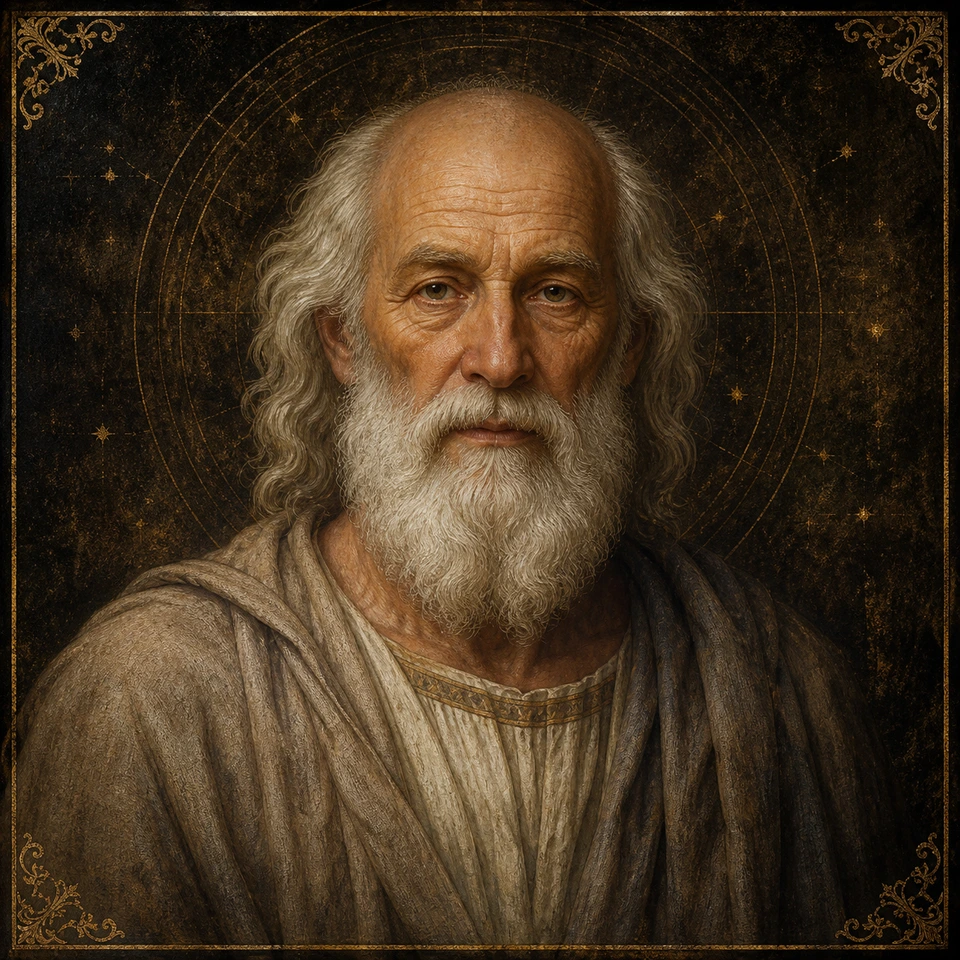
Praised by Hesiod for his unwavering commitment to truth, gentleness, and justice, Nereus reigns as an ancient sea deity and father to the Nereids. He famously appears in myth as the shapeshifting elder forcefully bound by Heracles to extract the hidden location of the Hesperides.
Overview
Nereus’s mastery is truthful counsel. Hesiod does not begin with a throne, weapon, or tempest. He calls Nereus the eldest child of Pontus, says that he does not lie, and joins gentleness to justice and remembrance of what is right. Mortals call him the Old Man because his speech can be trusted. Age carries dignity in this portrait, not weakness, comic frailty, or permission to collapse him into every bearded power of the sea.
The poem then gives that character a family. Nereus joins Doris, daughter of Ocean, and their fifty daughters move through the verse in a long Nereid catalogue. Amphitrite and Thetis are named among them. The singular father, his partner, the plural sisterhood, and each named daughter remain distinct. Their kinship does not make Nereus another name for Pontus, Poseidon, Triton, Proteus, or the sea itself.
Pseudo-Apollodorus preserves the family with a visible difference. Earth and Pontus produce Nereus, and Nereus and Doris produce the Nereids. Hesiod’s passage names Pontus alone at Nereus’s birth; the later mythographer makes Earth explicit. Both parentages remain side by side because the difference belongs to the surviving genealogy.
The same mythographer puts truthful knowledge under force. At the river Eridanus, daughters of Zeus and Themis show Heracles where to find Nereus. Heracles seizes the god while he sleeps. Nereus turns himself into all kinds of shapes, but the hero binds him and refuses release until he learns where the apples and the Hesperides are. The act advances a famous labor, yet the causation remains blunt: the route is obtained from a captive. Nereus’s dignity is not erased by the violence done to him, and the story’s coercion is not softened into a friendly oracle.
Two Attic vessels place Nereus in the surviving material record. The Beazley Archive identifies a hydria now in the British Museum as a scene of Heracles and Nereus, and its indexed cup record names Nereus in the decoration of a second British Museum vessel. Their catalogue identities add chronology without turning uninspected imagery into a universal ancient portrait.
Hesiod and Pseudo-Apollodorus name no sanctuary, festival, priesthood, offering formula, or local rite for Nereus. That silence belongs to these witnesses rather than to every form of Greek practice. What remains is substantial: a sea-born elder praised for just counsel, father of many daughters, and keeper of knowledge whom Heracles binds until he speaks. His story makes moral authority and heroic violence occupy the same divine life.
Canonical identity
Canonical Identity
Nereus is a singular Greek sea deity introduced by Hesiod as the eldest child of Pontus, standing completely apart from his myriad offspring, which include his grandson Triton (via Amphitrite and Poseidon) and his many daughters, the Nereids. His earliest surviving literary portrait defines him as mindful of right, just, gentle, and truthful. These specific qualities characterize his ancient presence and must not be replaced by a generalized modern mood imposed upon the sea. Ancient texts often feature similar scenes of old men of the sea wrestling heroes, demanding that identity be carefully verified rather than relying strictly on fish imagery or a white beard.
Linguistic Identity
Nereus is the Greek Νηρεύς. The authentic ancient pronunciation remains unresolved.
Sources and evidence
TEXTUAL · Supported
Hesiod calls Nereus the eldest child of Pontus and describes him as truthful, gentle, mindful of right, and just.
- Source
- Hesiod; translated by Hugh G. Evelyn-White, Theogony (Perseus eng1 component) (1914)
- Reviewed edition
- Hugh G. Evelyn-White English translation of Hesiod, Theogony, Loeb Classical Library, London, 1914, pages 78-153, Perseus eng1 component · translated by Hugh G. Evelyn-White · edited by Hugh G. Evelyn-White · Perseus Digital Library
- Exact locator
- Entry Theogony · Line 233-239
- Scope
- Archaic Greece · Ancient Greece
- Authority
- Hesiod’s Theogony in Hugh G. Evelyn-White’s 1914 English eng1 component
- Certainty
- High
The moral description explains why mortals call him the Old Man.
Open exact reviewed sourceTEXTUAL · Supported
The Scaife ATLAS short-definition entry gives the nominative Ancient Greek headword Νηρεύς and the short definition Nereus.
- Source
- Scaife ATLAS, Νηρεύς short definition
- Reviewed edition
- Scaife ATLAS short-definition entry 59496 for Νηρεύς · Tufts University
- Exact locator
- Entry Νηρεύς; Scaife short-def-59496 · RecordUrl https://atlas.perseus.tufts.edu/dictionaries/entry/urn:cite2:scaife-viewer:dictionary-entries.atlas_v1:short-def-59496/
- Scope
- Unspecified · Ancient Greece
- Authority
- Scaife ATLAS exact short-definition entry
- Certainty
- High for the nominative headword only
The route supplies no citations, etymology, or pronunciation.
Open exact reviewed source2 reviewed sources for this section
- Scaife ATLAS, Νηρεύς short definitionScaife ATLAS dictionary short-def entry 59496 · Tufts University
- Hesiod; translated by Hugh G. Evelyn-White, Theogony (Perseus eng1 component) (1914)Loeb Classical Library English translation, pages 78-153, London, 1914 · Perseus Digital Library
Culture, tradition, period, and place
Archaic Greek poetry supplies the earliest literary portrait in this account. Hesiod places Nereus in the generation of Pontus, praises his character, and follows him into the Nereid family. The later Library reorganizes the genealogy and sets the Heracles encounter beside the river Eridanus.
The order of the Hesiodic lines matters. Nereus’s moral character is not a later gloss placed over a bare family tree. Truth and justice stand immediately before Doris and the daughters, so ancestry and dependable counsel enter the poem as one continuous portrait.
Attic pottery adds a material chronology. The Beazley Archive places both Athenian red-figure vessels between about 525 and 475 BC, attributes the hydria to the Berlin Painter and the cup to the Euergides Painter, and names Nereus in each decoration. These catalogue identities do not make the vessels evidence for a sanctuary or a universal portrait type. Together, poem and pottery show his identity crossing literary and material forms without collapsing one kind of witness into the other.
6 reviewed sources for this section
- Hesiod; translated by Hugh G. Evelyn-White, Theogony (Perseus eng1 component) (1914)Loeb Classical Library English translation, pages 78-153, London, 1914 · Perseus Digital Library
- Pseudo-Apollodorus; edited and translated by James G. Frazer, Library (1921)Harvard University Press and William Heinemann edition, 1921 · Perseus Digital Library / Scaife ATLAS
- British Museum, hydria, museum number 1843,1103.47Live official British Museum collection record · British Museum
- British Museum, kylix, museum number 1836,0224.124Live official British Museum collection record · British Museum
- Classical Art Research Centre, University of Oxford, Beazley Archive Pottery Database record 202006Official indexed CARC object record · University of Oxford
- Classical Art Research Centre, University of Oxford, Beazley Archive Pottery Database record 200738Official indexed CARC object record · University of Oxford
Historical development
Hesiod’s Nereus is both ancestor and moral presence. His truth, gentleness, justice, and memory of right precede the catalogue of daughters. The family expands the sea into names without turning the father into a ruler of every current or shore.
Pseudo-Apollodorus later makes Earth a parent beside Pontus and gives Nereus a decisive place in Heracles’s search. The Beazley Archive places both Athenian red-figure vessels between about 525 and 475 BC, attributes the hydria to the Berlin Painter and the cup to the Euergides Painter, and names Nereus in each decoration. No broader iconographic rule is drawn from indexed catalogue metadata.
6 reviewed sources for this section
- Hesiod; translated by Hugh G. Evelyn-White, Theogony (Perseus eng1 component) (1914)Loeb Classical Library English translation, pages 78-153, London, 1914 · Perseus Digital Library
- Pseudo-Apollodorus; edited and translated by James G. Frazer, Library (1921)Harvard University Press and William Heinemann edition, 1921 · Perseus Digital Library / Scaife ATLAS
- British Museum, hydria, museum number 1843,1103.47Live official British Museum collection record · British Museum
- British Museum, kylix, museum number 1836,0224.124Live official British Museum collection record · British Museum
- Classical Art Research Centre, University of Oxford, Beazley Archive Pottery Database record 202006Official indexed CARC object record · University of Oxford
- Classical Art Research Centre, University of Oxford, Beazley Archive Pottery Database record 200738Official indexed CARC object record · University of Oxford
Attested roles and historical themes
Roles, powers, and limits
Truthful counsel is Nereus’s sharpest attested mastery. Hesiod says that he does not lie, does not forget what is right, and possesses gentle and just counsels. The Heracles episode makes his knowledge consequential because the hero cannot continue toward the Hesperides until Nereus reveals their location. Nereus knows the road to the Hesperides. Nothing in the passage makes him master of every hidden thing.
The disclosure is compelled. Nereus turns into all kinds of shapes, yet Heracles binds him and withholds release. His transformation belongs to that struggle alone. It does not make Nereus Proteus, Triton, Pontus, Poseidon, or the sea itself, and fatherhood of the Nereids does not grant him every marine office.
2 reviewed sources for this section
- Hesiod; translated by Hugh G. Evelyn-White, Theogony (Perseus eng1 component) (1914)Loeb Classical Library English translation, pages 78-153, London, 1914 · Perseus Digital Library
- Pseudo-Apollodorus; edited and translated by James G. Frazer, Library (1921)Harvard University Press and William Heinemann edition, 1921 · Perseus Digital Library / Scaife ATLAS
Epithets and titles
Poetic Epithet
Old Man
γέρων · Old Man
Greek hexameter tradition · Archaic Greek poetic witnessHesiod explains the title through Nereus’s truth, gentleness, justice, and memory of right.
1 reviewed source for this section
- Hesiod; translated by Hugh G. Evelyn-White, Theogony (Perseus eng1 component) (1914)Loeb Classical Library English translation, pages 78-153, London, 1914 · Perseus Digital Library
Worship and cult
Hesiod praises Nereus, places him in a divine genealogy, and makes him father of the Nereids. Pseudo-Apollodorus turns him into a consequential actor in Heracles’s labor. Neither passage names a temple, priesthood, civic cult, household rite, sacrifice, or festival devoted to him.
The two Attic vessels confirm that his figure belonged to ancient visual culture, but object date and painter attribution do not reveal a rite. Nereus’s religious dignity does not depend on inventing a sanctuary, and silence in these witnesses does not prove that no community ever approached him.
6 reviewed sources for this section
- Hesiod; translated by Hugh G. Evelyn-White, Theogony (Perseus eng1 component) (1914)Loeb Classical Library English translation, pages 78-153, London, 1914 · Perseus Digital Library
- Pseudo-Apollodorus; edited and translated by James G. Frazer, Library (1921)Harvard University Press and William Heinemann edition, 1921 · Perseus Digital Library / Scaife ATLAS
- British Museum, hydria, museum number 1843,1103.47Live official British Museum collection record · British Museum
- British Museum, kylix, museum number 1836,0224.124Live official British Museum collection record · British Museum
- Classical Art Research Centre, University of Oxford, Beazley Archive Pottery Database record 202006Official indexed CARC object record · University of Oxford
- Classical Art Research Centre, University of Oxford, Beazley Archive Pottery Database record 200738Official indexed CARC object record · University of Oxford
Temples, sanctuaries, and sacred places
The river Eridanus is the named setting of the Heracles encounter. Pseudo-Apollodorus says that Heracles reaches its nymphs, learns where Nereus is, and seizes the sleeping god. The ancient river name remains geographically unresolved rather than being attached to a modern map without proof.
Neither the Hesiodic genealogy nor the Library passages name a sanctuary of Nereus. Attica is where the two catalogued vessels were made; it is not evidence for a Nereus temple or exclusive sacred territory.
6 reviewed sources for this section
- Hesiod; translated by Hugh G. Evelyn-White, Theogony (Perseus eng1 component) (1914)Loeb Classical Library English translation, pages 78-153, London, 1914 · Perseus Digital Library
- Pseudo-Apollodorus; edited and translated by James G. Frazer, Library (1921)Harvard University Press and William Heinemann edition, 1921 · Perseus Digital Library / Scaife ATLAS
- British Museum, hydria, museum number 1843,1103.47Live official British Museum collection record · British Museum
- British Museum, kylix, museum number 1836,0224.124Live official British Museum collection record · British Museum
- Classical Art Research Centre, University of Oxford, Beazley Archive Pottery Database record 202006Official indexed CARC object record · University of Oxford
- Classical Art Research Centre, University of Oxford, Beazley Archive Pottery Database record 200738Official indexed CARC object record · University of Oxford
Festivals and processions
No festival name, calendar date, recurring procession, or seasonal observance appears in the Nereus passages from Hesiod and Pseudo-Apollodorus. The Nereid catalogue is genealogy, and the binding at Eridanus is a heroic episode.
The two Attic vessels add object dates rather than ritual dates. Pottery chronology cannot become a festival calendar, so no ancient observance is reconstructed from it.
6 reviewed sources for this section
- Hesiod; translated by Hugh G. Evelyn-White, Theogony (Perseus eng1 component) (1914)Loeb Classical Library English translation, pages 78-153, London, 1914 · Perseus Digital Library
- Pseudo-Apollodorus; edited and translated by James G. Frazer, Library (1921)Harvard University Press and William Heinemann edition, 1921 · Perseus Digital Library / Scaife ATLAS
- British Museum, hydria, museum number 1843,1103.47Live official British Museum collection record · British Museum
- British Museum, kylix, museum number 1836,0224.124Live official British Museum collection record · British Museum
- Classical Art Research Centre, University of Oxford, Beazley Archive Pottery Database record 202006Official indexed CARC object record · University of Oxford
- Classical Art Research Centre, University of Oxford, Beazley Archive Pottery Database record 200738Official indexed CARC object record · University of Oxford
Offerings, votives, and ritual evidence
No offering list, votive formula, sacrificial instruction, or priestly action for Nereus appears in the two literary witnesses. The myth of a bound informant supplies no ritual instruction for later readers.
The pottery records secure vessel identities and dates without establishing an offering. Fish, wands, sceptres, wreaths, and other objects therefore do not become devotional prescriptions through catalogue association alone.
6 reviewed sources for this section
- Hesiod; translated by Hugh G. Evelyn-White, Theogony (Perseus eng1 component) (1914)Loeb Classical Library English translation, pages 78-153, London, 1914 · Perseus Digital Library
- Pseudo-Apollodorus; edited and translated by James G. Frazer, Library (1921)Harvard University Press and William Heinemann edition, 1921 · Perseus Digital Library / Scaife ATLAS
- British Museum, hydria, museum number 1843,1103.47Live official British Museum collection record · British Museum
- British Museum, kylix, museum number 1836,0224.124Live official British Museum collection record · British Museum
- Classical Art Research Centre, University of Oxford, Beazley Archive Pottery Database record 202006Official indexed CARC object record · University of Oxford
- Classical Art Research Centre, University of Oxford, Beazley Archive Pottery Database record 200738Official indexed CARC object record · University of Oxford
Iconography and material culture
The Beazley Archive identifies British Museum 1843,1103.47 as an Athenian red-figure hydria whose decoration names Heracles and Nereus, while its indexed record for British Museum 1836,0224.124 identifies an Athenian red-figure cup that names Nereus in the decoration.
No object image was inspected here, so the records support catalogue identity, chronology, attribution, and bounded subject identification, not a universal pose, garment, bodily form, fish, wand, sceptre, wreath, or ritual object. The modern collection portrait remains a modern portrait, not a substitute for ancient iconography.
Sources and evidence
MATERIAL CULTURE · Supported
CARC record 202006 identifies an Athenian red-figure hydria dated -525 to -475, attributed to the Berlin Painter, now British Museum 1843,1103.47, with decoration explicitly naming Heracles and Nereus.
- Source
- Classical Art Research Centre, University of Oxford, Beazley Archive Pottery Database record 202006
- Reviewed edition
- CARC 202006, Athenian red-figure hydria, -525 to -475, Berlin Painter, British Museum 1843,1103.47, HERAKLES AND NEREUS · University of Oxford
- Exact locator
- Entry CARC 202006; Athenian red-figure hydria; -525 to -475; Berlin Painter; decoration HERAKLES AND NEREUS · MuseumObjectId 1843,1103.47 · RecordUrl https://www.carc.ox.ac.uk/record/490AC28E-6A4E-481A-96F4-4B5B8B8665CD
- Scope
- Classical Greece · Attica
- Authority
- Classical Art Research Centre Beazley Archive exact indexed record
- Certainty
- Verified indexed catalogue metadata; object image unreviewed
The direct page challenged automated browsing. This supports catalogue identity, chronology, attribution, and bounded subject identification only; no image was inspected.
Open exact reviewed sourceMATERIAL CULTURE · Supported
Official indexed British Museum metadata identifies accession 1843,1103.47 as an Attic hydria of about 490 BC attributed to the Berlin Painter.
- Source
- British Museum, hydria, museum number 1843,1103.47
- Reviewed edition
- British Museum collection record for hydria 1843,1103.47 · British Museum
- Exact locator
- MuseumObjectId 1843,1103.47 · Entry hydria; Attic; circa 490 BC; attributed to the Berlin Painter
- Scope
- Classical Greece · Attica
- Authority
- British Museum indexed accession metadata
- Certainty
- High for accession identity, material, date, and attribution; iconographic detail unresolved
The indexed catalogue identity establishes the vessel, accession, date, and attribution, but not its scene, pose, garments, attributes, anatomy, inscription, or other iconographic detail.
Open exact reviewed sourceMATERIAL CULTURE · Supported
CARC record 200738 identifies an Athenian red-figure cup dated -525 to -475, attributed to the Euergides Painter, now British Museum 1836,0224.124, whose indexed decoration names Nereus.
- Source
- Classical Art Research Centre, University of Oxford, Beazley Archive Pottery Database record 200738
- Reviewed edition
- CARC 200738, Athenian red-figure cup, -525 to -475, Euergides Painter, British Museum 1836,0224.124, decoration names Nereus · University of Oxford
- Exact locator
- Entry CARC 200738; Athenian red-figure cup; -525 to -475; Euergides Painter; decoration names Nereus · MuseumObjectId 1836,0224.124 · RecordUrl https://www.carc.ox.ac.uk/record/F9C8EEDB-79AB-49AE-9159-AC8A732E73C2
- Scope
- Archaic Greece · Attica
- Authority
- Classical Art Research Centre Beazley Archive exact indexed record
- Certainty
- Verified indexed catalogue metadata; object image unreviewed
The direct page challenged automated browsing. This supports catalogue identity, chronology, attribution, and bounded subject identification only; no image was inspected.
Open exact reviewed sourceMATERIAL CULTURE · Supported
Official indexed British Museum metadata identifies accession 1836,0224.124 as an Attic kylix of about 510 BC attributed to the Euergides Painter.
- Source
- British Museum, kylix, museum number 1836,0224.124
- Reviewed edition
- British Museum collection record for kylix 1836,0224.124 · British Museum
- Exact locator
- MuseumObjectId 1836,0224.124 · Entry kylix; Attic; circa 510 BC; attributed to the Euergides Painter
- Scope
- Archaic Greece · Attica
- Authority
- British Museum indexed accession metadata
- Certainty
- High for accession identity, material, date, and attribution; iconographic detail unresolved
The indexed catalogue identity establishes the vessel, accession, date, and attribution, but not its scene, pose, garments, attributes, anatomy, inscription, or other iconographic detail.
Open exact reviewed source4 reviewed sources for this section
- Classical Art Research Centre, University of Oxford, Beazley Archive Pottery Database record 202006Official indexed CARC object record · University of Oxford
- British Museum, hydria, museum number 1843,1103.47Live official British Museum collection record · British Museum
- Classical Art Research Centre, University of Oxford, Beazley Archive Pottery Database record 200738Official indexed CARC object record · University of Oxford
- British Museum, kylix, museum number 1836,0224.124Live official British Museum collection record · British Museum
Animals, plants, and embodied forms
Pseudo-Apollodorus says only that Nereus turns himself into all kinds of shapes. The passage names no lion, serpent, fish, flame, water form, or other specific transformation. Naming such forms would decorate the struggle beyond its witness.
No plant species is assigned to Nereus in the literary passages. The accession metadata supplies no botanical emblem or exclusive animal. Animals and plants therefore remain unresolved rather than being borrowed from another sea figure.
5 reviewed sources for this section
- Pseudo-Apollodorus; edited and translated by James G. Frazer, Library (1921)Harvard University Press and William Heinemann edition, 1921 · Perseus Digital Library / Scaife ATLAS
- British Museum, hydria, museum number 1843,1103.47Live official British Museum collection record · British Museum
- British Museum, kylix, museum number 1836,0224.124Live official British Museum collection record · British Museum
- Classical Art Research Centre, University of Oxford, Beazley Archive Pottery Database record 202006Official indexed CARC object record · University of Oxford
- Classical Art Research Centre, University of Oxford, Beazley Archive Pottery Database record 200738Official indexed CARC object record · University of Oxford
Relationships and genealogy
Hesiod makes Nereus the eldest child of Pontus, then joins him with Doris and gives them fifty daughters. Amphitrite and Thetis are named within the Nereid company. The existing Amphitrite relationship preserves this Hesiodic daughterhood.
Pseudo-Apollodorus explicitly places Earth beside Pontus as Nereus’s parents and again makes Doris mother of the Nereids. This later genealogy adds Gaia without erasing Hesiod’s Pontus-only birth line; Doris, the Nereids, Amphitrite, and Thetis remain distinct members of the same family.
Sources and evidence
TEXTUAL · Supported
Hesiod says Nereus and Doris have fifty daughters and names Amphitrite among them.
- Source
- Hesiod; translated by Hugh G. Evelyn-White, Theogony (Perseus eng1 component) (1914)
- Reviewed edition
- Hugh G. Evelyn-White English translation of Hesiod, Theogony, Loeb Classical Library, London, 1914, pages 78-153, Perseus eng1 component · translated by Hugh G. Evelyn-White · edited by Hugh G. Evelyn-White · Perseus Digital Library
- Exact locator
- Entry Theogony · Line 240-264
- Scope
- Archaic Greece · Ancient Greece
- Authority
- Hesiod’s Theogony in Hugh G. Evelyn-White’s 1914 English eng1 component
- Certainty
- High
The plural Nereids are daughters of Nereus, not alternate forms of their father.
Open exact reviewed sourceTEXTUAL · Supported
Pseudo-Apollodorus lists Nereus among the children of Earth and Pontus.
- Source
- Pseudo-Apollodorus; edited and translated by James G. Frazer, Library (1921)
- Reviewed edition
- James G. Frazer edition and English translation, Harvard University Press and William Heinemann, 1921 · translated by James G. Frazer · edited by James G. Frazer · Perseus Digital Library / Scaife ATLAS
- Exact locator
- Entry Library · Book 1 · Chapter 2 · Section 6
- Scope
- Greek religion under Roman imperial rule · Ancient Greece
- Authority
- Pseudo-Apollodorus’s Library in the Frazer edition
- Certainty
- High
This mythographic genealogy supplies Earth as mother while retaining Pontus as father.
Open exact reviewed sourceTEXTUAL · Supported
Pseudo-Apollodorus names Doris as Nereus’s partner and enumerates their Nereid daughters.
- Source
- Pseudo-Apollodorus; edited and translated by James G. Frazer, Library (1921)
- Reviewed edition
- James G. Frazer edition and English translation, Harvard University Press and William Heinemann, 1921 · translated by James G. Frazer · edited by James G. Frazer · Perseus Digital Library / Scaife ATLAS
- Exact locator
- Entry Library · Book 1 · Chapter 2 · Section 7
- Scope
- Greek religion under Roman imperial rule · Ancient Greece
- Authority
- Pseudo-Apollodorus’s Library in the Frazer edition
- Certainty
- High
The list overlaps Hesiod while preserving a separate mythographic witness.
Open exact reviewed source2 reviewed sources for this section
- Hesiod; translated by Hugh G. Evelyn-White, Theogony (Perseus eng1 component) (1914)Loeb Classical Library English translation, pages 78-153, London, 1914 · Perseus Digital Library
- Pseudo-Apollodorus; edited and translated by James G. Frazer, Library (1921)Harvard University Press and William Heinemann edition, 1921 · Perseus Digital Library / Scaife ATLAS
Actual myths and source variants
The family myth begins with character before number. Hesiod’s truthful elder joins Doris, and fifty daughters enter the poem by name. Pseudo-Apollodorus preserves Earth and Pontus as parents and offers a separate Nereid catalogue. The witnesses agree on a family shape while differing in explicit parentage and list. Amphitrite and Thetis remain named daughters within the plural company; neither becomes a substitute name for all the Nereids.
In the Hesperides labor, nymphs beside the Eridanus reveal Nereus to Heracles. The hero seizes him asleep. Nereus changes into all kinds of shapes, but Heracles binds him and refuses release until he learns where the apples and Hesperides are. The nymphs cause the discovery, the binding causes the answer, and the coercion remains visible. Once the location is learned, Nereus drops from the itinerary; later travels through Libya and Egypt belong to Heracles, not to the captive sea god.
Sources and evidence
TEXTUAL · Supported
Pseudo-Apollodorus says river nymphs revealed Nereus to Heracles; the hero seized him asleep, bound him through all kinds of shapes, and withheld release until learning where the apples and Hesperides were.
- Source
- Pseudo-Apollodorus; edited and translated by James G. Frazer, Library (1921)
- Reviewed edition
- James G. Frazer edition and English translation, Harvard University Press and William Heinemann, 1921 · translated by James G. Frazer · edited by James G. Frazer · Perseus Digital Library / Scaife ATLAS
- Exact locator
- Entry Library · Book 2 · Chapter 5 · Section 11
- Scope
- Greek religion under Roman imperial rule · River Eridanus in the Heracles itinerary
- Authority
- Pseudo-Apollodorus’s Library in the Frazer edition
- Certainty
- High
The nymphs cause the discovery, the binding causes the answer, and no particular transformation shape is named.
Open exact reviewed source2 reviewed sources for this section
- Hesiod; translated by Hugh G. Evelyn-White, Theogony (Perseus eng1 component) (1914)Loeb Classical Library English translation, pages 78-153, London, 1914 · Perseus Digital Library
- Pseudo-Apollodorus; edited and translated by James G. Frazer, Library (1921)Harvard University Press and William Heinemann edition, 1921 · Perseus Digital Library / Scaife ATLAS
Myth Library
Each myth gathers its attested participants into one source-grounded account, while distinct source traditions remain readable in their own variants.
Divine Genealogy
Nereus and the Nereids
The truthful sea elder Nereus joins Doris and becomes father of the many Nereids, including Amphitrite and Thetis.
- Role in this profile
- stands as the truthful elder of the sea and fathers the Nereids with Doris
- Place scope
- Ancient Greece
- Witnesses
- 2
- Variants
- 2
Heroic Quest And Divine Encounter
Heracles Seizes and Binds Nereus
Nymphs beside the Eridanus reveal sleeping Nereus to Heracles, who seizes and binds the changing god until he learns where the apples and Hesperides are.
- Role in this profile
- turns himself into all kinds of shapes after Heracles seizes him asleep, remains bound, and reveals the location of the apples and Hesperides
- Place scope
- River Eridanus in the Heracles itinerary
- Witnesses
- 1
- Variants
- 1
Equivalences, syncretisms, and identity boundaries
Hesiod keeps the marine generations distinct. Pontus fathers Nereus; Nereus and Doris produce the plural Nereids; Amphitrite and Poseidon produce Triton. The Library adds Earth to Nereus’s parentage and preserves the Nereid family without merging father, daughters, and grandson.
Age, prophecy, transformation, or a marine setting cannot erase those genealogies. The phrase Old Man of the Sea describes Nereus in its Hesiodic setting, but it does not by itself identify an uncertain vase figure or make every changing sea elder the same god.
Sources and evidence
TEXTUAL · Supported
Hesiod makes Nereus a son of Pontus and father of Amphitrite, while Triton is the son of Amphitrite and Poseidon.
- Source
- Hesiod; translated by Hugh G. Evelyn-White, Theogony (Perseus eng1 component) (1914)
- Reviewed edition
- Hugh G. Evelyn-White English translation of Hesiod, Theogony, Loeb Classical Library, London, 1914, pages 78-153, Perseus eng1 component · translated by Hugh G. Evelyn-White · edited by Hugh G. Evelyn-White · Perseus Digital Library
- Exact locator
- Entry Theogony · Line 233-264; 930-934
- Scope
- Archaic Greece · Ancient Greece
- Authority
- Hesiod’s Theogony in Hugh G. Evelyn-White’s 1914 English eng1 component
- Certainty
- High
The genealogy distinguishes Nereus from his daughter’s son and from the collective of his daughters.
Open exact reviewed source2 reviewed sources for this section
- Hesiod; translated by Hugh G. Evelyn-White, Theogony (Perseus eng1 component) (1914)Loeb Classical Library English translation, pages 78-153, London, 1914 · Perseus Digital Library
- Pseudo-Apollodorus; edited and translated by James G. Frazer, Library (1921)Harvard University Press and William Heinemann edition, 1921 · Perseus Digital Library / Scaife ATLAS
Correspondence index
The strongest historical themes stay close to the texts: truthful and just counsel in Hesiod, sea ancestry and the Nereid family in both genealogies, and changing resistance under coercion in the Heracles episode.
No planet, zodiac sign, gemstone, metal, color, weekday, moon phase, season, incense, named offering, plant, or animal correspondence is established by these witnesses. The sea is ancestry and narrative setting, not automatic proof of a later occult element or universal ritual system.
Contextual evidence, not a general correspondence
| Category | Direct correspondence | How and why | Evidence boundary |
|---|---|---|---|
| classical-element | Sea water as settingContextual evidence only | Nereus belongs to the genealogy and stories of the sea. | Ancient Literary Marine identity does not establish rulership in a later four-element system. 2 reviewed sources for this section
|
| direction-place | The Greek seaContextual evidence only | His genealogy, daughters, and heroic encounter all present him as a sea deity. | Ancient Literary This marine setting does not imply a compass direction or exclusive coast. 2 reviewed sources for this section
|
| intention-magical-power | Truthful counsel and ethical judgmentContextual evidence only | Hesiod praises Nereus for truth, gentleness, justice, and memory of right. | Ancient Literary Hesiodic virtues remain literary characterization rather than a guarantee of divination or compelled answers. 2 reviewed sources for this section
|
13 expected categories currently not evidenced
celestial-body · Not evidenced
No celestial body
The literary and material witnesses assign Nereus no planet or star.
- Layer
- Research Boundary
- Scope
- Sea ancestry does not create celestial rulership.
6 reviewed sources for this section
- Hesiod; translated by Hugh G. Evelyn-White, Theogony (Perseus eng1 component) (1914)Loeb Classical Library English translation, pages 78-153, London, 1914 · Perseus Digital Library
- Pseudo-Apollodorus; edited and translated by James G. Frazer, Library (1921)Harvard University Press and William Heinemann edition, 1921 · Perseus Digital Library / Scaife ATLAS
- British Museum, hydria, museum number 1843,1103.47Live official British Museum collection record · British Museum
- British Museum, kylix, museum number 1836,0224.124Live official British Museum collection record · British Museum
- Classical Art Research Centre, University of Oxford, Beazley Archive Pottery Database record 202006Official indexed CARC object record · University of Oxford
- Classical Art Research Centre, University of Oxford, Beazley Archive Pottery Database record 200738Official indexed CARC object record · University of Oxford
zodiac · Not evidenced
No zodiac sign
Hesiod, Pseudo-Apollodorus, and the permitted object metadata place Nereus in no zodiac scheme.
- Layer
- Research Boundary
- Scope
- No sign follows from his marine genealogy or old age.
6 reviewed sources for this section
- Hesiod; translated by Hugh G. Evelyn-White, Theogony (Perseus eng1 component) (1914)Loeb Classical Library English translation, pages 78-153, London, 1914 · Perseus Digital Library
- Pseudo-Apollodorus; edited and translated by James G. Frazer, Library (1921)Harvard University Press and William Heinemann edition, 1921 · Perseus Digital Library / Scaife ATLAS
- British Museum, hydria, museum number 1843,1103.47Live official British Museum collection record · British Museum
- British Museum, kylix, museum number 1836,0224.124Live official British Museum collection record · British Museum
- Classical Art Research Centre, University of Oxford, Beazley Archive Pottery Database record 202006Official indexed CARC object record · University of Oxford
- Classical Art Research Centre, University of Oxford, Beazley Archive Pottery Database record 200738Official indexed CARC object record · University of Oxford
gemstone-crystal-mineral · Not evidenced
No gemstone or mineral
No gemstone, crystal, or mineral appears in the named texts or permitted museum metadata.
- Layer
- Research Boundary
- Scope
- Material silence cannot be filled by a modern stone list.
6 reviewed sources for this section
- Hesiod; translated by Hugh G. Evelyn-White, Theogony (Perseus eng1 component) (1914)Loeb Classical Library English translation, pages 78-153, London, 1914 · Perseus Digital Library
- Pseudo-Apollodorus; edited and translated by James G. Frazer, Library (1921)Harvard University Press and William Heinemann edition, 1921 · Perseus Digital Library / Scaife ATLAS
- British Museum, hydria, museum number 1843,1103.47Live official British Museum collection record · British Museum
- British Museum, kylix, museum number 1836,0224.124Live official British Museum collection record · British Museum
- Classical Art Research Centre, University of Oxford, Beazley Archive Pottery Database record 202006Official indexed CARC object record · University of Oxford
- Classical Art Research Centre, University of Oxford, Beazley Archive Pottery Database record 200738Official indexed CARC object record · University of Oxford
metal-material · Not evidenced
No canonical metal
The reviewed literary passages and accession-level museum metadata identify no metal associated with Nereus.
- Layer
- Research Boundary
- Scope
- No sacred metal can be inferred from object type, date, or painter attribution.
6 reviewed sources for this section
- Hesiod; translated by Hugh G. Evelyn-White, Theogony (Perseus eng1 component) (1914)Loeb Classical Library English translation, pages 78-153, London, 1914 · Perseus Digital Library
- Pseudo-Apollodorus; edited and translated by James G. Frazer, Library (1921)Harvard University Press and William Heinemann edition, 1921 · Perseus Digital Library / Scaife ATLAS
- British Museum, hydria, museum number 1843,1103.47Live official British Museum collection record · British Museum
- British Museum, kylix, museum number 1836,0224.124Live official British Museum collection record · British Museum
- Classical Art Research Centre, University of Oxford, Beazley Archive Pottery Database record 202006Official indexed CARC object record · University of Oxford
- Classical Art Research Centre, University of Oxford, Beazley Archive Pottery Database record 200738Official indexed CARC object record · University of Oxford
plant-tree · Not evidenced
No identified plant
The literary passages and permitted museum metadata identify no plant for Nereus.
- Layer
- Research Boundary
- Scope
- No sacred or ritual plant is established.
6 reviewed sources for this section
- Hesiod; translated by Hugh G. Evelyn-White, Theogony (Perseus eng1 component) (1914)Loeb Classical Library English translation, pages 78-153, London, 1914 · Perseus Digital Library
- Pseudo-Apollodorus; edited and translated by James G. Frazer, Library (1921)Harvard University Press and William Heinemann edition, 1921 · Perseus Digital Library / Scaife ATLAS
- British Museum, hydria, museum number 1843,1103.47Live official British Museum collection record · British Museum
- British Museum, kylix, museum number 1836,0224.124Live official British Museum collection record · British Museum
- Classical Art Research Centre, University of Oxford, Beazley Archive Pottery Database record 202006Official indexed CARC object record · University of Oxford
- Classical Art Research Centre, University of Oxford, Beazley Archive Pottery Database record 200738Official indexed CARC object record · University of Oxford
animal · Not evidenced
No reviewed animal correspondence
The literary passage names no specific transformation animal, and the permitted museum evidence does not establish a universal animal for Nereus.
- Layer
- Research Boundary
- Scope
- No animal, offering, or hybrid body can be inferred from accession metadata.
6 reviewed sources for this section
- Hesiod; translated by Hugh G. Evelyn-White, Theogony (Perseus eng1 component) (1914)Loeb Classical Library English translation, pages 78-153, London, 1914 · Perseus Digital Library
- Pseudo-Apollodorus; edited and translated by James G. Frazer, Library (1921)Harvard University Press and William Heinemann edition, 1921 · Perseus Digital Library / Scaife ATLAS
- British Museum, hydria, museum number 1843,1103.47Live official British Museum collection record · British Museum
- British Museum, kylix, museum number 1836,0224.124Live official British Museum collection record · British Museum
- Classical Art Research Centre, University of Oxford, Beazley Archive Pottery Database record 202006Official indexed CARC object record · University of Oxford
- Classical Art Research Centre, University of Oxford, Beazley Archive Pottery Database record 200738Official indexed CARC object record · University of Oxford
color · Not evidenced
No canonical color
The literary passages and permitted museum metadata establish no ritual color.
- Layer
- Research Boundary
- Scope
- The modern portrait palette is not an ancient cult prescription.
6 reviewed sources for this section
- Hesiod; translated by Hugh G. Evelyn-White, Theogony (Perseus eng1 component) (1914)Loeb Classical Library English translation, pages 78-153, London, 1914 · Perseus Digital Library
- Pseudo-Apollodorus; edited and translated by James G. Frazer, Library (1921)Harvard University Press and William Heinemann edition, 1921 · Perseus Digital Library / Scaife ATLAS
- British Museum, hydria, museum number 1843,1103.47Live official British Museum collection record · British Museum
- British Museum, kylix, museum number 1836,0224.124Live official British Museum collection record · British Museum
- Classical Art Research Centre, University of Oxford, Beazley Archive Pottery Database record 202006Official indexed CARC object record · University of Oxford
- Classical Art Research Centre, University of Oxford, Beazley Archive Pottery Database record 200738Official indexed CARC object record · University of Oxford
weekday · Not evidenced
No weekday
No weekday is named by the literary or material witnesses.
- Layer
- Research Boundary
- Scope
- No planetary weekday can be inferred from marine identity.
6 reviewed sources for this section
- Hesiod; translated by Hugh G. Evelyn-White, Theogony (Perseus eng1 component) (1914)Loeb Classical Library English translation, pages 78-153, London, 1914 · Perseus Digital Library
- Pseudo-Apollodorus; edited and translated by James G. Frazer, Library (1921)Harvard University Press and William Heinemann edition, 1921 · Perseus Digital Library / Scaife ATLAS
- British Museum, hydria, museum number 1843,1103.47Live official British Museum collection record · British Museum
- British Museum, kylix, museum number 1836,0224.124Live official British Museum collection record · British Museum
- Classical Art Research Centre, University of Oxford, Beazley Archive Pottery Database record 202006Official indexed CARC object record · University of Oxford
- Classical Art Research Centre, University of Oxford, Beazley Archive Pottery Database record 200738Official indexed CARC object record · University of Oxford
moon-phase · Not evidenced
No moon phase
Hesiod and Pseudo-Apollodorus connect no lunar phase with Nereus.
- Layer
- Research Boundary
- Scope
- The sea setting does not create a moon-phase observance.
6 reviewed sources for this section
- Hesiod; translated by Hugh G. Evelyn-White, Theogony (Perseus eng1 component) (1914)Loeb Classical Library English translation, pages 78-153, London, 1914 · Perseus Digital Library
- Pseudo-Apollodorus; edited and translated by James G. Frazer, Library (1921)Harvard University Press and William Heinemann edition, 1921 · Perseus Digital Library / Scaife ATLAS
- British Museum, hydria, museum number 1843,1103.47Live official British Museum collection record · British Museum
- British Museum, kylix, museum number 1836,0224.124Live official British Museum collection record · British Museum
- Classical Art Research Centre, University of Oxford, Beazley Archive Pottery Database record 202006Official indexed CARC object record · University of Oxford
- Classical Art Research Centre, University of Oxford, Beazley Archive Pottery Database record 200738Official indexed CARC object record · University of Oxford
festival-time · Not evidenced
No secure festival time
No annual feast, season, or procession date survives in these sources.
- Layer
- Research Boundary
- Scope
- Narrative events and painted scenes do not create a civic calendar.
6 reviewed sources for this section
- Hesiod; translated by Hugh G. Evelyn-White, Theogony (Perseus eng1 component) (1914)Loeb Classical Library English translation, pages 78-153, London, 1914 · Perseus Digital Library
- Pseudo-Apollodorus; edited and translated by James G. Frazer, Library (1921)Harvard University Press and William Heinemann edition, 1921 · Perseus Digital Library / Scaife ATLAS
- British Museum, hydria, museum number 1843,1103.47Live official British Museum collection record · British Museum
- British Museum, kylix, museum number 1836,0224.124Live official British Museum collection record · British Museum
- Classical Art Research Centre, University of Oxford, Beazley Archive Pottery Database record 202006Official indexed CARC object record · University of Oxford
- Classical Art Research Centre, University of Oxford, Beazley Archive Pottery Database record 200738Official indexed CARC object record · University of Oxford
incense-perfume · Not evidenced
No incense or resin
No incense, resin, or fumigant is named for Nereus.
- Layer
- Research Boundary
- Scope
- No fragrance can be recovered from the surviving genealogy or imagery.
6 reviewed sources for this section
- Hesiod; translated by Hugh G. Evelyn-White, Theogony (Perseus eng1 component) (1914)Loeb Classical Library English translation, pages 78-153, London, 1914 · Perseus Digital Library
- Pseudo-Apollodorus; edited and translated by James G. Frazer, Library (1921)Harvard University Press and William Heinemann edition, 1921 · Perseus Digital Library / Scaife ATLAS
- British Museum, hydria, museum number 1843,1103.47Live official British Museum collection record · British Museum
- British Museum, kylix, museum number 1836,0224.124Live official British Museum collection record · British Museum
- Classical Art Research Centre, University of Oxford, Beazley Archive Pottery Database record 202006Official indexed CARC object record · University of Oxford
- Classical Art Research Centre, University of Oxford, Beazley Archive Pottery Database record 200738Official indexed CARC object record · University of Oxford
modern-offerings · Not evidenced
No attested offering
No offering is named for Nereus in the reviewed literary passages or permitted object metadata.
- Layer
- Research Boundary
- Scope
- No food, drink, object, or sacrifice is documented as his exclusive gift.
6 reviewed sources for this section
- Hesiod; translated by Hugh G. Evelyn-White, Theogony (Perseus eng1 component) (1914)Loeb Classical Library English translation, pages 78-153, London, 1914 · Perseus Digital Library
- Pseudo-Apollodorus; edited and translated by James G. Frazer, Library (1921)Harvard University Press and William Heinemann edition, 1921 · Perseus Digital Library / Scaife ATLAS
- British Museum, hydria, museum number 1843,1103.47Live official British Museum collection record · British Museum
- British Museum, kylix, museum number 1836,0224.124Live official British Museum collection record · British Museum
- Classical Art Research Centre, University of Oxford, Beazley Archive Pottery Database record 202006Official indexed CARC object record · University of Oxford
- Classical Art Research Centre, University of Oxford, Beazley Archive Pottery Database record 200738Official indexed CARC object record · University of Oxford
ritual-object-symbol-tool · Not evidenced
No reviewed ritual object or tool
The permitted museum metadata establishes vessel type, date, Attic attribution, painter attribution, and bounded subject identity, not ritual equipment for Nereus.
- Layer
- Research Boundary
- Scope
- No fish, wand, sceptre, garment, wreath, or other ritual equipment is established by the reviewed evidence.
6 reviewed sources for this section
- Hesiod; translated by Hugh G. Evelyn-White, Theogony (Perseus eng1 component) (1914)Loeb Classical Library English translation, pages 78-153, London, 1914 · Perseus Digital Library
- Pseudo-Apollodorus; edited and translated by James G. Frazer, Library (1921)Harvard University Press and William Heinemann edition, 1921 · Perseus Digital Library / Scaife ATLAS
- British Museum, hydria, museum number 1843,1103.47Live official British Museum collection record · British Museum
- British Museum, kylix, museum number 1836,0224.124Live official British Museum collection record · British Museum
- Classical Art Research Centre, University of Oxford, Beazley Archive Pottery Database record 202006Official indexed CARC object record · University of Oxford
- Classical Art Research Centre, University of Oxford, Beazley Archive Pottery Database record 200738Official indexed CARC object record · University of Oxford
2 reviewed sources for this section
- Hesiod; translated by Hugh G. Evelyn-White, Theogony (Perseus eng1 component) (1914)Loeb Classical Library English translation, pages 78-153, London, 1914 · Perseus Digital Library
- Pseudo-Apollodorus; edited and translated by James G. Frazer, Library (1921)Harvard University Press and William Heinemann edition, 1921 · Perseus Digital Library / Scaife ATLAS
Later reception and living significance
The old sea god remains memorable because the early portrait joins authority to gentleness. His counsel is trustworthy, his family fills the sea with named daughters, and his knowledge carries a route that Heracles cannot discover alone.
No named contemporary devotional community or rite is represented in these sources. Modern readers can still face the ancient tension without inventing a practice: Hesiod praises justice, while the Library shows a sleeping elder seized and bound until he speaks. Neither passage turns coercion into consent, and neither strips Nereus of dignity.
2 reviewed sources for this section
- Hesiod; translated by Hugh G. Evelyn-White, Theogony (Perseus eng1 component) (1914)Loeb Classical Library English translation, pages 78-153, London, 1914 · Perseus Digital Library
- Pseudo-Apollodorus; edited and translated by James G. Frazer, Library (1921)Harvard University Press and William Heinemann edition, 1921 · Perseus Digital Library / Scaife ATLAS
Evidence, conflicts, and research gaps
Hugh G. Evelyn-White’s 1914 English Theogony supplies Nereus’s character, Pontus parentage, Doris, and the Nereid daughters at lines 233-264. James G. Frazer’s 1921 English Library supplies Earth and Pontus at 1.2.6, the Nereid genealogy at 1.2.7, and the Eridanus, nymph, seizure, transformation, binding, and answer sequence at 2.5.11.
The Beazley Archive identifies the vessels as Attic records that name Nereus, while the British Museum pages presently yield only accession-level metadata. The catalogues establish object identity, chronology, attribution, and a bounded Nereus identification; they do not establish a universal portrait. Ancient pronunciation, a secure cult institution, inscriptions, other named objects, and accountable contemporary practice remain unresolved.
6 reviewed sources for this section
- Hesiod; translated by Hugh G. Evelyn-White, Theogony (Perseus eng1 component) (1914)Loeb Classical Library English translation, pages 78-153, London, 1914 · Perseus Digital Library
- Pseudo-Apollodorus; edited and translated by James G. Frazer, Library (1921)Harvard University Press and William Heinemann edition, 1921 · Perseus Digital Library / Scaife ATLAS
- British Museum, hydria, museum number 1843,1103.47Live official British Museum collection record · British Museum
- British Museum, kylix, museum number 1836,0224.124Live official British Museum collection record · British Museum
- Classical Art Research Centre, University of Oxford, Beazley Archive Pottery Database record 202006Official indexed CARC object record · University of Oxford
- Classical Art Research Centre, University of Oxford, Beazley Archive Pottery Database record 200738Official indexed CARC object record · University of Oxford
Direct connections and evidence
Explicit Source
Hesiod names Amphitrite among the daughters of Nereus and Doris
This Nereid genealogy is source-scoped and does not erase Pseudo-Apollodorus' conflicting daughter-of-Ocean account.
1 attestation · high confidence
- Hesiod; edited and translated by Hugh G. Evelyn-White, TheogonyHugh G. Evelyn-White edition and English translation in Hesiod, the Homeric Hymns and Homerica, 1914 · translated by Hugh G. Evelyn-White · edited by Hugh G. Evelyn-White · Perseus Digital Library / Scaife ATLAS · Archaic Greece · Ancient Greece · Entry Theogony · Line 240-264
Explicit Source
Pseudo-Apollodorus names Nereus among the children of Earth and Pontus
This edge preserves Pseudo-Apollodorus’s explicit Earth parentage. Hesiod’s reviewed passage names Pontus alone at Nereus’s birth.
1 attestation · high confidence
- Pseudo-Apollodorus; edited and translated by James G. Frazer, LibraryJames G. Frazer edition and English translation, Harvard University Press and William Heinemann, 1921 · translated by James G. Frazer · edited by James G. Frazer · Perseus Digital Library / Scaife ATLAS · Greek religion under Roman imperial rule · Ancient Greece · Entry Library · Book 1 · Chapter 2 · Section 6
Archive scope and classification
- Figure classification
- God or goddess · certain
- Pantheon or tradition shelf
- Greek
- Cultures
- Greek
- Traditions
- Ancient Greek religion
- Periods
- Archaic Greece, Classical Greece, Greek religion under Roman imperial rule
- Places
- Ancient Greece, Attica
Nereus appears in Greek poetry as the truthful elder of the sea, father of the Nereids, and the captive guide in Heracles’s search for the Hesperides.
Reviewed sources
- Hesiod; edited and translated by Hugh G. Evelyn-White, Theogony (1914)Hesiod, the Homeric Hymns and Homerica, London and New York, 1914 · Perseus Digital Library / Scaife ATLAS
- Pseudo-Apollodorus; edited and translated by James G. Frazer, Library (1921)Harvard University Press and William Heinemann edition, 1921 · Perseus Digital Library / Scaife ATLAS
- British Museum, hydria, museum number 1843,1103.47Live official British Museum collection record · British Museum
- British Museum, kylix, museum number 1836,0224.124Live official British Museum collection record · British Museum
- Hesiod; translated by Hugh G. Evelyn-White, Theogony (Perseus eng1 component) (1914)Loeb Classical Library English translation, pages 78-153, London, 1914 · Perseus Digital Library
- Scaife ATLAS, Νηρεύς short definitionScaife ATLAS dictionary short-def entry 59496 · Tufts University
- Classical Art Research Centre, University of Oxford, Beazley Archive Pottery Database record 202006Official indexed CARC object record · University of Oxford
- Classical Art Research Centre, University of Oxford, Beazley Archive Pottery Database record 200738Official indexed CARC object record · University of Oxford