
Greek · Mythic/divine figure - deity status uncertain · Certain
Epimetheus
Ἐπιμηθεύς · Epimētheús
Pronunciation: /e.pi.mɛː.tʰěu̯s/ · eh-pee-may-THEH-oos
Research and editorial review by Cody Manes · Reviewed 2026-08-30
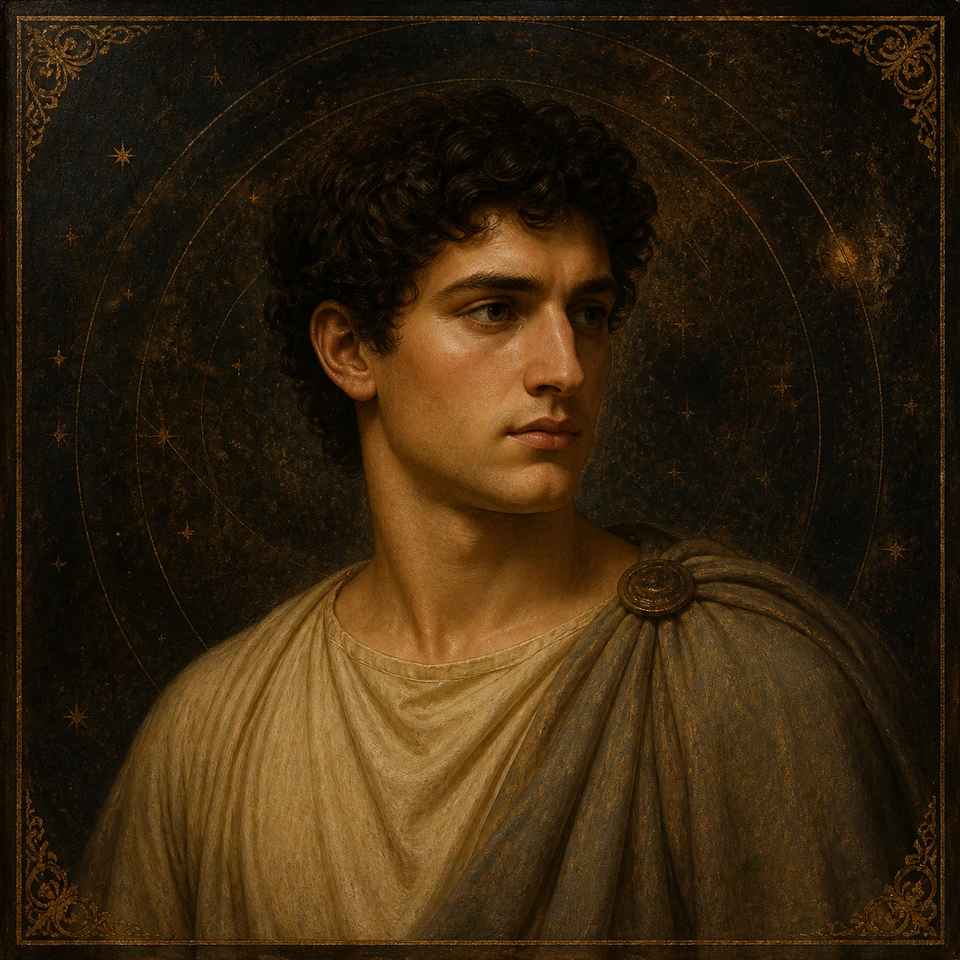
Operating in the shadow of his brother Prometheus, the divine Epimetheus is famed as the fateful receiver of Pandora in Hesiodic tradition. Later accounts portray him as the distributor of mortal traits and the father of Pyrrha, cementing his complex mythic legacy.
Overview
Epimetheus enters Greek literature as a brother measured against Prometheus. Hesiod names both among the sons of Iapetus and Clymene, but gives them opposite dramatic timing. Prometheus anticipates Zeus. Epimetheus understands danger after it has entered his house. That contrast is sharp, memorable, and morally loaded, yet it does not reduce him to a timeless abstraction called Afterthought. He is a named actor whose roles change across poetry, philosophy, mythography, and painted pottery.
The Pandora cycle gives him his most famous act. In the Theogony, Zeus orders a beautiful woman fashioned as retaliation after conflict with Prometheus. She remains unnamed, and Epimetheus’s acceptance is compressed into the proof that he brings calamity to humankind. Works and Days builds a different sequence. Prometheus warns him never to accept a gift from Zeus. Hermes delivers Pandora. Epimetheus accepts her and only then grasps the danger. Pandora opens a pithos, a large storage jar, and troubles scatter among mortals while Hope remains inside. The ancient poem does not contain the familiar little box.
Plato’s Protagoras gives Epimetheus another creation-era task. The gods form mortal kinds within the earth and charge the brothers with equipping them. Epimetheus asks to distribute the available powers. He gives speed to some animals, strength to others, weapons or shelter, hides, foods, and reproductive balances. His work is careful until the supply runs out. Humanity remains naked and defenseless. Prometheus responds by stealing fire and technical wisdom from Athena and Hephaestus, while Zeus later sends reverence and justice through Hermes so human communities can survive. This is a philosophical argument about embodiment, craft, and civic life, not a missing chapter of Hesiod.
Family traditions also shift. Hesiod makes Clymene his mother and Atlas, Menoetius, and Prometheus his brothers. Pseudo-Apollodorus names Asia as mother in one passage, then calls Pandora the wife of Epimetheus and Pyrrha their daughter in another. Pyrrha’s marriage to Deucalion carries the line into the flood tradition. The contradictions remain visible because later mythography should not silently rewrite Archaic poetry.
Material evidence gives him more than the caricature of a foolish old man. An Attic vessel of about 435-430 BC once carried a white Epimetheus label above a youthful male figure. The painted label is no longer visible, so the documentary chain matters. Dyfri Williams’s study of fifth-century Athenian pottery follows Epimetheus through scenes involving Prometheus, Pandora, gods, Eros, dramatic possibilities, and perhaps cult-facing imagery. Those scenes support a broader Classical reception, but they do not establish an independent temple, festival, priesthood, or offering system.
The secure figure therefore lives at a boundary between consequence and repair. Hesiod makes his acceptance part of a hostile ancient explanation for women and mortal hardship. Plato makes his unequal distribution the condition that forces human technology and civic interdependence. Later genealogies make him husband and father. No ancient source reviewed here turns those actions into a universal divine portfolio, and no accountable public modern community source supplies fixed magical correspondences. The strongest reading keeps the human cost, the changing traditions, and the evidence gaps together.
Canonical identity
Canonical Identity
Epimetheus holds a cautious primary classification as a probable mythic or divine figure. Hesiod identifies him as the son of Iapetus and Clymene, and the direct brother of Prometheus, Atlas, and Menoetius. Because he is not included in the earlier Theogony list of first-generation Titans, he does not carry that specific generational title. While Hesiod leverages the narrative opposition between forethought and thought-after-the-event to drive his story, this thematic device does not transform Epimetheus into an abstract, universal god of hindsight.
Linguistic Identity
The Greek form of the name is Ἐπιμηθεύς, transliterated as Epimētheús. A qualified fifth-century BC Attic reconstruction yields the phonetic profile /e.pi.mɛː.tʰěu̯ s/ (approximately eh-pee-may-THEH-oos). However, an English pronunciation guide cannot sufficiently reproduce the required vowel length, aspiration, diphthong, or ancient pitch.
Sources and evidence
TEXTUAL · Supported
The Ancient Greek name is Ἐπιμηθεύς, transliterated Epimētheús, with a qualified fifth-century BC Attic reconstruction /e.pi.mɛː.tʰěu̯s/.
- Source
- Wiktionary contributors, Ἐπιμηθεύς
- Reviewed edition
- Wiktionary live revision reviewed 2026-08-30 · Wiktionary
- Exact locator
- Entry Ἐπιμηθεύς · Section Ancient Greek pronunciation
- Scope
- Classical Greece · Attica
- Authority
- collaborative historical lexicon
- Certainty
- Qualified
The readable guide cannot reproduce vowel length, aspiration, diphthong, or pitch accent exactly.
Open exact reviewed sourceTEXTUAL · Supported
Hesiod makes Epimetheus a named son of Iapetus and Clymene but not one of the first-generation Titans in the preceding Titan list.
- Source
- Hesiod; edited and translated by Hugh G. Evelyn-White, Theogony (1914)
- Reviewed edition
- Hugh G. Evelyn-White edition and English translation in Hesiod, the Homeric Hymns and Homerica, 1914 · translated by Hugh G. Evelyn-White · edited by Hugh G. Evelyn-White · Perseus Digital Library / Scaife ATLAS
- Exact locator
- Entry Theogony · Line 132-138 compared with 507-514
- Scope
- Archaic Greece · Ancient Greece
- Authority
- primary literary witness
- Certainty
- Certain
The evidence therefore supports probable mythic or divine status instead of a first-generation Titan classification.
Open exact reviewed sourceTEXTUAL · Supported
The contrast between Prometheus and Epimetheus becomes a narrative opposition of foresight and recognition after the event, but the name does not establish a worshipped domain of hindsight.
- Source
- Hesiod; edited and translated by Hugh G. Evelyn-White, Works and Days (1914)
- Reviewed edition
- Hugh G. Evelyn-White edition and English translation in Hesiod, the Homeric Hymns and Homerica, 1914 · translated by Hugh G. Evelyn-White · edited by Hugh G. Evelyn-White · Perseus Digital Library / Scaife ATLAS
- Exact locator
- Entry Works and Days · Line 83-89
- Scope
- Archaic Greece · Ancient Greece
- Authority
- primary literary witness
- Certainty
- Certain
Hesiod makes the recognition come after acceptance; etymological moralization remains literary rather than cultic.
Open exact reviewed source3 reviewed sources for this section
- Wiktionary contributors, ἘπιμηθεύςLive collaborative lexical entry reviewed 2026-08-30 · Wiktionary
- Hesiod; edited and translated by Hugh G. Evelyn-White, Theogony (1914)Hesiod, the Homeric Hymns and Homerica, London and New York, 1914 · Perseus Digital Library / Scaife ATLAS
- Hesiod; edited and translated by Hugh G. Evelyn-White, Works and Days (1914)Hesiod, the Homeric Hymns and Homerica, London and New York, 1914 · Perseus Digital Library / Scaife ATLAS
Culture, tradition, period, and place
Epimetheus belongs first to Archaic Greek poetry, where the two Hesiodic poems give distinct versions of Zeus’s retaliation through a fashioned woman. The Theogony compresses his role into one ruinous acceptance. Works and Days names Pandora, recalls Prometheus’s warning, and follows the opening of the jar.
Classical Athens gives him another life. Plato’s Protagoras turns him into the distributor of protections among mortal species. Athenian pottery also places a youthful Epimetheus among divine and dramatic company. Pseudo-Apollodorus later supplies another maternal genealogy and makes Pandora his wife and Pyrrha their daughter. These periods cannot be collapsed into a single timeless doctrine.
Sources and evidence
TEXTUAL · Supported
The earliest secure surviving Epimetheus narratives used here are Archaic Greek poems attributed to Hesiod.
- Source
- Hesiod; edited and translated by Hugh G. Evelyn-White, Theogony (1914)
- Reviewed edition
- Hugh G. Evelyn-White edition and English translation in Hesiod, the Homeric Hymns and Homerica, 1914 · translated by Hugh G. Evelyn-White · edited by Hugh G. Evelyn-White · Perseus Digital Library / Scaife ATLAS
- Exact locator
- Entry Theogony · Line 507-514, 570-616
- Scope
- Archaic Greece · Ancient Greece
- Authority
- primary literary witness
- Certainty
- Certain
Works and Days 42-108 supplies a second Hesiodic telling with materially different details.
Open exact reviewed sourceTEXTUAL · Supported
Plato’s Protagoras places Epimetheus in a fourth-century BC philosophical account of mortal creation, animal equipment, human vulnerability, and civic life.
- Source
- Plato; translated by W. R. M. Lamb, Protagoras (1967)
- Reviewed edition
- W. R. M. Lamb translation in Plato in Twelve Volumes, Volume 3, 1967 reprint · translated by W. R. M. Lamb · Perseus Digital Library
- Exact locator
- Entry Protagoras · Section 320c-322d
- Scope
- Classical Greece · Athens
- Authority
- primary literary witness
- Certainty
- Certain
This is a speech within a philosophical dialogue, not a transparent cult narrative.
Open exact reviewed sourceTEXTUAL · Supported
Pseudo-Apollodorus preserves later genealogical forms in which Asia is mother of the Iapetids and Pandora bears Pyrrha to Epimetheus.
- Source
- Pseudo-Apollodorus; edited and translated by James G. Frazer, Library (1921)
- Reviewed edition
- James G. Frazer edition and English translation, Harvard University Press and William Heinemann, 1921 · translated by James G. Frazer · edited by James G. Frazer · Perseus Digital Library / Scaife ATLAS
- Exact locator
- Book 1 · Chapter 2 and 7 · Section 1.2.3; 1.7.2
- Scope
- Greek religion under Roman imperial rule · Ancient Greece
- Authority
- primary literary witness
- Certainty
- Certain
The later synthesis is kept separate from Hesiod’s Clymene genealogy.
Open exact reviewed source4 reviewed sources for this section
- Hesiod; edited and translated by Hugh G. Evelyn-White, Theogony (1914)Hesiod, the Homeric Hymns and Homerica, London and New York, 1914 · Perseus Digital Library / Scaife ATLAS
- Hesiod; edited and translated by Hugh G. Evelyn-White, Works and Days (1914)Hesiod, the Homeric Hymns and Homerica, London and New York, 1914 · Perseus Digital Library / Scaife ATLAS
- Plato; translated by W. R. M. Lamb, Protagoras (1967)Plato in Twelve Volumes, Volume 3, 1967 reprint · Perseus Digital Library
- Pseudo-Apollodorus; edited and translated by James G. Frazer, Library (1921)Harvard University Press and William Heinemann edition, 1921 · Perseus Digital Library / Scaife ATLAS
Historical development
Hesiod’s Epimetheus is built through contrast. Prometheus sees ahead, while Epimetheus recognizes the danger only after accepting Zeus’s gift. The contrast explains human hardship inside poems already concerned with sacrifice, fire, labor, and the fraught order of Zeus.
By the fifth and fourth centuries BC, the figure becomes less confined to one mistake. A labeled Athenian vase gives him a youthful body, and other scenes assemble him with Prometheus, Pandora, Zeus, Hermes, or Eros. Plato assigns him a cosmic task whose failure exposes humanity but whose careful distributions preserve every other species. Later mythography turns the Pandora connection into marriage and genealogy. Development is visible, but an institutional cult history is not.
Sources and evidence
TEXTUAL · Supported
Theogony introduces Epimetheus through contrast with Prometheus and calls him a calamity to grain-eating men because he first accepted Zeus’s fashioned woman.
- Source
- Hesiod; edited and translated by Hugh G. Evelyn-White, Theogony (1914)
- Reviewed edition
- Hugh G. Evelyn-White edition and English translation in Hesiod, the Homeric Hymns and Homerica, 1914 · translated by Hugh G. Evelyn-White · edited by Hugh G. Evelyn-White · Perseus Digital Library / Scaife ATLAS
- Exact locator
- Entry Theogony · Line 507-514
- Scope
- Archaic Greece · Ancient Greece
- Authority
- primary literary witness
- Certainty
- Certain
This is Hesiod’s characterization, not a neutral biography or a cult title.
Open exact reviewed sourceMATERIAL CULTURE · Supported
A late-Classical Attic vessel in Athens once carried a white Epimetheus label over a youthful male figure in an Anthesteria scene.
- Source
- Classical Art Research Centre, University of Oxford, Beazley Archive Pottery Database
- Reviewed edition
- Live record-level Beazley Archive Pottery Database · Classical Art Research Centre
- Exact locator
- Entry Beazley Archive Pottery Database entry 28128 · MuseumObjectId Athens National Archaeological Museum 3500 · Section about 435-430 BC
- Scope
- Classical Greece · Athens
- Authority
- scholarly object catalogue
- Certainty
- Qualified
The label is reported through CAVI but no longer survives visibly; CAVI documentation therefore carries the youthful identification.
Open exact reviewed sourceTEXTUAL · Supported
Fifth-century Athenian vase scenes give Epimetheus greater visual presence alongside Prometheus, Pandora, Zeus, Hermes, and Eros than the short surviving literary notices alone suggest.
- Source
- Dyfri Williams, Prometheus, Epimetheus and Pandora: from Athenian pottery to satyr-plays and cult (2014)
- Reviewed edition
- Dyfri Williams, Mètis N.S. 12, 2014, pages 265-290 · OpenEdition Books / Éditions EHESS
- Exact locator
- Entry Prometheus, Epimetheus and Pandora · Page 265-290
- Scope
- Modern classical scholarship · Athens
- Authority
- specialist material-culture study
- Certainty
- Certain
Williams connects the imagery with dramatic and cultic possibilities while marking interpretation as cautious.
Open exact reviewed source6 reviewed sources for this section
- Hesiod; edited and translated by Hugh G. Evelyn-White, Theogony (1914)Hesiod, the Homeric Hymns and Homerica, London and New York, 1914 · Perseus Digital Library / Scaife ATLAS
- Hesiod; edited and translated by Hugh G. Evelyn-White, Works and Days (1914)Hesiod, the Homeric Hymns and Homerica, London and New York, 1914 · Perseus Digital Library / Scaife ATLAS
- Plato; translated by W. R. M. Lamb, Protagoras (1967)Plato in Twelve Volumes, Volume 3, 1967 reprint · Perseus Digital Library
- Pseudo-Apollodorus; edited and translated by James G. Frazer, Library (1921)Harvard University Press and William Heinemann edition, 1921 · Perseus Digital Library / Scaife ATLAS
- Classical Art Research Centre, University of Oxford, Beazley Archive Pottery DatabaseLive scholarly vase-painting catalogue · Classical Art Research Centre
- Dyfri Williams, Prometheus, Epimetheus and Pandora: from Athenian pottery to satyr-plays and cult (2014)Mètis, N.S. 12, 2014, pages 265-290 · OpenEdition Books / Éditions EHESS
Attested roles and historical themes
Roles, powers, and limits
In Hesiod, Epimetheus is the receiver who acts against warning. That literary role carries grave consequences, but it is not a divine office governing foolishness. In Plato’s philosophical myth, he is an energetic allocator. He gives claws or speed, thick hides or burrows, abundant offspring or low fertility, then discovers too late that humankind has received nothing.
The two roles share delayed recognition, yet they belong to different works and different arguments. Neither supplies a cultic power over animals, hindsight, regret, excuses, invention, or moral healing. His limits are as important as his deeds: Prometheus carries fire and craft, Zeus and Hermes supply civic qualities, and Pandora’s jar remains her action in Works and Days.
Sources and evidence
TEXTUAL · Supported
In Works and Days, Epimetheus accepts the divine gift despite Prometheus’s warning and understands the evil only after he has received it.
- Source
- Hesiod; edited and translated by Hugh G. Evelyn-White, Works and Days (1914)
- Reviewed edition
- Hugh G. Evelyn-White edition and English translation in Hesiod, the Homeric Hymns and Homerica, 1914 · translated by Hugh G. Evelyn-White · edited by Hugh G. Evelyn-White · Perseus Digital Library / Scaife ATLAS
- Exact locator
- Entry Works and Days · Line 83-89
- Scope
- Archaic Greece · Ancient Greece
- Authority
- primary literary witness
- Certainty
- Certain
The action is an episode in Zeus’s retaliation, not a general power over error or hindsight.
Open exact reviewed sourceTEXTUAL · Supported
In Protagoras 320d-321c, Epimetheus distributes bodily protections and modes of survival among mortal species, then discovers that humans remain unequipped.
- Source
- Plato; translated by W. R. M. Lamb, Protagoras (1967)
- Reviewed edition
- W. R. M. Lamb translation in Plato in Twelve Volumes, Volume 3, 1967 reprint · translated by W. R. M. Lamb · Perseus Digital Library
- Exact locator
- Entry Protagoras · Section 320d-321c
- Scope
- Classical Greece · Athens
- Authority
- primary literary witness
- Certainty
- Certain
The role belongs to Plato’s philosophical myth and is not present in Hesiod.
Open exact reviewed sourceTEXTUAL · Supported
The reviewed literary and material evidence does not establish Epimetheus as a god of hindsight, animals, excuses, regret, or human error.
- Source
- Dyfri Williams, Prometheus, Epimetheus and Pandora: from Athenian pottery to satyr-plays and cult (2014)
- Reviewed edition
- Dyfri Williams, Mètis N.S. 12, 2014, pages 265-290 · OpenEdition Books / Éditions EHESS
- Exact locator
- Entry Prometheus, Epimetheus and Pandora · Page 265-290; compared with Hesiod Works and Days 83-89 and Plato Protagoras 320d-321c
- Scope
- Modern classical scholarship · Ancient Greece
- Authority
- bounded cross-source review
- Certainty
- Certain
Narrative actions and later etymological readings are not converted into cult functions.
Open exact reviewed source3 reviewed sources for this section
- Hesiod; edited and translated by Hugh G. Evelyn-White, Works and Days (1914)Hesiod, the Homeric Hymns and Homerica, London and New York, 1914 · Perseus Digital Library / Scaife ATLAS
- Plato; translated by W. R. M. Lamb, Protagoras (1967)Plato in Twelve Volumes, Volume 3, 1967 reprint · Perseus Digital Library
- Dyfri Williams, Prometheus, Epimetheus and Pandora: from Athenian pottery to satyr-plays and cult (2014)Mètis, N.S. 12, 2014, pages 265-290 · OpenEdition Books / Éditions EHESS
Epithets and titles
No securely localized poetic or cult epithet for Epimetheus is established in the reviewed witnesses; narrative characterizations and name-based moral readings are not converted into titles.
2 reviewed sources for this section
- Hesiod; edited and translated by Hugh G. Evelyn-White, Theogony (1914)Hesiod, the Homeric Hymns and Homerica, London and New York, 1914 · Perseus Digital Library / Scaife ATLAS
- Dyfri Williams, Prometheus, Epimetheus and Pandora: from Athenian pottery to satyr-plays and cult (2014)Mètis, N.S. 12, 2014, pages 265-290 · OpenEdition Books / Éditions EHESS
Worship and cult
The surviving literary and material evidence does not securely establish an independent cult of Epimetheus. Dyfri Williams argues that late fifth-century Athenian imagery may reflect a heightened public presence for Prometheus and Epimetheus together, perhaps within dramatic and cultic thought after reconciliation with Zeus. That is significant, but still qualified.
No named priesthood, altar, temple, sacrificial calendar, household observance, or dedicatory formula belongs specifically to Epimetheus in these sources. A vase with an Anthesteria setting can show that Athenians imagined him inside festival culture without proving that the festival honored him.
Sources and evidence
TEXTUAL · Supported
Williams’s vase study suggests increased Athenian prominence for Prometheus and Epimetheus as a pair, but it does not establish an independent Epimetheus priesthood, sanctuary, sacrificial calendar, or household rite.
- Source
- Dyfri Williams, Prometheus, Epimetheus and Pandora: from Athenian pottery to satyr-plays and cult (2014)
- Reviewed edition
- Dyfri Williams, Mètis N.S. 12, 2014, pages 265-290 · OpenEdition Books / Éditions EHESS
- Exact locator
- Entry Prometheus, Epimetheus and Pandora · Page 265-290
- Scope
- Modern classical scholarship · Athens
- Authority
- specialist cult and iconography review
- Certainty
- Qualified
Possible cult-facing imagery is retained without upgrading it to a separate cult institution.
Open exact reviewed source2 reviewed sources for this section
- Classical Art Research Centre, University of Oxford, Beazley Archive Pottery DatabaseLive scholarly vase-painting catalogue · Classical Art Research Centre
- Dyfri Williams, Prometheus, Epimetheus and Pandora: from Athenian pottery to satyr-plays and cult (2014)Mètis, N.S. 12, 2014, pages 265-290 · OpenEdition Books / Éditions EHESS
Temples, sanctuaries, and sacred places
Athens is the strongest historical setting for Epimetheus’s Classical reception because labeled and attributed vases were made and viewed there. It is not thereby a sacred place belonging to him. No reviewed witness securely identifies a temple, sanctuary, altar, grove, cave, spring, mountain, pilgrimage route, or local seat dedicated specifically to Epimetheus. Prometheus’s Athenian cult cannot be transferred to his brother by association.
Sources and evidence
TEXTUAL · Supported
No temple, sanctuary, altar, sacred landscape, or pilgrimage place dedicated specifically to Epimetheus is established in the reviewed source routes.
- Source
- Dyfri Williams, Prometheus, Epimetheus and Pandora: from Athenian pottery to satyr-plays and cult (2014)
- Reviewed edition
- Dyfri Williams, Mètis N.S. 12, 2014, pages 265-290 · OpenEdition Books / Éditions EHESS
- Exact locator
- Entry Prometheus, Epimetheus and Pandora · Page 265-290
- Scope
- Modern classical scholarship · Ancient Greece
- Authority
- explicit sacred-place evidence gap
- Certainty
- Certain
Athens is an artistic and reception context, not automatically a sacred place of Epimetheus.
Open exact reviewed source1 reviewed source for this section
- Dyfri Williams, Prometheus, Epimetheus and Pandora: from Athenian pottery to satyr-plays and cult (2014)Mètis, N.S. 12, 2014, pages 265-290 · OpenEdition Books / Éditions EHESS
Festivals and processions
No festival or procession dedicated specifically to Epimetheus is securely attested. The youthful labeled figure appears in an Anthesteria scene, but visual presence within a festival image is not evidence that he received a festival day, procession, competition, or calendar rite of his own. The proper conclusion is a live question about Athenian religious imagination, not an invented Epimetheia.
Sources and evidence
TEXTUAL · Supported
No festival or procession dedicated specifically to Epimetheus is established by the reviewed sources.
- Source
- Dyfri Williams, Prometheus, Epimetheus and Pandora: from Athenian pottery to satyr-plays and cult (2014)
- Reviewed edition
- Dyfri Williams, Mètis N.S. 12, 2014, pages 265-290 · OpenEdition Books / Éditions EHESS
- Exact locator
- Entry Prometheus, Epimetheus and Pandora · Page 265-290
- Scope
- Modern classical scholarship · Athens
- Authority
- explicit festival evidence gap
- Certainty
- Certain
An Anthesteria vase context does not prove that Epimetheus received an Anthesteria rite.
Open exact reviewed source2 reviewed sources for this section
- Classical Art Research Centre, University of Oxford, Beazley Archive Pottery DatabaseLive scholarly vase-painting catalogue · Classical Art Research Centre
- Dyfri Williams, Prometheus, Epimetheus and Pandora: from Athenian pottery to satyr-plays and cult (2014)Mètis, N.S. 12, 2014, pages 265-290 · OpenEdition Books / Éditions EHESS
Offerings, votives, and ritual evidence
No ancient source reviewed here names an offering, sacrifice, libation, incense, votive object, prayer, priestly act, or ritual instruction for Epimetheus. Pandora’s jar is a narrative vessel, not an offering bowl. Hammers belong to disputed Pandora-making scenes, while the fennel stalk and fire belong to Prometheus. A modern rite may make a personal symbolic choice, but it cannot claim these objects as historically fixed gifts to Epimetheus.
Sources and evidence
TEXTUAL · Supported
No surviving Greek witness establishes a named offering, sacrifice, votive formula, prayer, or ritual instruction for Epimetheus.
- Source
- Dyfri Williams, Prometheus, Epimetheus and Pandora: from Athenian pottery to satyr-plays and cult (2014)
- Reviewed edition
- Dyfri Williams, Mètis N.S. 12, 2014, pages 265-290 · OpenEdition Books / Éditions EHESS
- Exact locator
- Entry Prometheus, Epimetheus and Pandora · Page 265-290
- Scope
- Modern classical scholarship · Ancient Greece
- Authority
- explicit ritual evidence gap
- Certainty
- Certain
The absence prevents Pandora’s jar or a craftsman’s implement from becoming an invented offering.
Open exact reviewed source2 reviewed sources for this section
- Hesiod; edited and translated by Hugh G. Evelyn-White, Works and Days (1914)Hesiod, the Homeric Hymns and Homerica, London and New York, 1914 · Perseus Digital Library / Scaife ATLAS
- Dyfri Williams, Prometheus, Epimetheus and Pandora: from Athenian pottery to satyr-plays and cult (2014)Mètis, N.S. 12, 2014, pages 265-290 · OpenEdition Books / Éditions EHESS
Iconography and material culture
A late-Classical Attic vessel, Athens National Archaeological Museum 3500, once bore a white Epimetheus label above a youthful male figure. The label has vanished from sight, so the CAVI notice and Beazley Archive entry carry the identification. The evidence supports one youthful Athenian visual type rather than a universal appearance.
Williams surveys further fifth-century scenes in which Epimetheus stands within the Prometheus-Pandora cycle and possible dramatic imagery. Their hammers, jar, fire, fennel, or other implements cannot all migrate into his personal symbolism. A modern portrait can therefore show him as youthful and empty-handed without claiming to recover the vanished painting.
Sources and evidence
MATERIAL CULTURE · Supported
The documented late-Classical visual type is a youthful male in an Athenian scene, identified by a now-vanished painted label.
- Source
- Classical Art Research Centre, University of Oxford, Beazley Archive Pottery Database
- Reviewed edition
- Live record-level Beazley Archive Pottery Database · Classical Art Research Centre
- Exact locator
- Entry Beazley Archive Pottery Database entry 28128 · MuseumObjectId Athens National Archaeological Museum 3500 · Section about 435-430 BC
- Scope
- Classical Greece · Athens
- Authority
- scholarly object catalogue
- Certainty
- Qualified
One labeled scene supports a historical visual type, not a universal portrait.
Open exact reviewed sourceTEXTUAL · Supported
Pandora, the jar, hammers, fire, and the fennel stalk belong to source-specific narratives or surrounding figures rather than to a stable personal attribute of Epimetheus.
- Source
- Dyfri Williams, Prometheus, Epimetheus and Pandora: from Athenian pottery to satyr-plays and cult (2014)
- Reviewed edition
- Dyfri Williams, Mètis N.S. 12, 2014, pages 265-290 · OpenEdition Books / Éditions EHESS
- Exact locator
- Entry Prometheus, Epimetheus and Pandora · Page 265-290
- Scope
- Modern classical scholarship · Athens
- Authority
- text and material comparison
- Certainty
- Certain
The distinction protects the named figure from inheriting every object in the wider Prometheus-Pandora cycle.
Open exact reviewed source2 reviewed sources for this section
- Classical Art Research Centre, University of Oxford, Beazley Archive Pottery DatabaseLive scholarly vase-painting catalogue · Classical Art Research Centre
- Dyfri Williams, Prometheus, Epimetheus and Pandora: from Athenian pottery to satyr-plays and cult (2014)Mètis, N.S. 12, 2014, pages 265-290 · OpenEdition Books / Éditions EHESS
Animals, plants, and embodied forms
Plato gives Epimetheus an extraordinary relationship with animal bodies, but not with sacred animals. His distribution answers survival: strength is balanced by lack of speed, small bodies receive wings or underground shelter, and species receive coverings, foods, and reproductive rates. These are philosophical allocations across mortal life.
No animal accompanies him as a personal emblem, and no plant or tree is consecrated to him. He does not transform into another species. The whole animal kingdom cannot become his correspondence merely because Plato makes him its allocator.
Sources and evidence
TEXTUAL · Supported
Plato’s Epimetheus assigns fur, hides, speed, strength, weapons, foods, and reproductive balances among animal kinds.
- Source
- Plato; translated by W. R. M. Lamb, Protagoras (1967)
- Reviewed edition
- W. R. M. Lamb translation in Plato in Twelve Volumes, Volume 3, 1967 reprint · translated by W. R. M. Lamb · Perseus Digital Library
- Exact locator
- Entry Protagoras · Section 320d-321b
- Scope
- Classical Greece · Athens
- Authority
- primary literary witness
- Certainty
- Certain
These are distributed survival qualities in a philosophical tale, not sacred species.
Open exact reviewed sourceTEXTUAL · Supported
No sacred animal, plant, tree, or embodied transformation is established for Epimetheus in the reviewed sources.
- Source
- Plato; translated by W. R. M. Lamb, Protagoras (1967)
- Reviewed edition
- W. R. M. Lamb translation in Plato in Twelve Volumes, Volume 3, 1967 reprint · translated by W. R. M. Lamb · Perseus Digital Library
- Exact locator
- Entry Protagoras · Section 320d-321c; compared with Williams 2014, pages 265-290
- Scope
- Classical Greece · Ancient Greece
- Authority
- bounded literary and material review
- Certainty
- Certain
Participation in the animal-allotment story does not make every species sacred to him.
Open exact reviewed source2 reviewed sources for this section
- Plato; translated by W. R. M. Lamb, Protagoras (1967)Plato in Twelve Volumes, Volume 3, 1967 reprint · Perseus Digital Library
- Dyfri Williams, Prometheus, Epimetheus and Pandora: from Athenian pottery to satyr-plays and cult (2014)Mètis, N.S. 12, 2014, pages 265-290 · OpenEdition Books / Éditions EHESS
Relationships and genealogy
Hesiod names Iapetus and Clymene as the parents of Atlas, Menoetius, Prometheus, and Epimetheus. Pseudo-Apollodorus gives the brothers another mother, Asia. Both genealogies remain visible because the later name is not a correction of the earlier poem.
Prometheus is the decisive sibling relationship. He warns Epimetheus in Works and Days and repairs the human vulnerability caused by his distribution in Protagoras. Pseudo-Apollodorus calls Pandora the wife of Epimetheus and Pyrrha their daughter, linking this family to the Deucalion flood tradition. Hesiod does not supply that child genealogy.
Sources and evidence
TEXTUAL · Supported
Hesiod names Iapetus and Clymene as Epimetheus’s parents.
- Source
- Hesiod; edited and translated by Hugh G. Evelyn-White, Theogony (1914)
- Reviewed edition
- Hugh G. Evelyn-White edition and English translation in Hesiod, the Homeric Hymns and Homerica, 1914 · translated by Hugh G. Evelyn-White · edited by Hugh G. Evelyn-White · Perseus Digital Library / Scaife ATLAS
- Exact locator
- Entry Theogony · Line 507-511
- Scope
- Archaic Greece · Ancient Greece
- Authority
- primary literary witness
- Certainty
- Certain
Pseudo-Apollodorus later substitutes Asia for Clymene.
Open exact reviewed sourceTEXTUAL · Supported
Hesiod places Atlas, Menoetius, Prometheus, and Epimetheus in one sibling group, with Prometheus serving as Epimetheus’s decisive narrative counterpart.
- Source
- Hesiod; edited and translated by Hugh G. Evelyn-White, Theogony (1914)
- Reviewed edition
- Hugh G. Evelyn-White edition and English translation in Hesiod, the Homeric Hymns and Homerica, 1914 · translated by Hugh G. Evelyn-White · edited by Hugh G. Evelyn-White · Perseus Digital Library / Scaife ATLAS
- Exact locator
- Entry Theogony · Line 507-520
- Scope
- Archaic Greece · Ancient Greece
- Authority
- primary literary witness
- Certainty
- Certain
Prometheus is the brother whose direct interactions with Epimetheus appear in both Hesiod and Plato.
Open exact reviewed sourceTEXTUAL · Supported
Pseudo-Apollodorus calls Pandora the wife of Epimetheus and Pyrrha their daughter.
- Source
- Pseudo-Apollodorus; edited and translated by James G. Frazer, Library (1921)
- Reviewed edition
- James G. Frazer edition and English translation, Harvard University Press and William Heinemann, 1921 · translated by James G. Frazer · edited by James G. Frazer · Perseus Digital Library / Scaife ATLAS
- Exact locator
- Book 1 · Chapter 7 · Section 2
- Scope
- Greek religion under Roman imperial rule · Ancient Greece
- Authority
- primary literary witness
- Certainty
- Certain
Hesiod’s surviving Pandora accounts do not supply this child genealogy.
Open exact reviewed sourceTEXTUAL · Supported
Pseudo-Apollodorus names Asia, not Clymene, as the mother of Atlas, Prometheus, Epimetheus, and Menoetius.
- Source
- Pseudo-Apollodorus; edited and translated by James G. Frazer, Library (1921)
- Reviewed edition
- James G. Frazer edition and English translation, Harvard University Press and William Heinemann, 1921 · translated by James G. Frazer · edited by James G. Frazer · Perseus Digital Library / Scaife ATLAS
- Exact locator
- Book 1 · Chapter 2 · Section 3
- Scope
- Greek religion under Roman imperial rule · Ancient Greece
- Authority
- primary literary witness
- Certainty
- Certain
The contradictory maternal line remains a distinct later variant.
Open exact reviewed source3 reviewed sources for this section
- Hesiod; edited and translated by Hugh G. Evelyn-White, Theogony (1914)Hesiod, the Homeric Hymns and Homerica, London and New York, 1914 · Perseus Digital Library / Scaife ATLAS
- Hesiod; edited and translated by Hugh G. Evelyn-White, Works and Days (1914)Hesiod, the Homeric Hymns and Homerica, London and New York, 1914 · Perseus Digital Library / Scaife ATLAS
- Pseudo-Apollodorus; edited and translated by James G. Frazer, Library (1921)Harvard University Press and William Heinemann edition, 1921 · Perseus Digital Library / Scaife ATLAS
Actual myths and source variants
Two narratives govern Epimetheus’s surviving story. In the Pandora cycle, Zeus answers Prometheus’s challenge with a fashioned woman. Theogony leaves her unnamed and emphasizes the trap; Works and Days names Pandora, gives the warning to Epimetheus, and opens the jar; Pseudo-Apollodorus makes the pair parents of Pyrrha.
Plato’s Protagoras tells a different creation story. Epimetheus equips animal species, exhausts the available powers, and leaves humans naked and defenseless. Prometheus steals fire and technical skill, then Zeus sends civic qualities through Hermes. Pandora is absent. The contrast between these narratives is evidence of change, not a problem to solve by blending them.
Sources and evidence
TEXTUAL · Supported
Theogony and Works and Days agree that Epimetheus receives Zeus’s fashioned woman, but only Works and Days names Pandora, gives Prometheus’s warning, and narrates the jar.
- Source
- Hesiod; edited and translated by Hugh G. Evelyn-White, Works and Days (1914)
- Reviewed edition
- Hugh G. Evelyn-White edition and English translation in Hesiod, the Homeric Hymns and Homerica, 1914 · translated by Hugh G. Evelyn-White · edited by Hugh G. Evelyn-White · Perseus Digital Library / Scaife ATLAS
- Exact locator
- Entry Works and Days · Line 42-108; compared with Theogony 507-514 and 570-616
- Scope
- Archaic Greece · Ancient Greece
- Authority
- paired primary poetic witnesses
- Certainty
- Certain
The two poems are preserved as distinct tellings rather than fused.
Open exact reviewed sourceTEXTUAL · Supported
Works and Days says the woman removes the jar’s lid, scatters evils among humanity, and leaves Hope beneath the rim when the lid closes.
- Source
- Hesiod; edited and translated by Hugh G. Evelyn-White, Works and Days (1914)
- Reviewed edition
- Hugh G. Evelyn-White edition and English translation in Hesiod, the Homeric Hymns and Homerica, 1914 · translated by Hugh G. Evelyn-White · edited by Hugh G. Evelyn-White · Perseus Digital Library / Scaife ATLAS
- Exact locator
- Entry Works and Days · Line 90-105
- Scope
- Archaic Greece · Ancient Greece
- Authority
- primary literary witness
- Certainty
- Certain
The ancient vessel is a pithos, a large storage jar, not a small box.
Open exact reviewed sourceTEXTUAL · Supported
Plato’s Protagoras gives Epimetheus a separate creation-era task in which his generous animal allotment leaves humankind defenseless and forces Prometheus to intervene.
- Source
- Plato; translated by W. R. M. Lamb, Protagoras (1967)
- Reviewed edition
- W. R. M. Lamb translation in Plato in Twelve Volumes, Volume 3, 1967 reprint · translated by W. R. M. Lamb · Perseus Digital Library
- Exact locator
- Entry Protagoras · Section 320c-322a
- Scope
- Classical Greece · Athens
- Authority
- primary literary witness
- Certainty
- Certain
Pandora does not appear in this philosophical version.
Open exact reviewed source4 reviewed sources for this section
- Hesiod; edited and translated by Hugh G. Evelyn-White, Theogony (1914)Hesiod, the Homeric Hymns and Homerica, London and New York, 1914 · Perseus Digital Library / Scaife ATLAS
- Hesiod; edited and translated by Hugh G. Evelyn-White, Works and Days (1914)Hesiod, the Homeric Hymns and Homerica, London and New York, 1914 · Perseus Digital Library / Scaife ATLAS
- Plato; translated by W. R. M. Lamb, Protagoras (1967)Plato in Twelve Volumes, Volume 3, 1967 reprint · Perseus Digital Library
- Pseudo-Apollodorus; edited and translated by James G. Frazer, Library (1921)Harvard University Press and William Heinemann edition, 1921 · Perseus Digital Library / Scaife ATLAS
Myth Library
Each myth gathers its attested participants into one source-grounded account, while distinct source traditions remain readable in their own variants.
Divine Retribution And Human Condition
Epimetheus and Pandora
Zeus answers Prometheus’s challenge by fashioning a dangerous gift. Epimetheus accepts her despite warning, and the Hesiodic witnesses diverge over her name, the jar, and the human consequences before later mythography makes Pandora his wife and Pyrrha their daughter.
- Role in this profile
- recipient who accepts Zeus’s fashioned gift despite Prometheus’s warning
- Place scope
- Ancient Greece
- Witnesses
- 3
- Variants
- 3
Philosophical Anthropogony
Epimetheus Distributes Mortal Powers
In the mythic speech of Plato’s Protagoras, Epimetheus distributes protections among mortal species, exhausts the available powers before reaching humankind, and leaves Prometheus to steal fire and technical skill before Zeus gives civic bonds.
- Role in this profile
- allocator who equips animal kinds and leaves humankind without a share
- Place scope
- Ancient Greece
- Witnesses
- 1
- Variants
- 1
Theogonic Punishment And Creation
Hephaestus Makes Pandora
Under Zeus' command, Hephaestus shapes the woman later named Pandora, while two Hesiodic poems preserve materially different versions.
- Role in this profile
- recipient who accepts Pandora despite his brother's warning
- Place scope
- Ancient Greece
- Witnesses
- 2
- Variants
- 2
Genealogical Cycle
The Sons of Iapetus and Their Fates
Hesiod and Pseudo-Apollodorus preserve competing maternal genealogies for Iapetus’s four sons and attach different punishments and burdens to each brother.
- Role in this profile
- Son who accepts Zeus’s fashioned woman
- Place scope
- Ancient Greece
- Witnesses
- 2
- Variants
- 2
Equivalences, syncretisms, and identity boundaries
Epimetheus remains distinct from Prometheus, from Iapetus and the first-generation Titans, and from abstract afterthought. Later writers may call him a Titan because he descends from Iapetus, but Hesiod’s first Titan generation and the Iapetids are not the same list.
No ancient fused form or cross-cultural equivalent is established here. Psychological archetypes and moral labels belong to reception when independently sourced, not to ancient identity.
Sources and evidence
TEXTUAL · Supported
Epimetheus is not Prometheus, a first-generation Titan, or an abstract personification of hindsight.
- Source
- Hesiod; edited and translated by Hugh G. Evelyn-White, Theogony (1914)
- Reviewed edition
- Hugh G. Evelyn-White edition and English translation in Hesiod, the Homeric Hymns and Homerica, 1914 · translated by Hugh G. Evelyn-White · edited by Hugh G. Evelyn-White · Perseus Digital Library / Scaife ATLAS
- Exact locator
- Entry Theogony · Line 132-138 and 507-514
- Scope
- Archaic Greece · Ancient Greece
- Authority
- primary literary witness
- Certainty
- Certain
Shared family and paired wordplay do not collapse separately addressable identities.
Open exact reviewed sourceTEXTUAL · Supported
No reviewed source establishes an ancient interpretatio, fused form, or cross-cultural equivalent for Epimetheus.
- Source
- Dyfri Williams, Prometheus, Epimetheus and Pandora: from Athenian pottery to satyr-plays and cult (2014)
- Reviewed edition
- Dyfri Williams, Mètis N.S. 12, 2014, pages 265-290 · OpenEdition Books / Éditions EHESS
- Exact locator
- Entry Prometheus, Epimetheus and Pandora · Page 265-290
- Scope
- Modern classical scholarship · Ancient Greece
- Authority
- explicit equivalence evidence gap
- Certainty
- Certain
Functional resemblance and modern archetypal comparison remain outside ancient identity.
Open exact reviewed source2 reviewed sources for this section
- Hesiod; edited and translated by Hugh G. Evelyn-White, Theogony (1914)Hesiod, the Homeric Hymns and Homerica, London and New York, 1914 · Perseus Digital Library / Scaife ATLAS
- Dyfri Williams, Prometheus, Epimetheus and Pandora: from Athenian pottery to satyr-plays and cult (2014)Mètis, N.S. 12, 2014, pages 265-290 · OpenEdition Books / Éditions EHESS
Correspondence index
No fixed historical or accountable shared modern correspondence system has been established for Epimetheus. The Hesiodic poems, Plato’s philosophical myth, the Athenian vases, and Williams’s material study assign no planet, zodiac sign, gemstone, metal, sacred plant, sacred animal, ritual color, Classical element, weekday, moon phase, direction, festival time, incense, offering substance, ritual implement, or magical intention.
The Pandora jar, the animal allotment, and the name’s contrast with Prometheus may inspire personal reflection. They remain narrative material. They do not become universal prescriptions for hindsight work, shadow work, regret, animal magic, or accepting gifts.
16 expected categories currently not evidenced
celestial-body · Not evidenced
No celestial body evidenced
Neither Hesiod nor the Classical reception sources assign Epimetheus a celestial body.
- Layer
- Research Boundary
- Scope
- A celestial correspondence requires its own source and cannot be inferred from genealogy or myth.
zodiac · Not evidenced
No zodiac sign evidenced
No reviewed source assigns Epimetheus a zodiac sign.
- Layer
- Research Boundary
- Scope
- A planetary or astrological correspondence requires independent evidence.
gemstone-crystal-mineral · Not evidenced
No gemstone, crystal, or mineral evidenced
No cited witness dedicates a stone or mineral to Epimetheus.
- Layer
- Research Boundary
- Scope
- Pandora’s jar is earthenware in narrative, not a gemstone correspondence.
metal-material · Not evidenced
No sacred metal or universal material evidenced
No metal is consecrated to Epimetheus in the reviewed evidence.
- Layer
- Research Boundary
- Scope
- Craft materials near Pandora scenes belong to their source context, not a universal material rule.
plant-tree · Not evidenced
No sacred plant or tree evidenced
No sacred plant or tree is assigned to Epimetheus.
- Layer
- Research Boundary
- Scope
- Prometheus’s fennel stalk cannot be inherited by his brother.
animal-embodied-form · Not evidenced
No sacred animal or embodied form evidenced
Plato makes Epimetheus distribute qualities among animals but names no sacred species or transformation.
- Layer
- Research Boundary
- Scope
- Narrative contact with all animals is not a species correspondence.
1 reviewed source for this section
- Plato; translated by W. R. M. Lamb, Protagoras (1967)Plato in Twelve Volumes, Volume 3, 1967 reprint · Perseus Digital Library
color · Not evidenced
No ritual color evidenced
No ritual or material witness assigns Epimetheus a color.
- Layer
- Research Boundary
- Scope
- Pigment on an Attic vase does not establish a sacred hue.
classical-element · Not evidenced
No Classical element evidenced
No source assigns earth, air, fire, or water as an Epimetheus correspondence.
- Layer
- Research Boundary
- Scope
- Prometheus’s fire and the earth-born mortal bodies in Plato remain separate narrative details.
weekday · Not evidenced
No weekday evidenced
No ancient or accountable community source fixes a weekday for Epimetheus.
- Layer
- Research Boundary
- Scope
- A modern planetary weekday cannot be inferred without an accountable source.
moon-phase · Not evidenced
No moon phase evidenced
No lunar phase is assigned to Epimetheus.
- Layer
- Research Boundary
- Scope
- A lunar phase cannot be inferred from the figure's name or family.
direction-place · Not evidenced
No sacred direction or dedicated place evidenced
Athens supplies material context but no securely dedicated Epimetheus sanctuary.
- Layer
- Research Boundary
- Scope
- Artistic provenance does not create a sacred direction or pilgrimage place.
1 reviewed source for this section
- Dyfri Williams, Prometheus, Epimetheus and Pandora: from Athenian pottery to satyr-plays and cult (2014)Mètis, N.S. 12, 2014, pages 265-290 · OpenEdition Books / Éditions EHESS
festival-time · Not evidenced
No dedicated festival time evidenced
An Anthesteria scene includes the labeled figure, but no festival to Epimetheus is secure.
- Layer
- Research Boundary
- Scope
- Image context cannot be converted into a personal calendar rite.
1 reviewed source for this section
- Dyfri Williams, Prometheus, Epimetheus and Pandora: from Athenian pottery to satyr-plays and cult (2014)Mètis, N.S. 12, 2014, pages 265-290 · OpenEdition Books / Éditions EHESS
incense-perfume · Not evidenced
No incense or perfume evidenced
No aromatic offering is named for Epimetheus.
- Layer
- Research Boundary
- Scope
- Modern scent choices remain personal unless an accountable tradition identifies them.
offering-ritual-material · Not evidenced
No offering material evidenced
No sacrifice, libation, food gift, or votive substance is attested.
- Layer
- Research Boundary
- Scope
- Pandora’s jar and workshop tools are not offerings.
ritual-object-symbol-tool · Not evidenced
No fixed ritual tool evidenced
No object functions as a historically fixed Epimetheus ritual implement.
- Layer
- Research Boundary
- Scope
- Jar, hammer, fennel stalk, and fire belong to particular narrative agents and scenes.
1 reviewed source for this section
- Dyfri Williams, Prometheus, Epimetheus and Pandora: from Athenian pottery to satyr-plays and cult (2014)Mètis, N.S. 12, 2014, pages 265-290 · OpenEdition Books / Éditions EHESS
intention-magical-power · Not evidenced
No shared magical intention evidenced
No accountable source establishes hindsight, regret, consequence, animals, or error as a shared magical office.
- Layer
- Research Boundary
- Scope
- Personal devotional reflection must remain personal rather than presented as ancient fact.
Sources and evidence
TEXTUAL · Supported
No accountable public modern community source was established for a shared Epimetheus planet, zodiac sign, stone, metal, plant, animal, color, element, weekday, moon phase, direction, festival, incense, offering, ritual tool, or magical intention.
- Source
- Dyfri Williams, Prometheus, Epimetheus and Pandora: from Athenian pottery to satyr-plays and cult (2014)
- Reviewed edition
- Dyfri Williams, Mètis N.S. 12, 2014, pages 265-290 · OpenEdition Books / Éditions EHESS
- Exact locator
- Entry Prometheus, Epimetheus and Pandora · Page 265-290; ancient evidence compared against unsupported modern extensions
- Scope
- Modern classical scholarship · Ancient Greece
- Authority
- explicit modern-evidence gap
- Certainty
- Certain
Private devotional choices are not presented as ancient or universally Pagan.
Open exact reviewed source5 reviewed sources for this section
- Hesiod; edited and translated by Hugh G. Evelyn-White, Theogony (1914)Hesiod, the Homeric Hymns and Homerica, London and New York, 1914 · Perseus Digital Library / Scaife ATLAS
- Hesiod; edited and translated by Hugh G. Evelyn-White, Works and Days (1914)Hesiod, the Homeric Hymns and Homerica, London and New York, 1914 · Perseus Digital Library / Scaife ATLAS
- Plato; translated by W. R. M. Lamb, Protagoras (1967)Plato in Twelve Volumes, Volume 3, 1967 reprint · Perseus Digital Library
- Classical Art Research Centre, University of Oxford, Beazley Archive Pottery DatabaseLive scholarly vase-painting catalogue · Classical Art Research Centre
- Dyfri Williams, Prometheus, Epimetheus and Pandora: from Athenian pottery to satyr-plays and cult (2014)Mètis, N.S. 12, 2014, pages 265-290 · OpenEdition Books / Éditions EHESS
Later reception and living significance
The most persistent later image is the contrast between the brothers. Prometheus anticipates; Epimetheus understands afterward. Plato already reshapes that opposition when Epimetheus’s generous distribution produces an unforeseen human lack. Athenian vase painters grant the pair a richer visual company than Hesiod’s short characterization suggests.
Later retellings often replace Pandora’s pithos with a small box. That object may be culturally familiar, but it is not the vessel named in Works and Days. No accountable public contemporary community source was secured for a shared Epimetheus rite or magical program. Modern devotees may encounter him through consequence, responsibility, kinship, or repair, but those meanings should be named as personal or community-specific rather than ancient inheritance.
Sources and evidence
TEXTUAL · Supported
The vessel in Works and Days is a pithos, while the familiar small box belongs to later reception and must not be backdated into the Archaic poem.
- Source
- Hesiod; edited and translated by Hugh G. Evelyn-White, Works and Days (1914)
- Reviewed edition
- Hugh G. Evelyn-White edition and English translation in Hesiod, the Homeric Hymns and Homerica, 1914 · translated by Hugh G. Evelyn-White · edited by Hugh G. Evelyn-White · Perseus Digital Library / Scaife ATLAS
- Exact locator
- Entry Works and Days · Line 90-105
- Scope
- Archaic Greece · Ancient Greece
- Authority
- primary literary witness
- Certainty
- Certain
The Greek textual object controls the ancient myth description.
Open exact reviewed sourceTEXTUAL · Supported
Plato and fifth-century Athenian vase painters enlarge the Prometheus-Epimetheus pairing beyond Hesiod’s brief contrast, giving Epimetheus roles in animal distribution and complex divine scenes.
- Source
- Dyfri Williams, Prometheus, Epimetheus and Pandora: from Athenian pottery to satyr-plays and cult (2014)
- Reviewed edition
- Dyfri Williams, Mètis N.S. 12, 2014, pages 265-290 · OpenEdition Books / Éditions EHESS
- Exact locator
- Entry Prometheus, Epimetheus and Pandora · Page 265-290; compared with Plato Protagoras 320c-322d
- Scope
- Modern classical scholarship · Athens
- Authority
- material and literary reception study
- Certainty
- Certain
The philosophical and visual developments remain separated from Archaic narrative.
Open exact reviewed source3 reviewed sources for this section
- Hesiod; edited and translated by Hugh G. Evelyn-White, Works and Days (1914)Hesiod, the Homeric Hymns and Homerica, London and New York, 1914 · Perseus Digital Library / Scaife ATLAS
- Plato; translated by W. R. M. Lamb, Protagoras (1967)Plato in Twelve Volumes, Volume 3, 1967 reprint · Perseus Digital Library
- Dyfri Williams, Prometheus, Epimetheus and Pandora: from Athenian pottery to satyr-plays and cult (2014)Mètis, N.S. 12, 2014, pages 265-290 · OpenEdition Books / Éditions EHESS
Evidence, conflicts, and research gaps
The source disagreements are substantive. Hesiod names Clymene as mother; Pseudo-Apollodorus names Asia. Hesiod links Epimetheus to Pandora’s arrival; Plato removes Pandora and makes him distributor among mortal species. Pseudo-Apollodorus adds marriage and Pyrrha. The vase evidence supplies bodies and company that poetry does not describe.
Three gaps remain open. The Ancient Greek pronunciation is a qualified reconstruction awaiting an academic phonology check. The lost white label on Athens 3500 makes its youthful identification dependent on CAVI documentation. Williams’s proposed cult-facing interpretation of several scenes does not yet yield a named independent sanctuary, festival, priesthood, or offering system. Thin evidence stays thin, and no modern correspondence list fills it.
Sources and evidence
TEXTUAL · Supported
The sources disagree about Epimetheus’s mother and about the form and scope of his role: Hesiod gives the Pandora contrast, Plato gives animal allotment, and Pseudo-Apollodorus supplies the Pandora-Pyrrha genealogy.
- Source
- Pseudo-Apollodorus; edited and translated by James G. Frazer, Library (1921)
- Reviewed edition
- James G. Frazer edition and English translation, Harvard University Press and William Heinemann, 1921 · translated by James G. Frazer · edited by James G. Frazer · Perseus Digital Library / Scaife ATLAS
- Exact locator
- Book 1 · Chapter 2 and 7 · Section 1.2.3; 1.7.2; compared with Hesiod and Plato
- Scope
- Greek religion under Roman imperial rule · Ancient Greece
- Authority
- source-variant comparison
- Certainty
- Certain
No seamless composite biography is imposed.
Open exact reviewed sourceTEXTUAL · Supported
Possible cult-facing imagery does not resolve the absence of a securely identified independent Epimetheus cult institution.
- Source
- Dyfri Williams, Prometheus, Epimetheus and Pandora: from Athenian pottery to satyr-plays and cult (2014)
- Reviewed edition
- Dyfri Williams, Mètis N.S. 12, 2014, pages 265-290 · OpenEdition Books / Éditions EHESS
- Exact locator
- Entry Prometheus, Epimetheus and Pandora · Page 265-290
- Scope
- Modern classical scholarship · Athens
- Authority
- qualified scholarly debate
- Certainty
- Qualified
Future inscriptional or sanctuary evidence could change this boundary.
Open exact reviewed source7 reviewed sources for this section
- Hesiod; edited and translated by Hugh G. Evelyn-White, Theogony (1914)Hesiod, the Homeric Hymns and Homerica, London and New York, 1914 · Perseus Digital Library / Scaife ATLAS
- Hesiod; edited and translated by Hugh G. Evelyn-White, Works and Days (1914)Hesiod, the Homeric Hymns and Homerica, London and New York, 1914 · Perseus Digital Library / Scaife ATLAS
- Plato; translated by W. R. M. Lamb, Protagoras (1967)Plato in Twelve Volumes, Volume 3, 1967 reprint · Perseus Digital Library
- Pseudo-Apollodorus; edited and translated by James G. Frazer, Library (1921)Harvard University Press and William Heinemann edition, 1921 · Perseus Digital Library / Scaife ATLAS
- Classical Art Research Centre, University of Oxford, Beazley Archive Pottery DatabaseLive scholarly vase-painting catalogue · Classical Art Research Centre
- Wiktionary contributors, ἘπιμηθεύςLive collaborative lexical entry reviewed 2026-08-30 · Wiktionary
- Dyfri Williams, Prometheus, Epimetheus and Pandora: from Athenian pottery to satyr-plays and cult (2014)Mètis, N.S. 12, 2014, pages 265-290 · OpenEdition Books / Éditions EHESS
Direct connections and evidence
Explicit Source
Hesiod names Atlas and Epimetheus as sons of Iapetus and Clymene
Epimetheus shares Atlas’ Hesiodic parentage; their later narrative careers remain distinct.
1 attestation · high confidence
- Hesiod; edited and translated by Hugh G. Evelyn-White, TheogonyHugh G. Evelyn-White edition and English translation in Hesiod, the Homeric Hymns and Homerica, 1914 · translated by Hugh G. Evelyn-White · edited by Hugh G. Evelyn-White · Perseus Digital Library / Scaife ATLAS · Archaic Greece · Ancient Greece · Entry Theogony · Line 507-516
Explicit Source
Hesiod names Prometheus and Epimetheus among the sons of Iapetus and Clymene
The sibling link is explicit; it does not transfer Prometheus’s cult, fire, fennel stalk, punishment, or culture-hero functions to Epimetheus.
1 attestation · high confidence
- Hesiod; edited and translated by Hugh G. Evelyn-White, TheogonyHugh G. Evelyn-White edition and English translation in Hesiod, the Homeric Hymns and Homerica, 1914 · translated by Hugh G. Evelyn-White · edited by Hugh G. Evelyn-White · Perseus Digital Library / Scaife ATLAS · Archaic Greece · Ancient Greece · Entry Theogony · Line 507-516
Explicit Source
Hesiod names Epimetheus as a son of Iapetus and Clymene
Iapetus remains father in Pseudo-Apollodorus, whose later genealogy names Asia rather than Clymene as mother.
1 attestation · high confidence
- Hesiod; edited and translated by Hugh G. Evelyn-White, TheogonyHugh G. Evelyn-White edition and English translation in Hesiod, the Homeric Hymns and Homerica, 1914 · translated by Hugh G. Evelyn-White · edited by Hugh G. Evelyn-White · Perseus Digital Library / Scaife ATLAS · Archaic Greece · Ancient Greece · Entry Theogony · Line 507-516
Archive scope and classification
- Figure classification
- Mythic/divine figure - deity status uncertain · probable
- Pantheon or tradition shelf
- Greek
- Cultures
- Greek
- Traditions
- Ancient Greek religion
- Periods
- Archaic Greece, Classical Greece, Greek religion under Roman imperial rule
- Places
- Ancient Greece, Athens
Identity, source-scoped myths, genealogy, Classical reception, material evidence, cult gaps, correspondence boundaries, and classification uncertainty are complete for the reviewed public evidence.
Reviewed sources
- Hesiod; edited and translated by Hugh G. Evelyn-White, Theogony (1914)Hesiod, the Homeric Hymns and Homerica, London and New York, 1914 · Perseus Digital Library / Scaife ATLAS
- Pseudo-Apollodorus; edited and translated by James G. Frazer, Library (1921)Harvard University Press and William Heinemann edition, 1921 · Perseus Digital Library / Scaife ATLAS
- Classical Art Research Centre, University of Oxford, Beazley Archive Pottery DatabaseLive scholarly vase-painting catalogue · Classical Art Research Centre
- Hesiod; edited and translated by Hugh G. Evelyn-White, Works and Days (1914)Hesiod, the Homeric Hymns and Homerica, London and New York, 1914 · Perseus Digital Library / Scaife ATLAS
- Plato; translated by W. R. M. Lamb, Protagoras (1967)Plato in Twelve Volumes, Volume 3, 1967 reprint · Perseus Digital Library
- Wiktionary contributors, ἘπιμηθεύςLive collaborative lexical entry reviewed 2026-08-30 · Wiktionary
- Dyfri Williams, Prometheus, Epimetheus and Pandora: from Athenian pottery to satyr-plays and cult (2014)Mètis, N.S. 12, 2014, pages 265-290 · OpenEdition Books / Éditions EHESS